Principal/Financier: Friuli Venezia Giulia Region (Bandi Scuola) Period: 2017 Partners: – State Institute of Higher Education “Brignoli-Einaudi-Marconi”, – Provincial Center for Adult Education (CPIA), – State Institute of Higher Education “Michelangelo Buonarroti”, – State Institute of Higher Education “Sandro Pertini”,
– State Institute of Higher Education with Slovenian language of instruction (Humanities High School and Scientific High School “S. Gregorčič” – Classical High School “P. Trubar”), – State Institute of Higher Education “Dante Alighieri” , – State Vocational Institute “R.M. Cossar – Leonardo Da Vinci”, – State Institute of Higher Education “I.Cankar – Z.Zois- J.Vega” Description: The project proposes a structured path of school-work alternation managed by ISIG on the basis of the experience gained in the similar path in A.A. 2015/2016. It consists of two workshops:
– State Institute of Higher Education with Slovenian language of instruction (Humanities High School and Scientific High School “S. Gregorčič” – Classical High School “P. Trubar”), – State Institute of Higher Education “Dante Alighieri” , – State Vocational Institute “R.M. Cossar – Leonardo Da Vinci”, – State Institute of Higher Education “I.Cankar – Z.Zois- J.Vega” Description: The project proposes a structured path of school-work alternation managed by ISIG on the basis of the experience gained in the similar path in A.A. 2015/2016. It consists of two workshops:
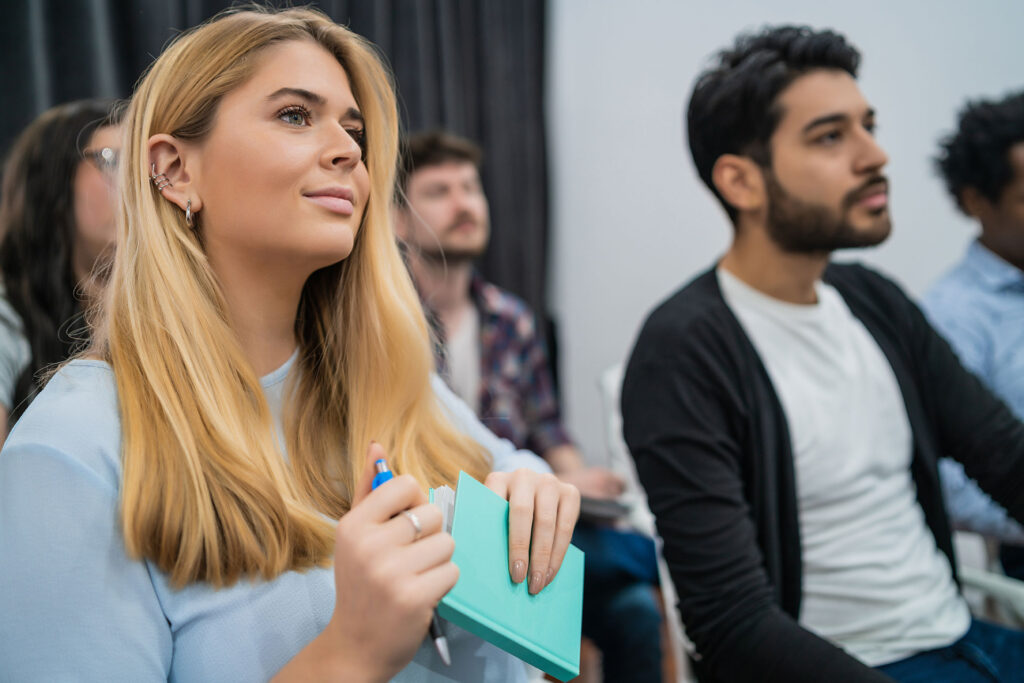
- “Design workshop” – Students are guided in the development of the preliminary stage of a project proposal, starting with brainstorming for gathering insights/ideas (on a topic of interest to their schooling, agreed upon with teachers), leading to the identification of objectives, actions and expected results of the project.
- “Social Research Workshop” – Students undertake a course structured in 5 meetings, during which they experience the rudiments of social research methodology. In particular, the students are guided in the creation of a questionnaire and trained to undertake its administration within their own school and schools within the Network, as well as outside (supervised by their teachers and ISIG researchers). After data collection, students, together with ISIG researchers, prepare the framework for data analysis, thus completing the research cycle.