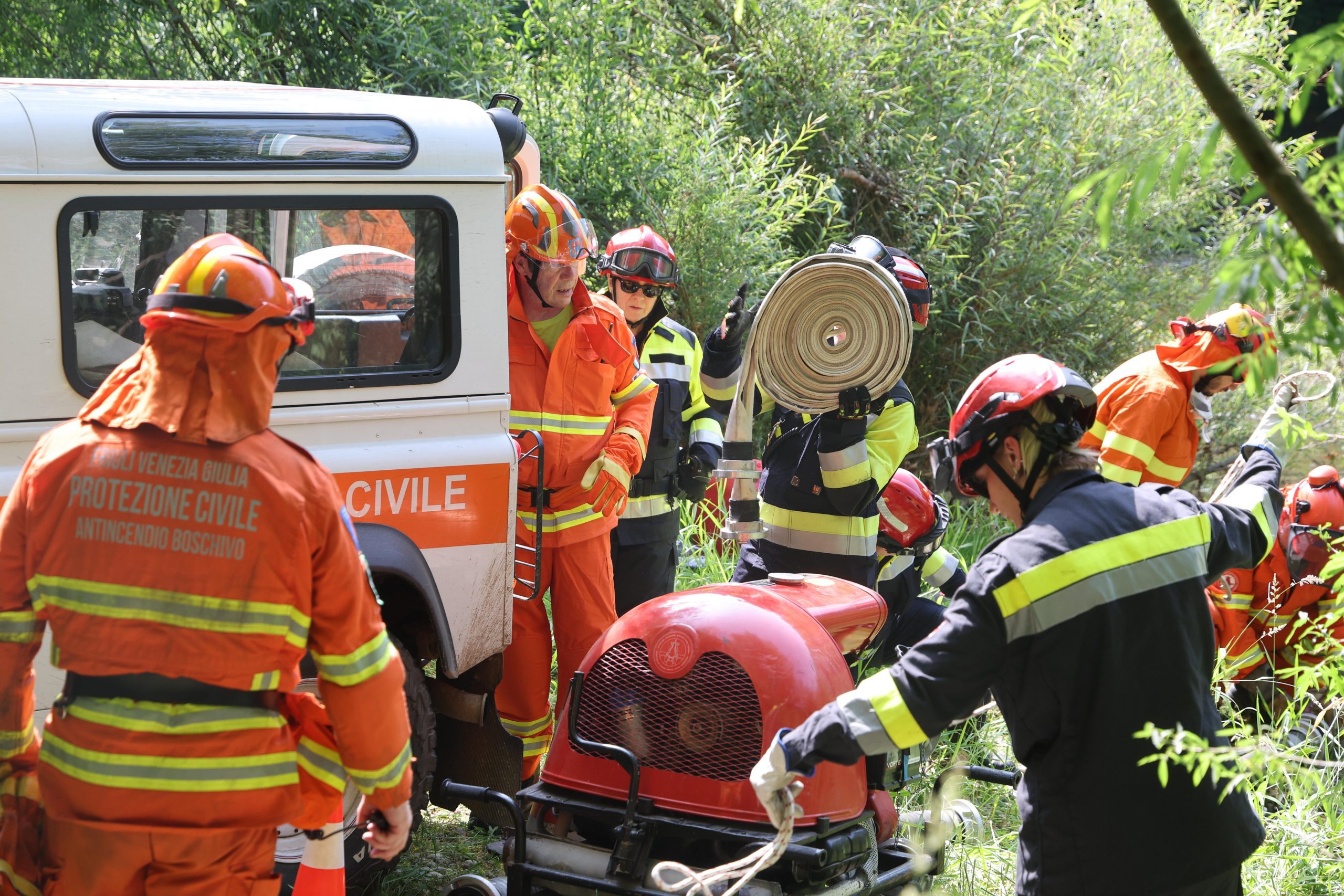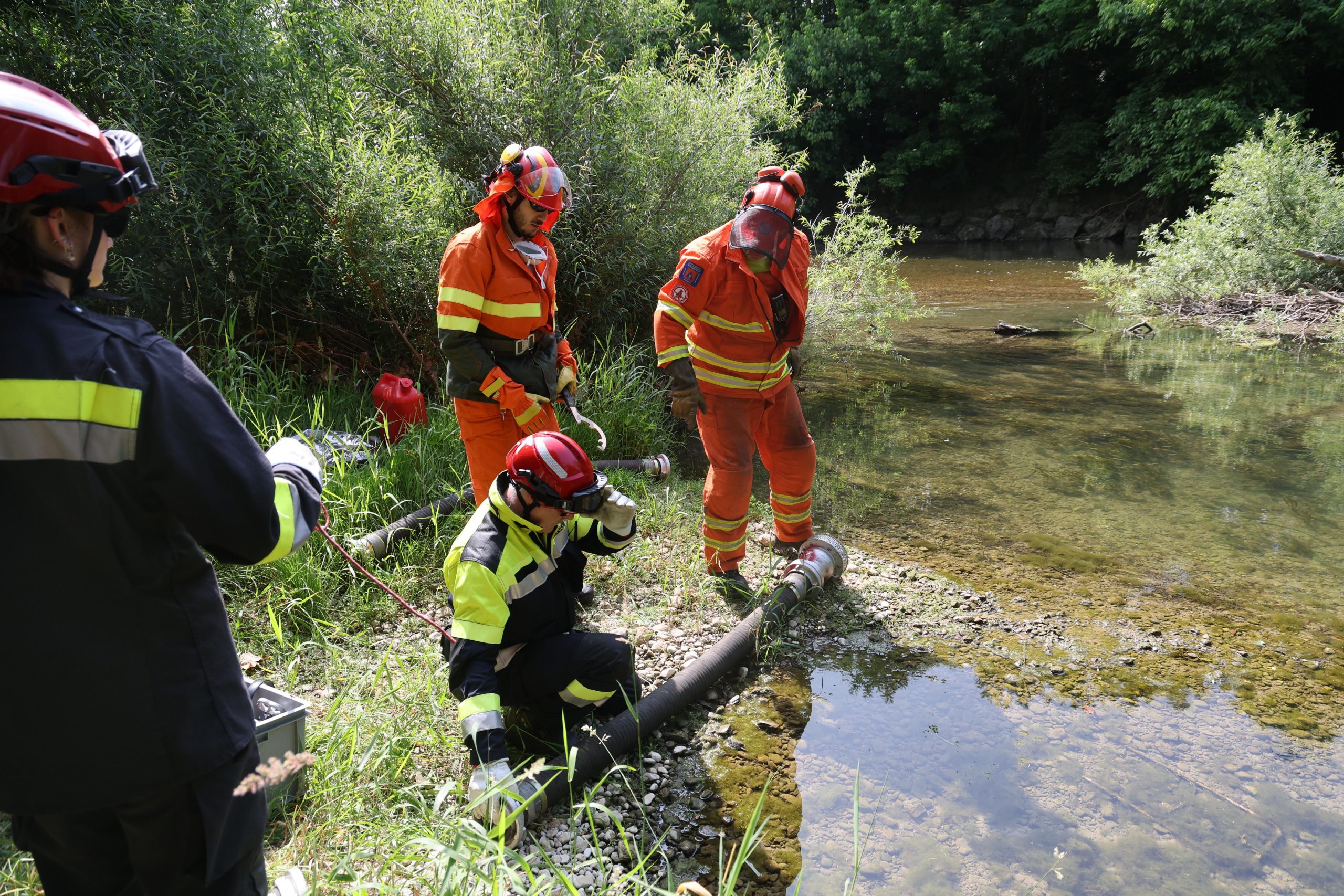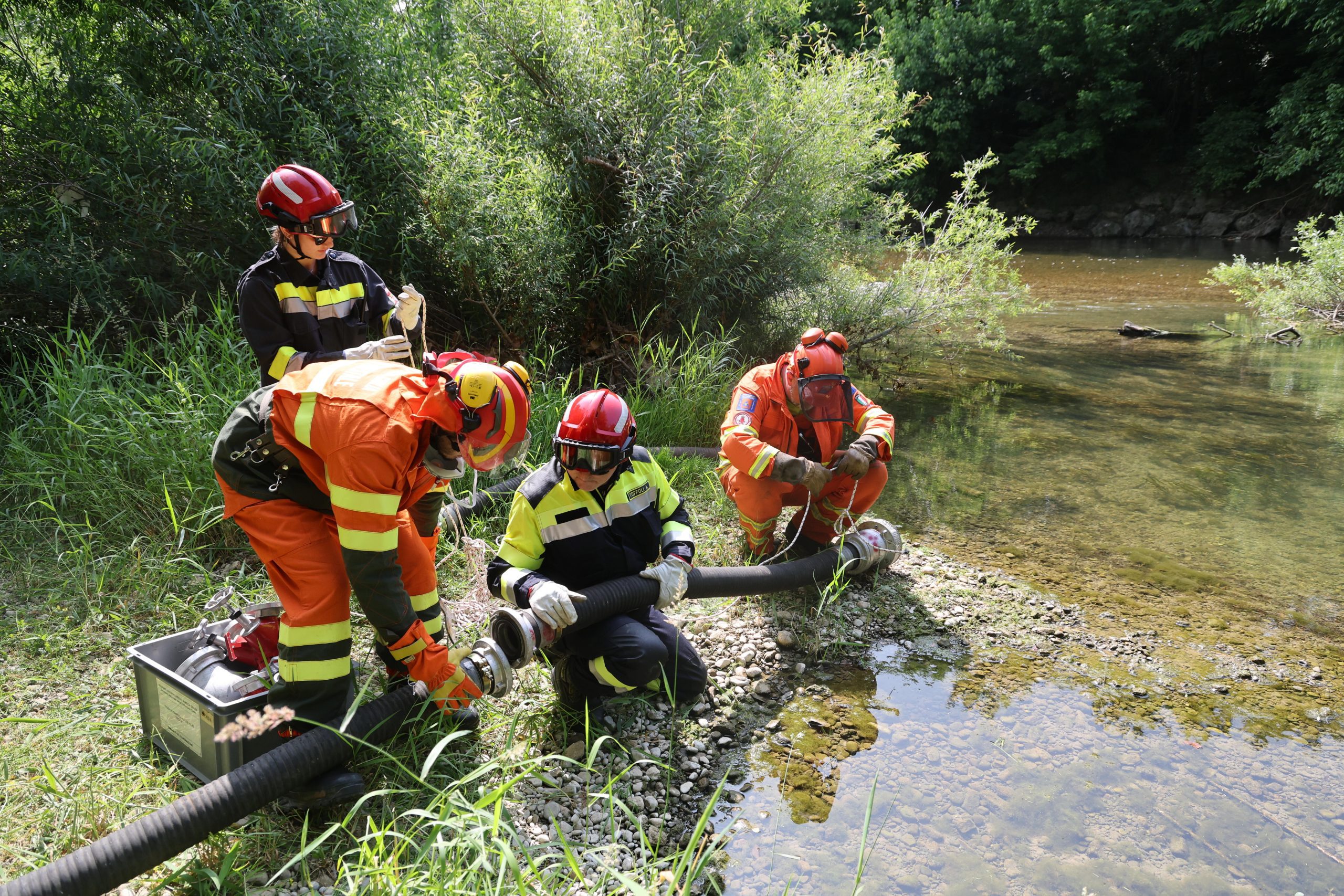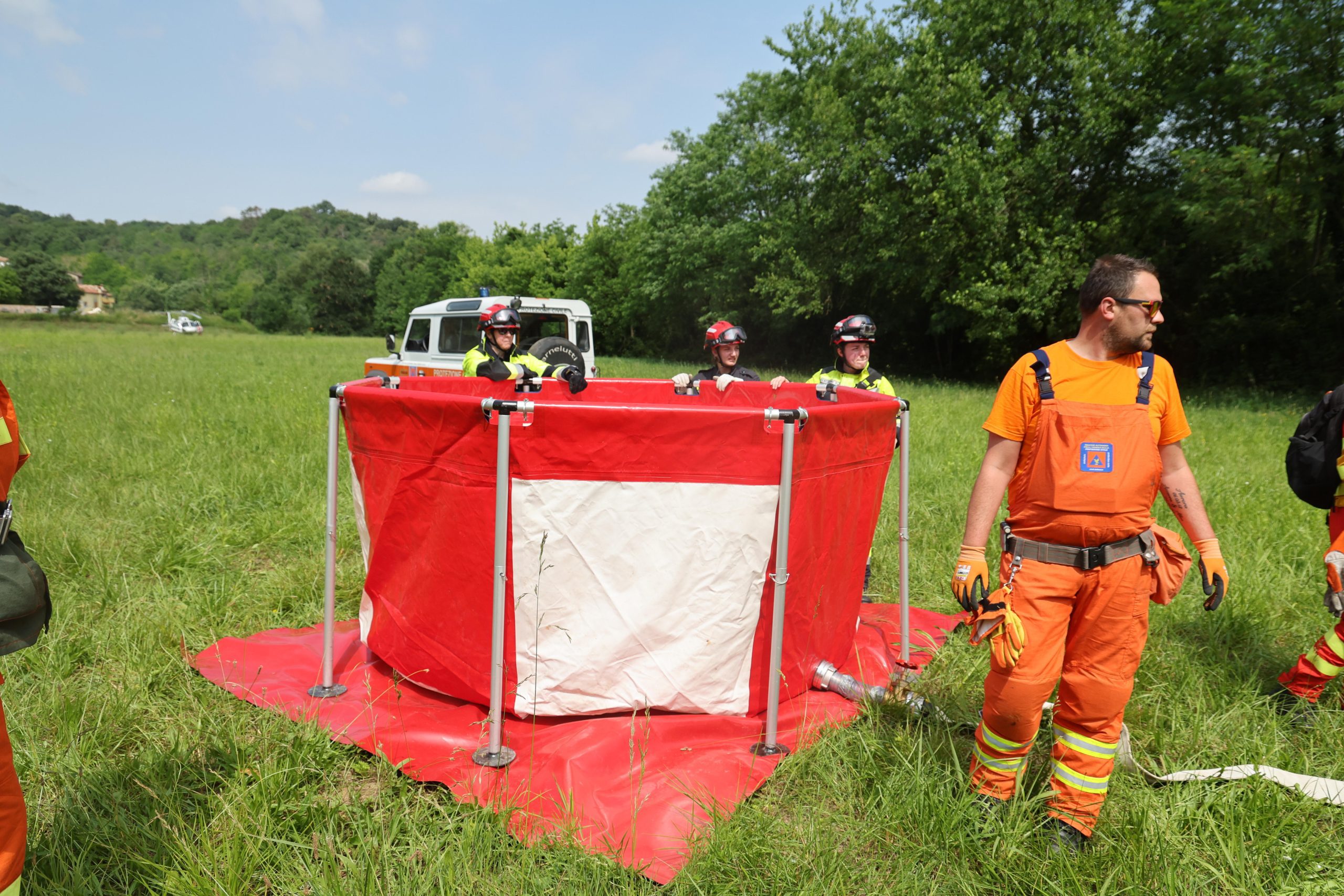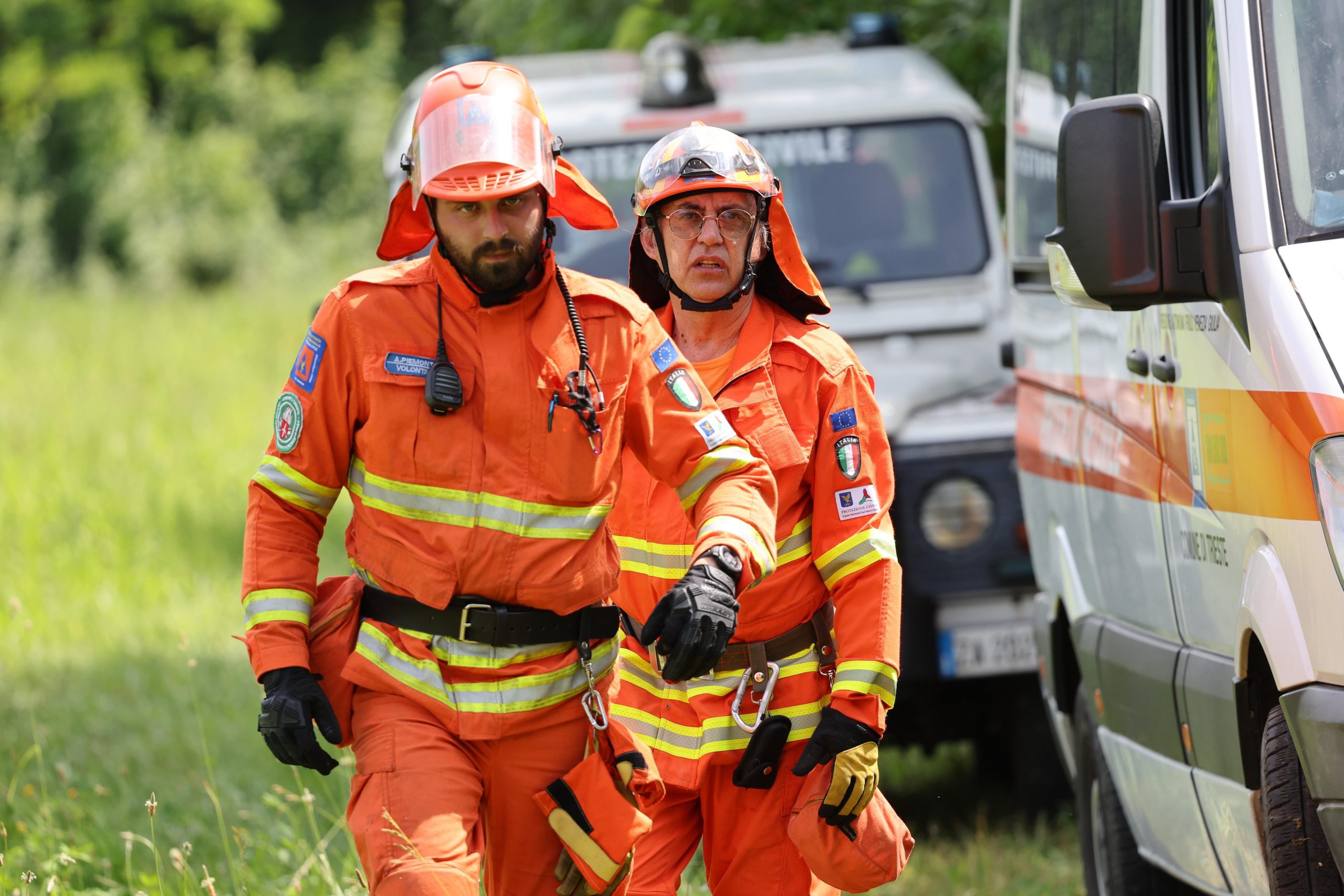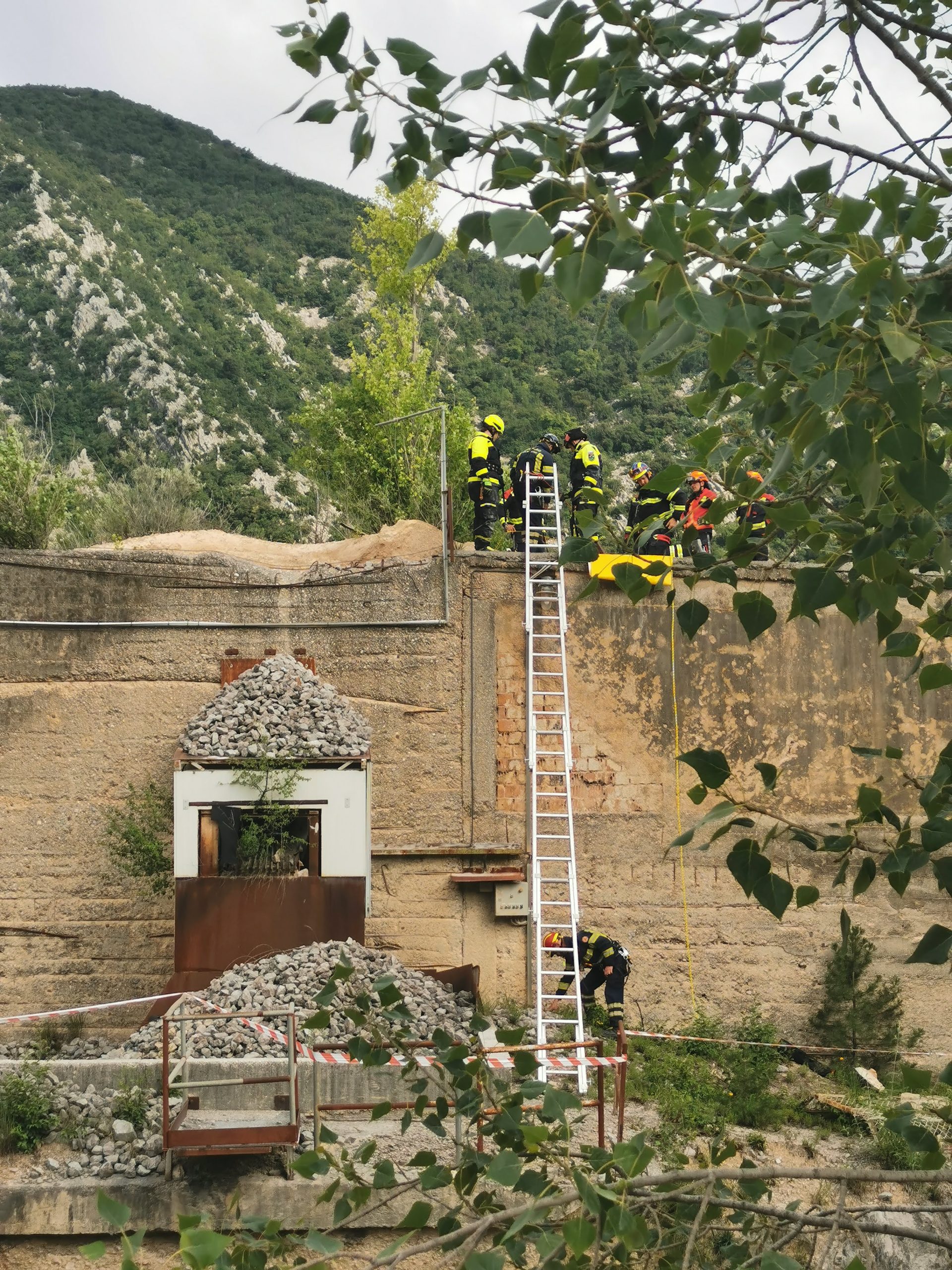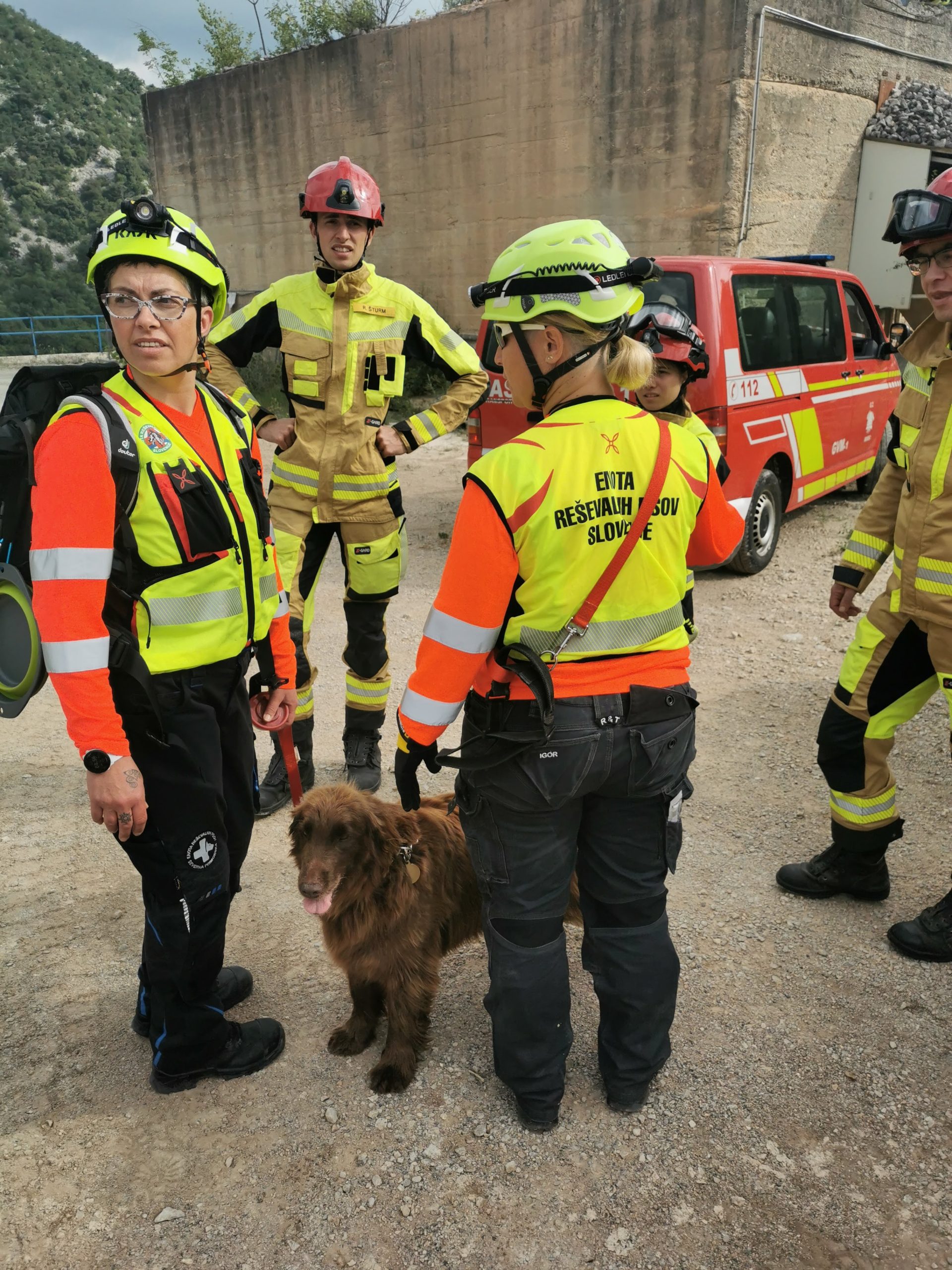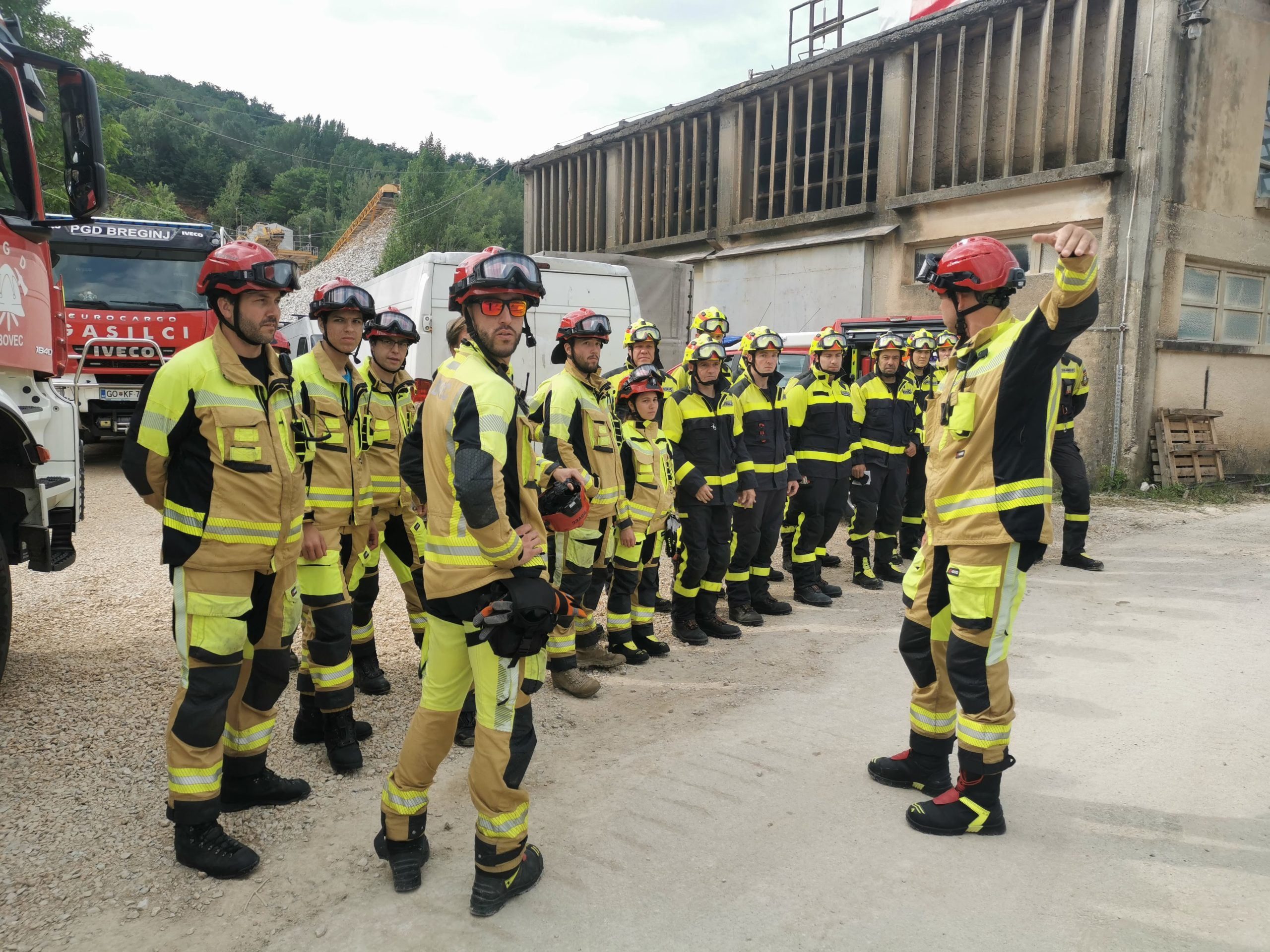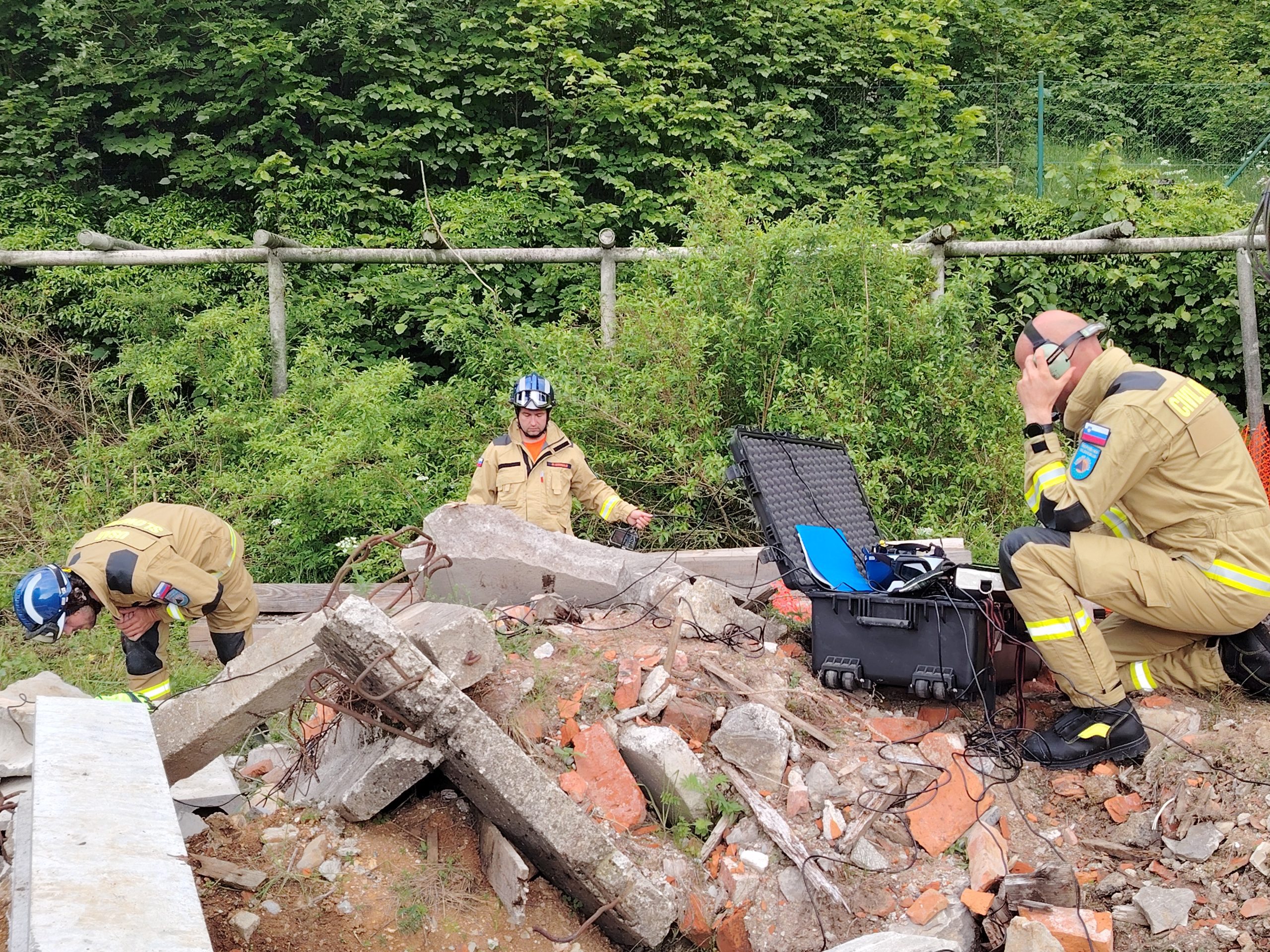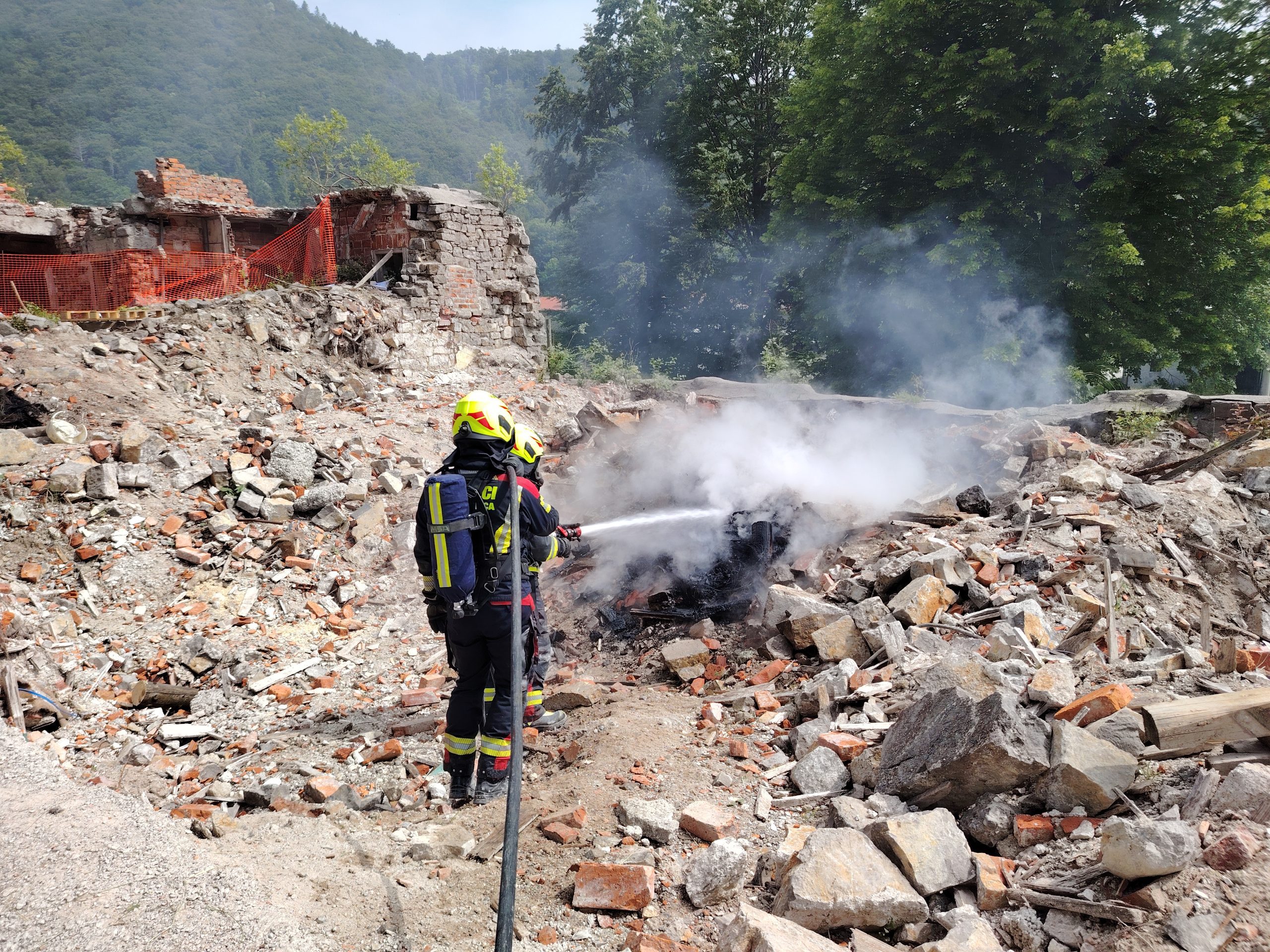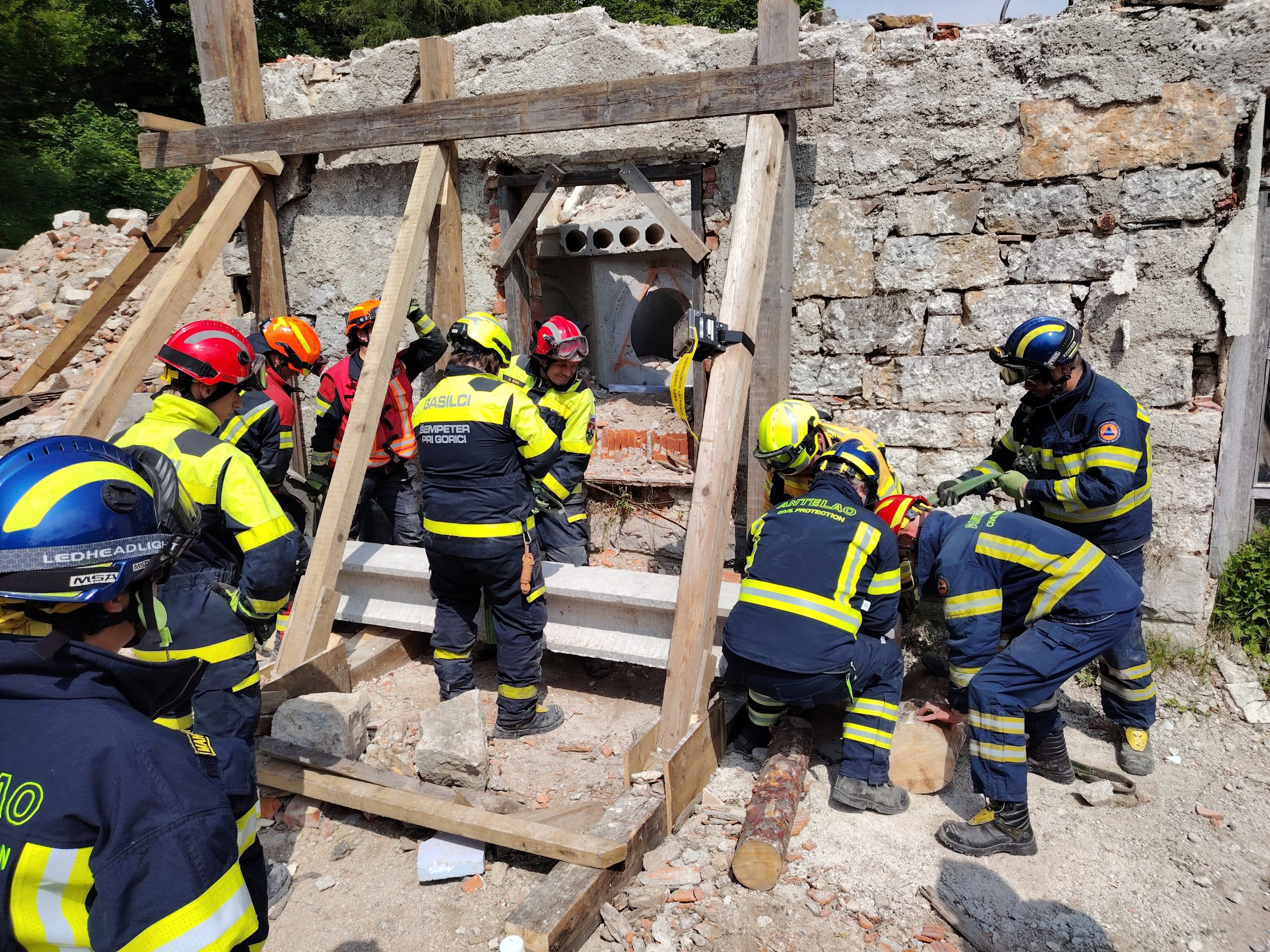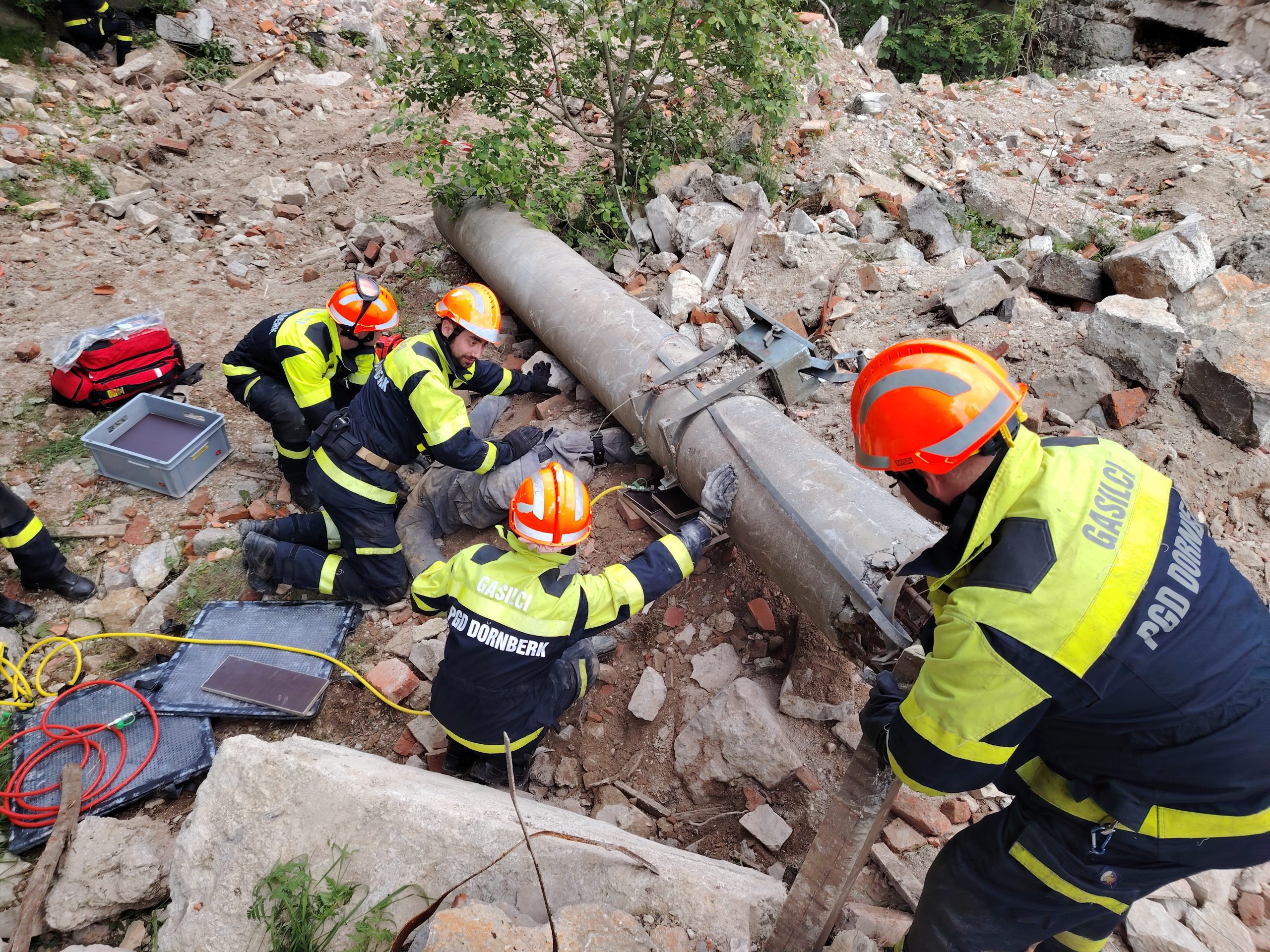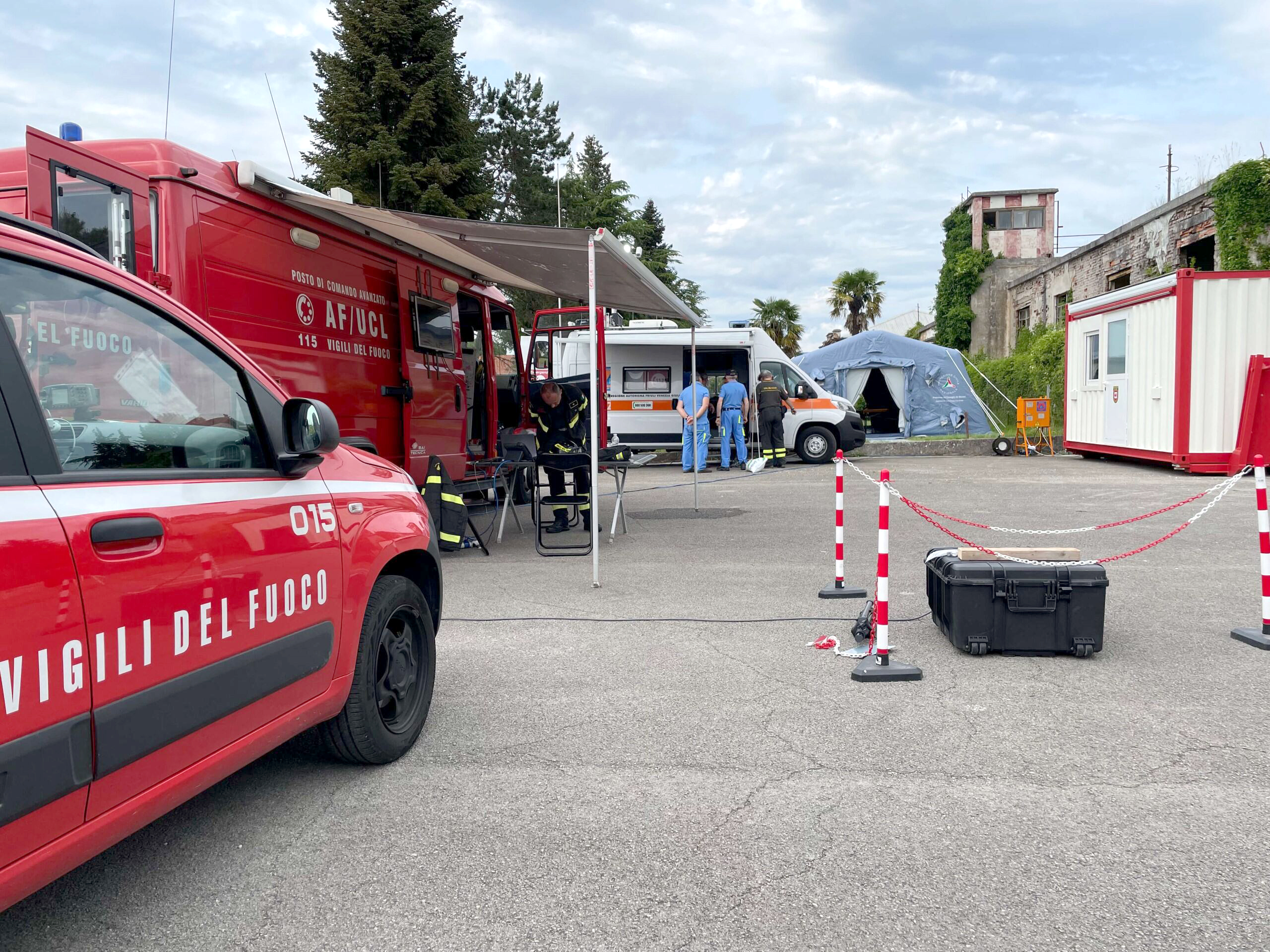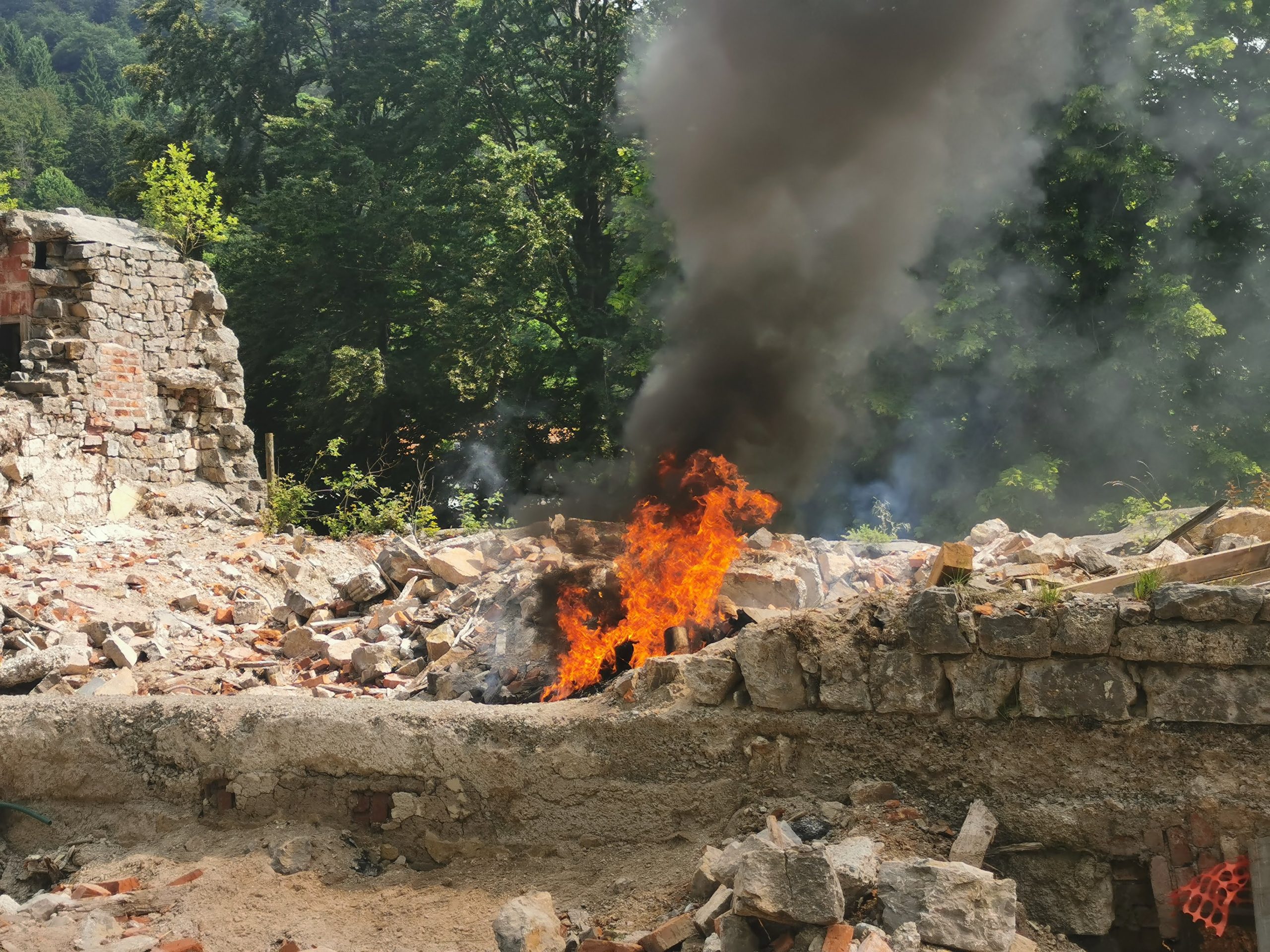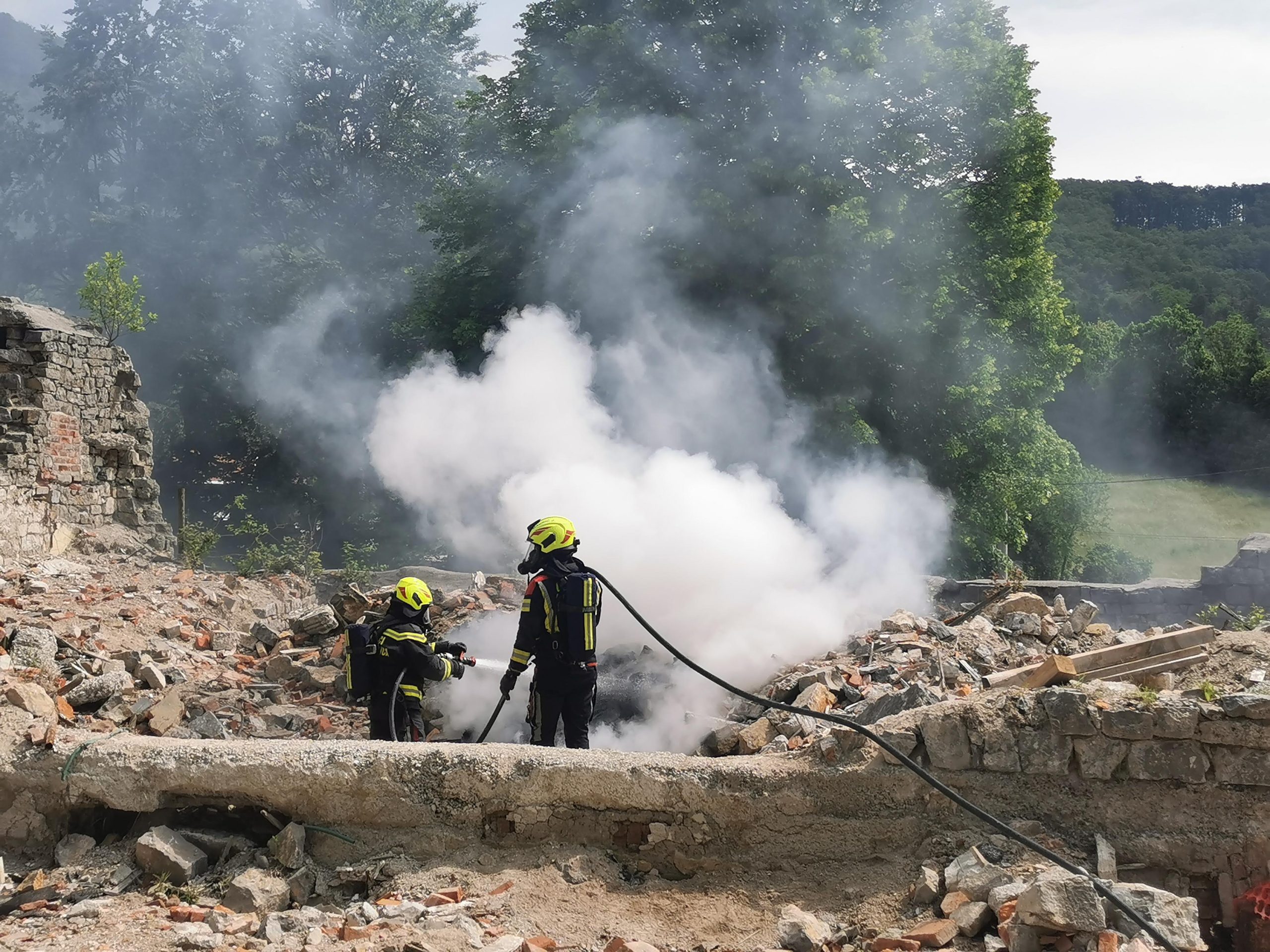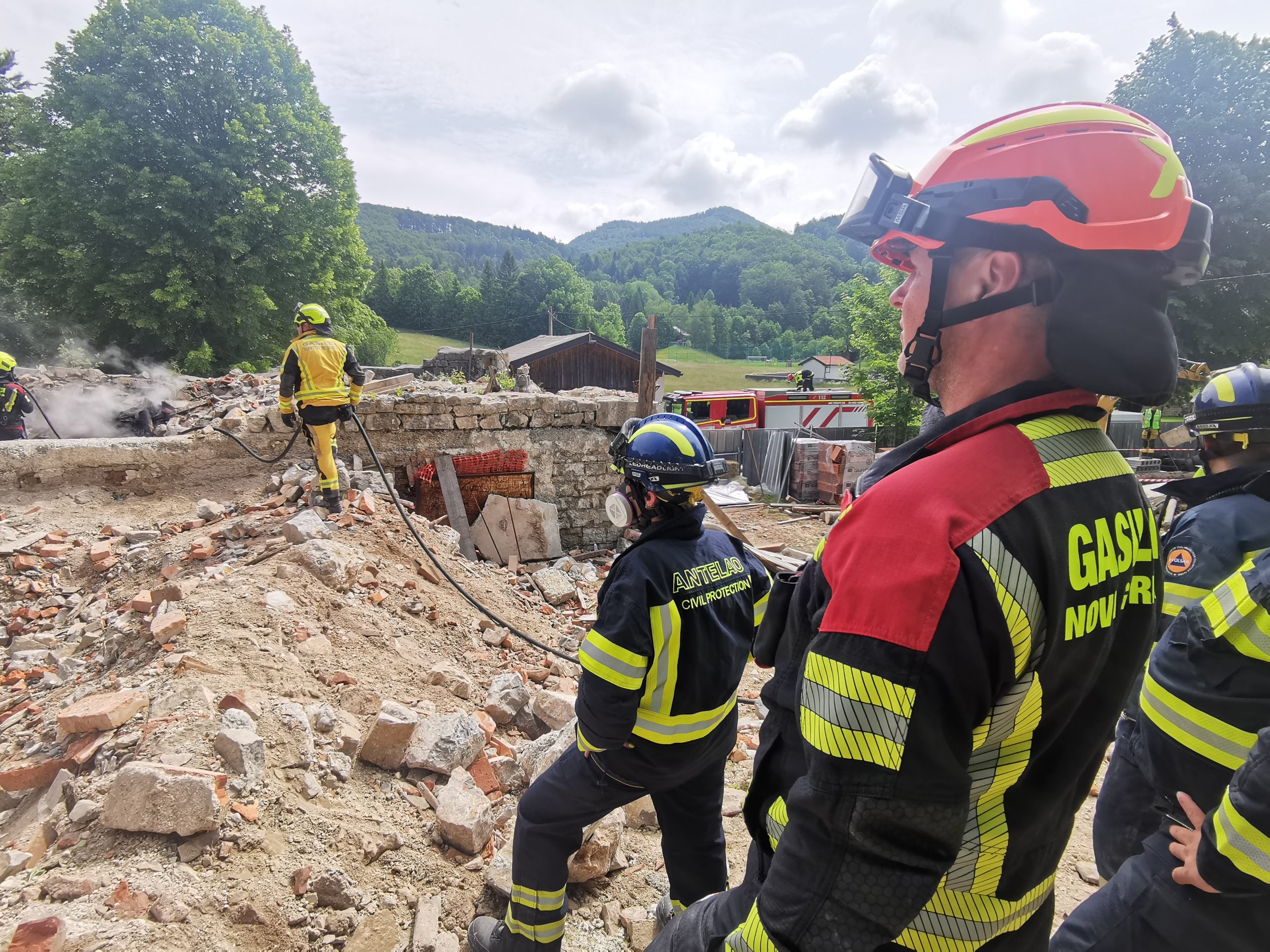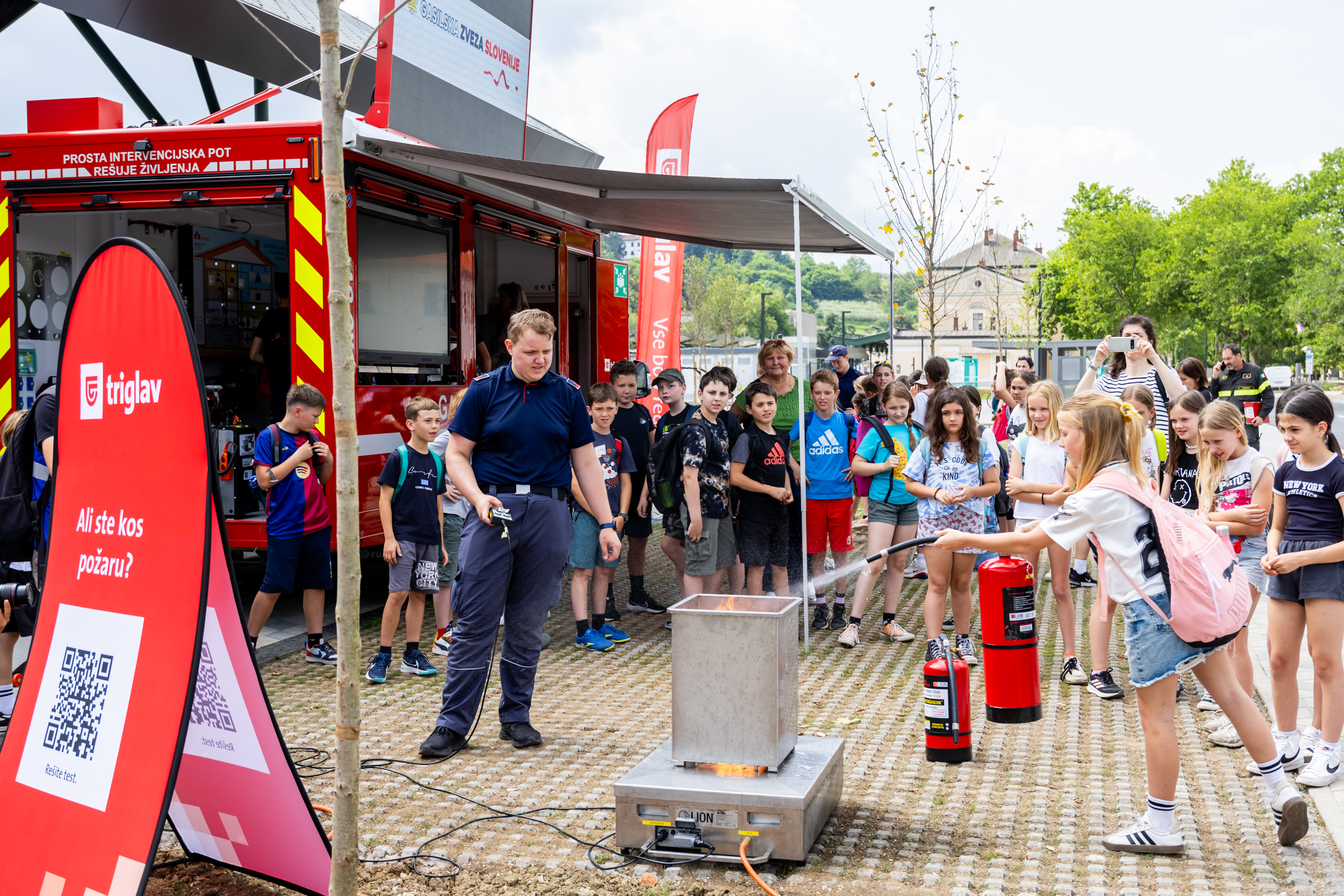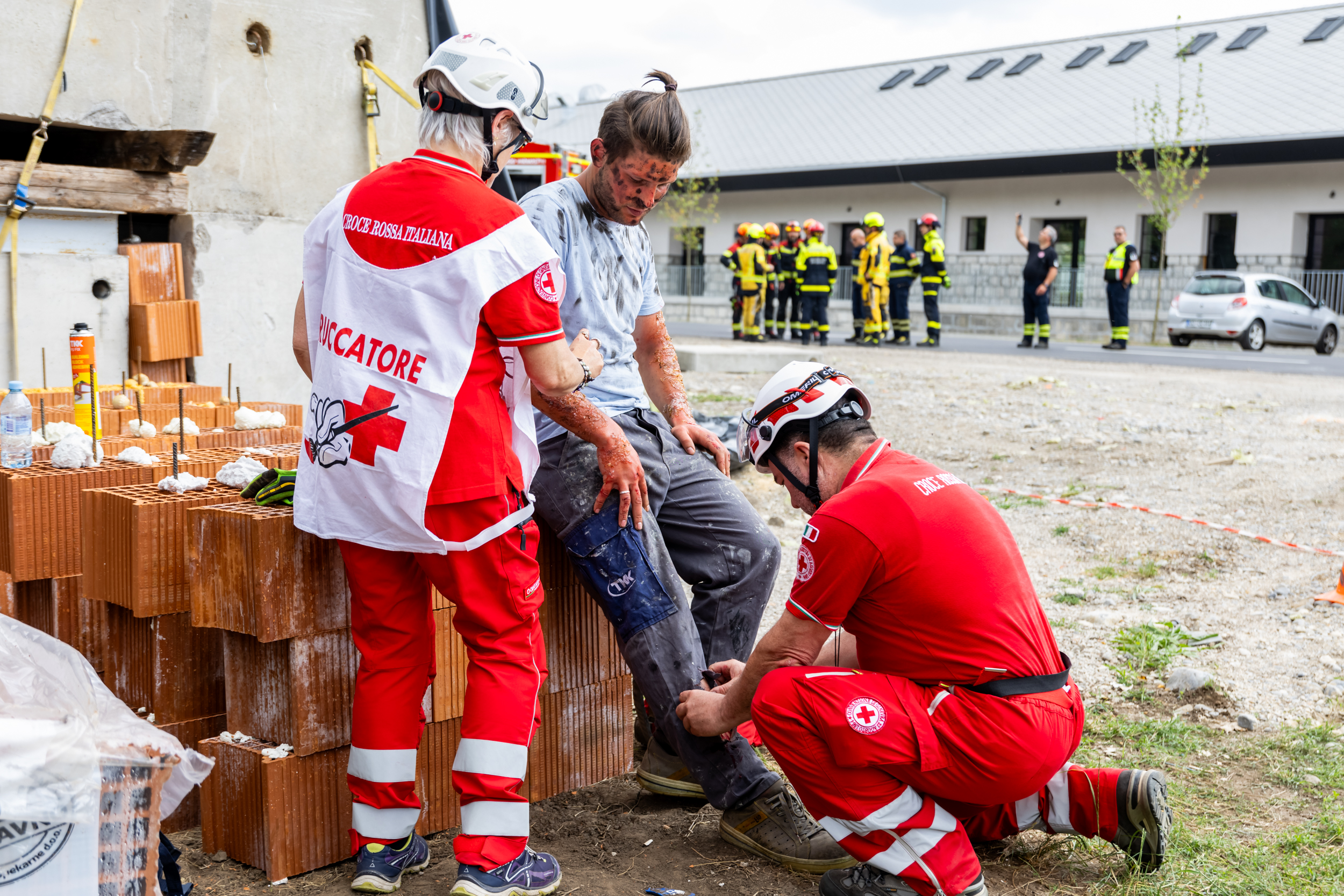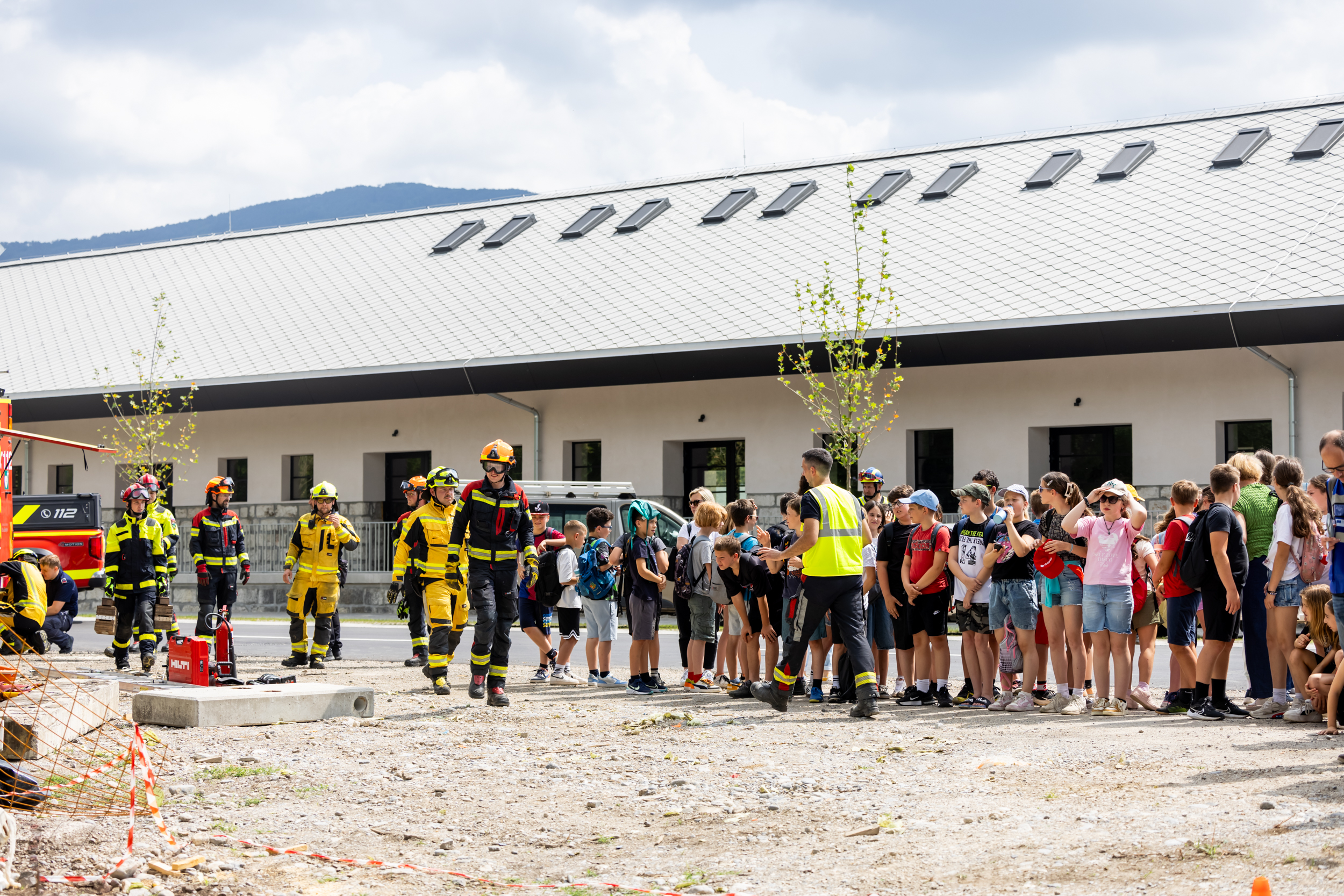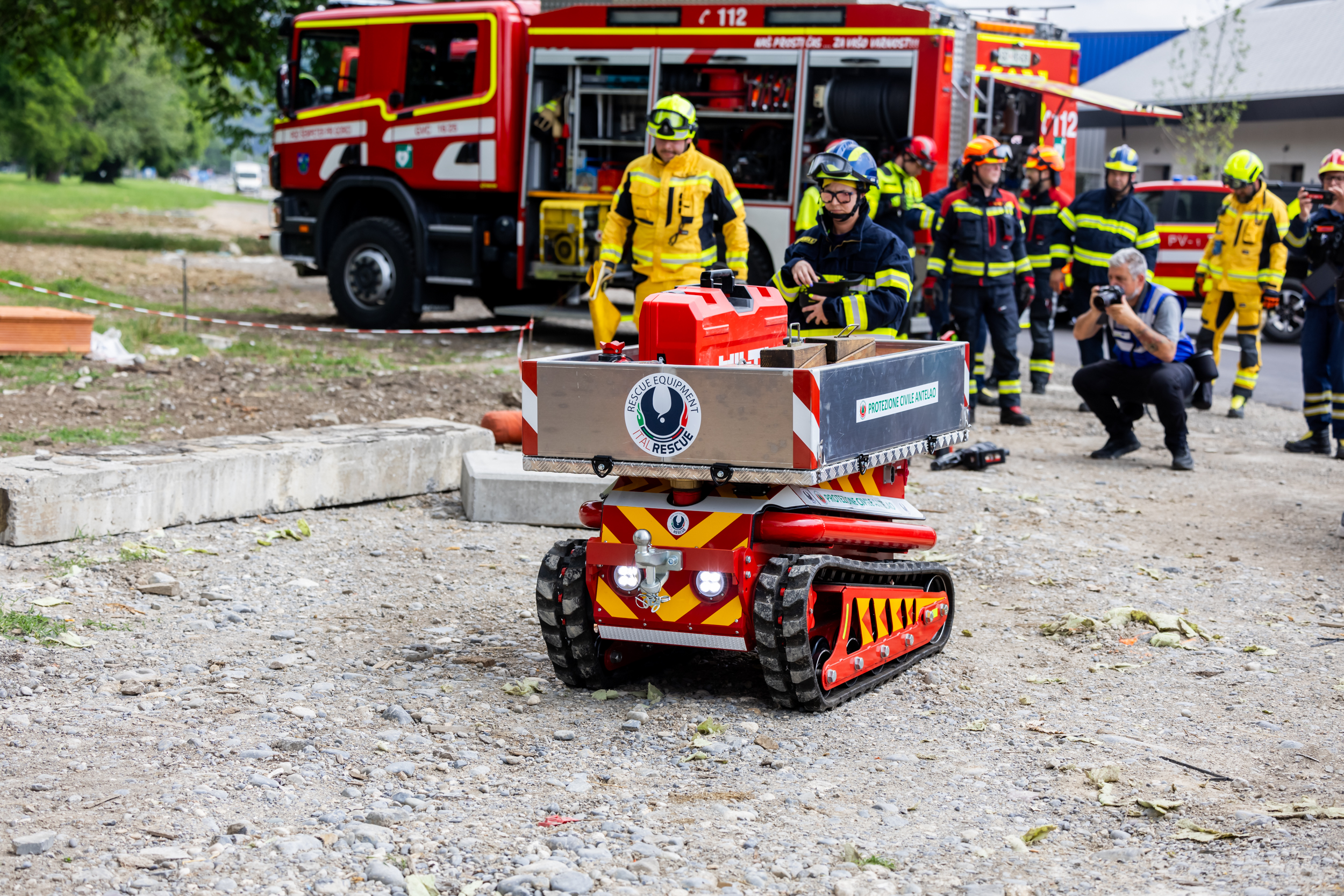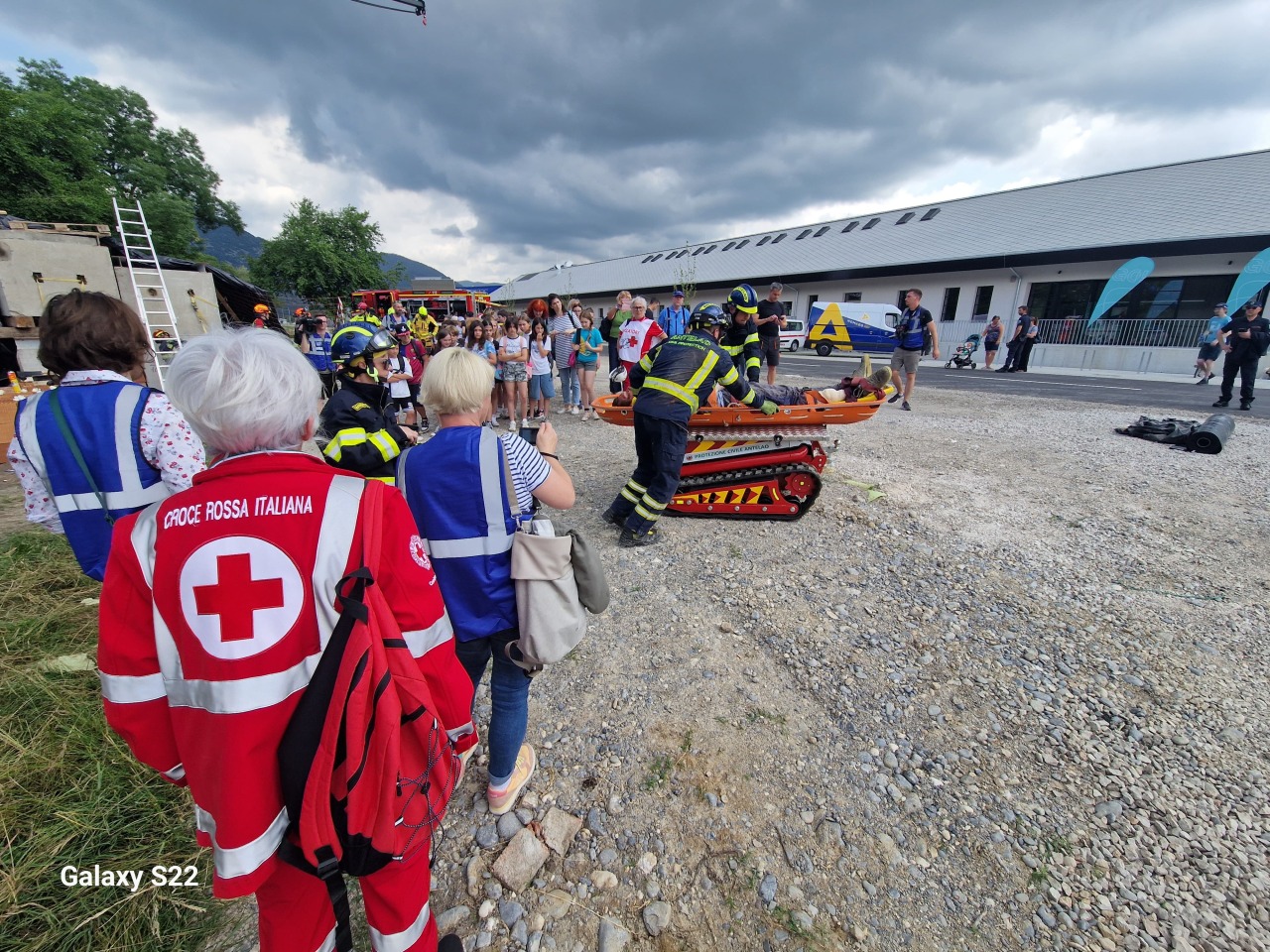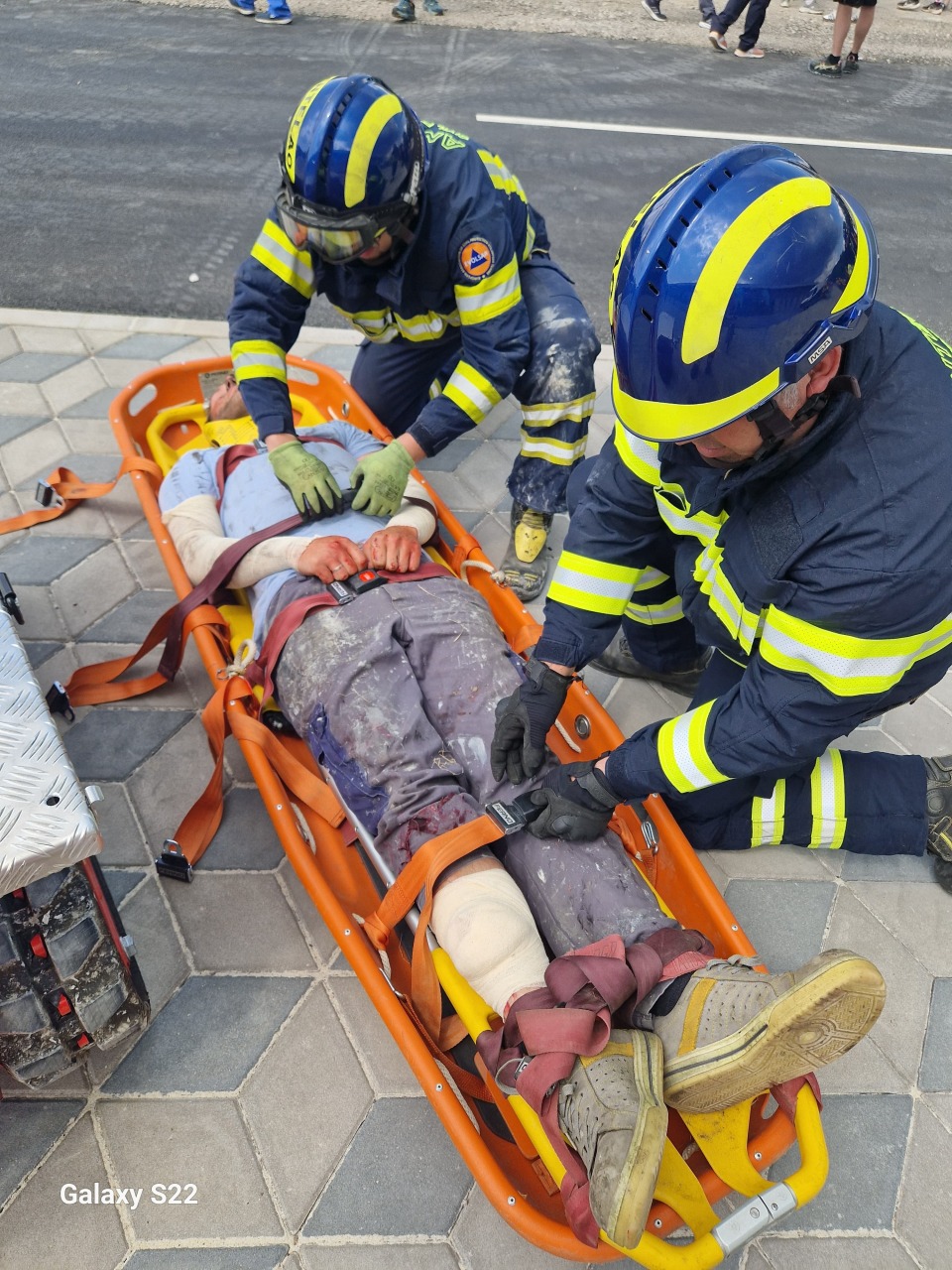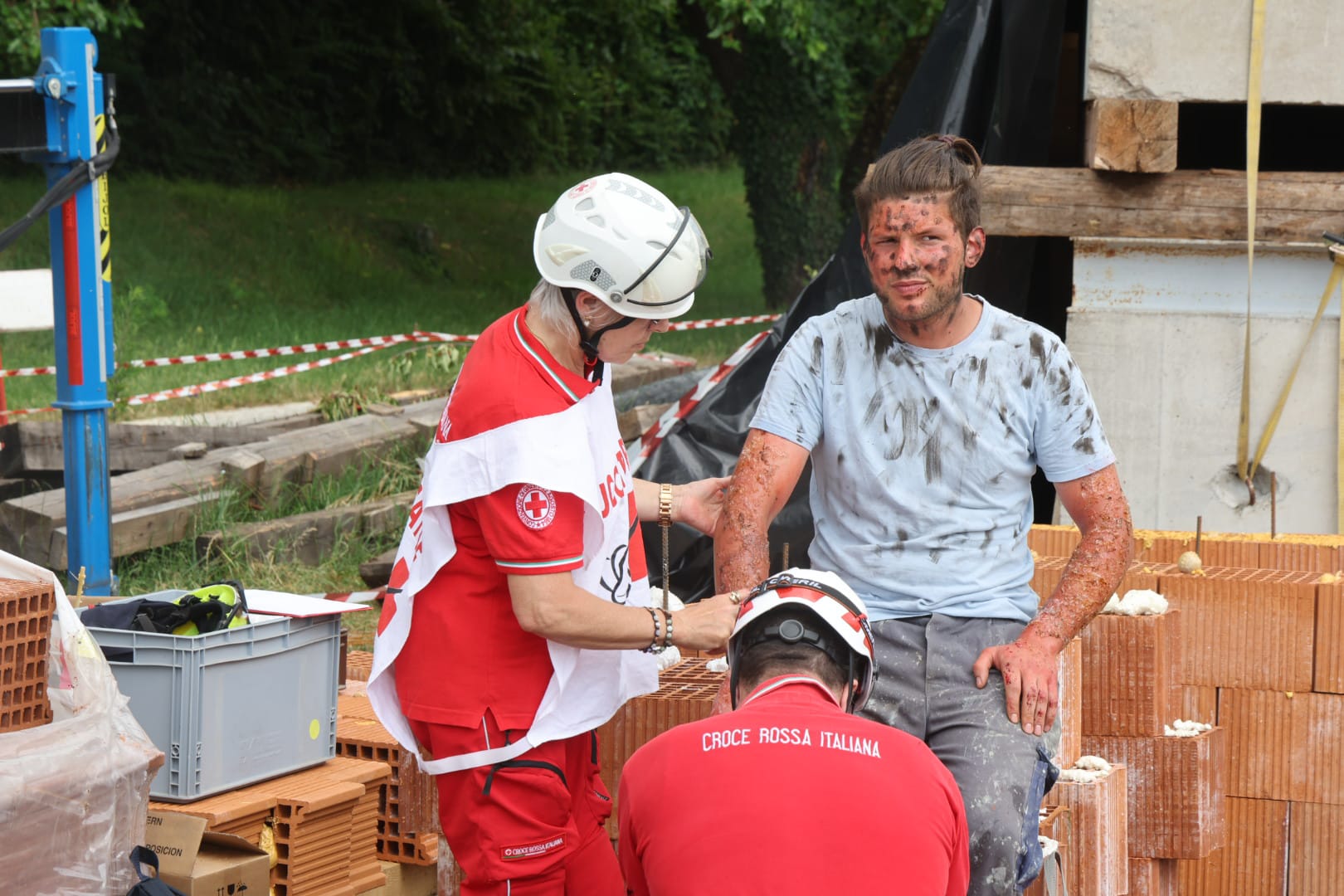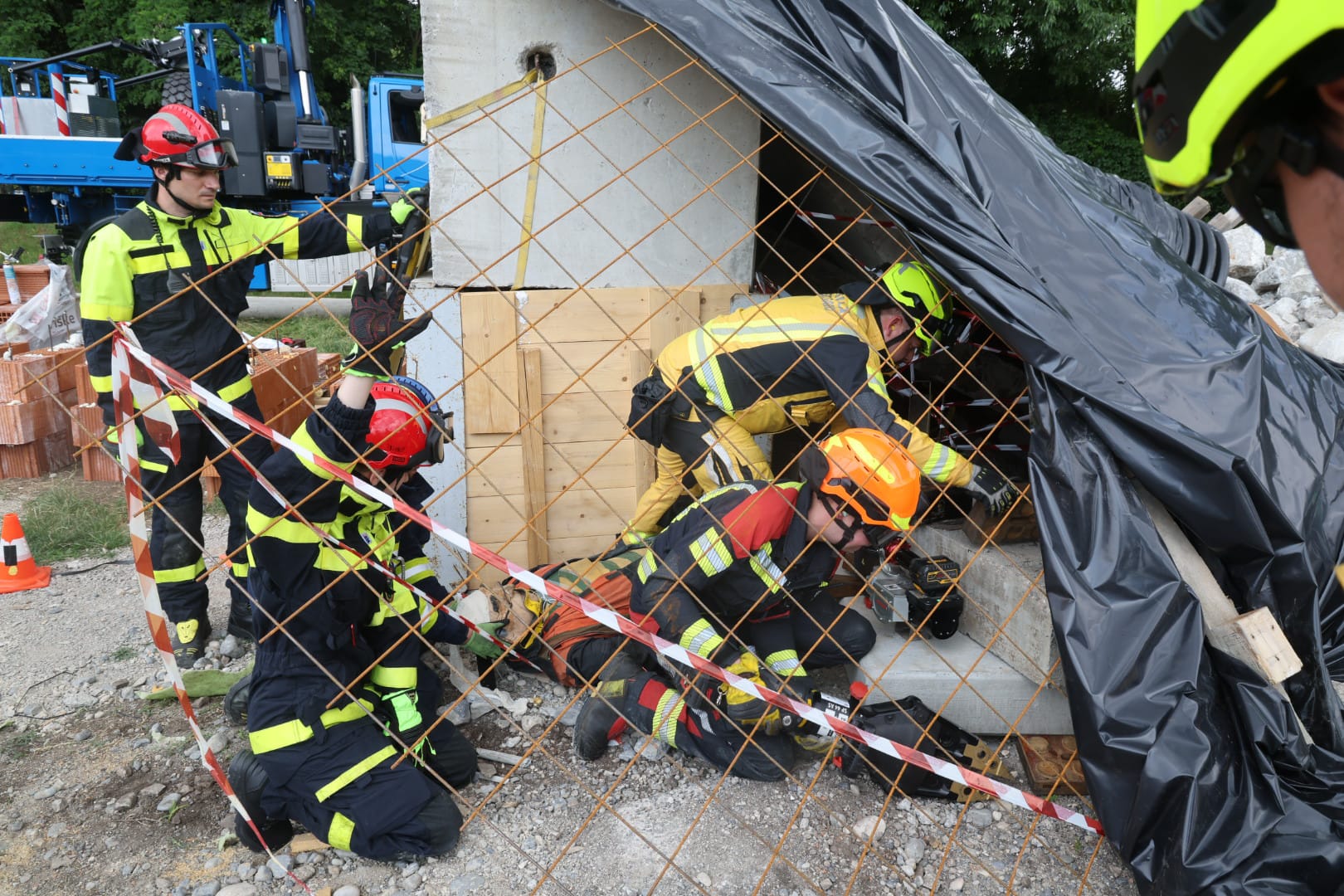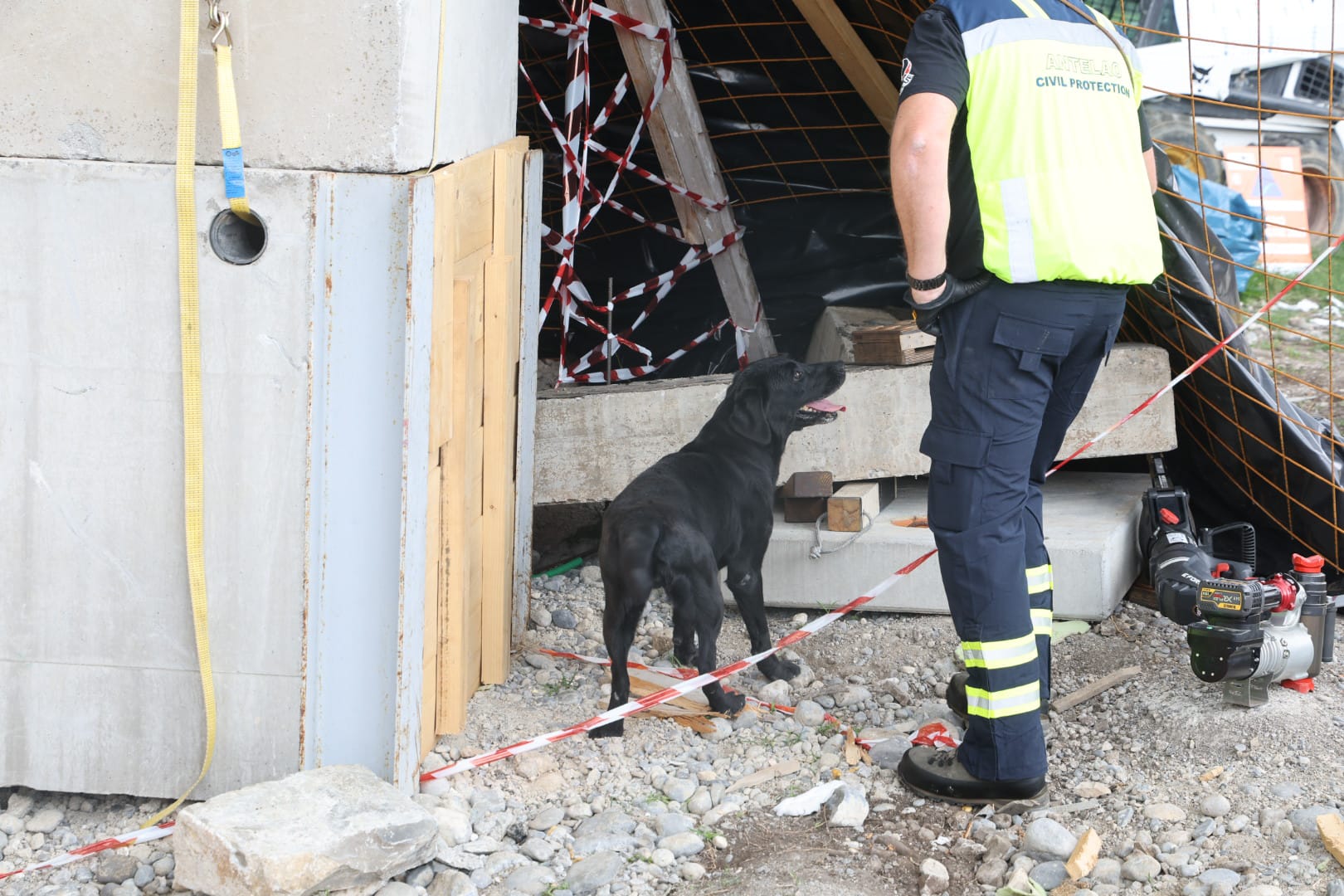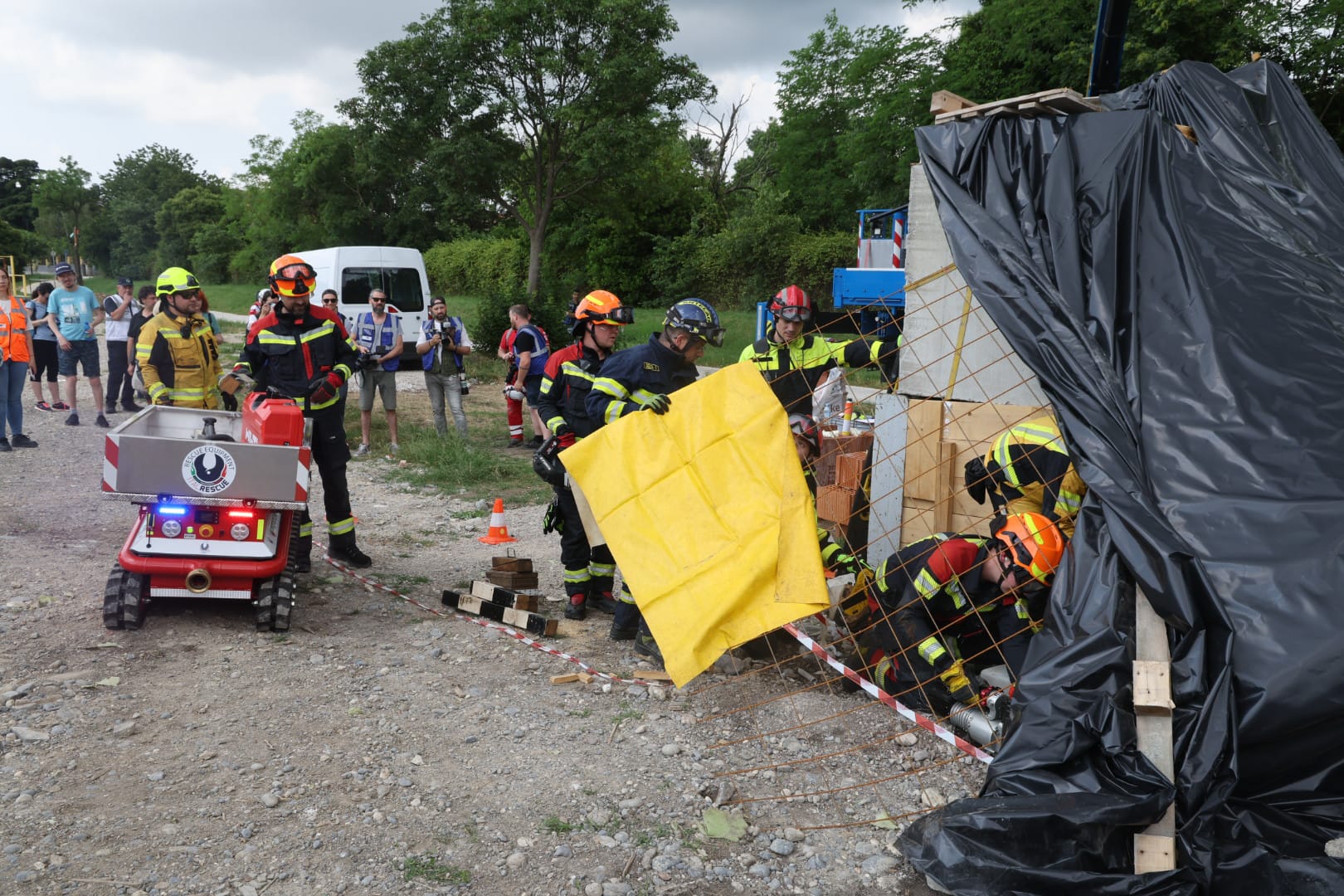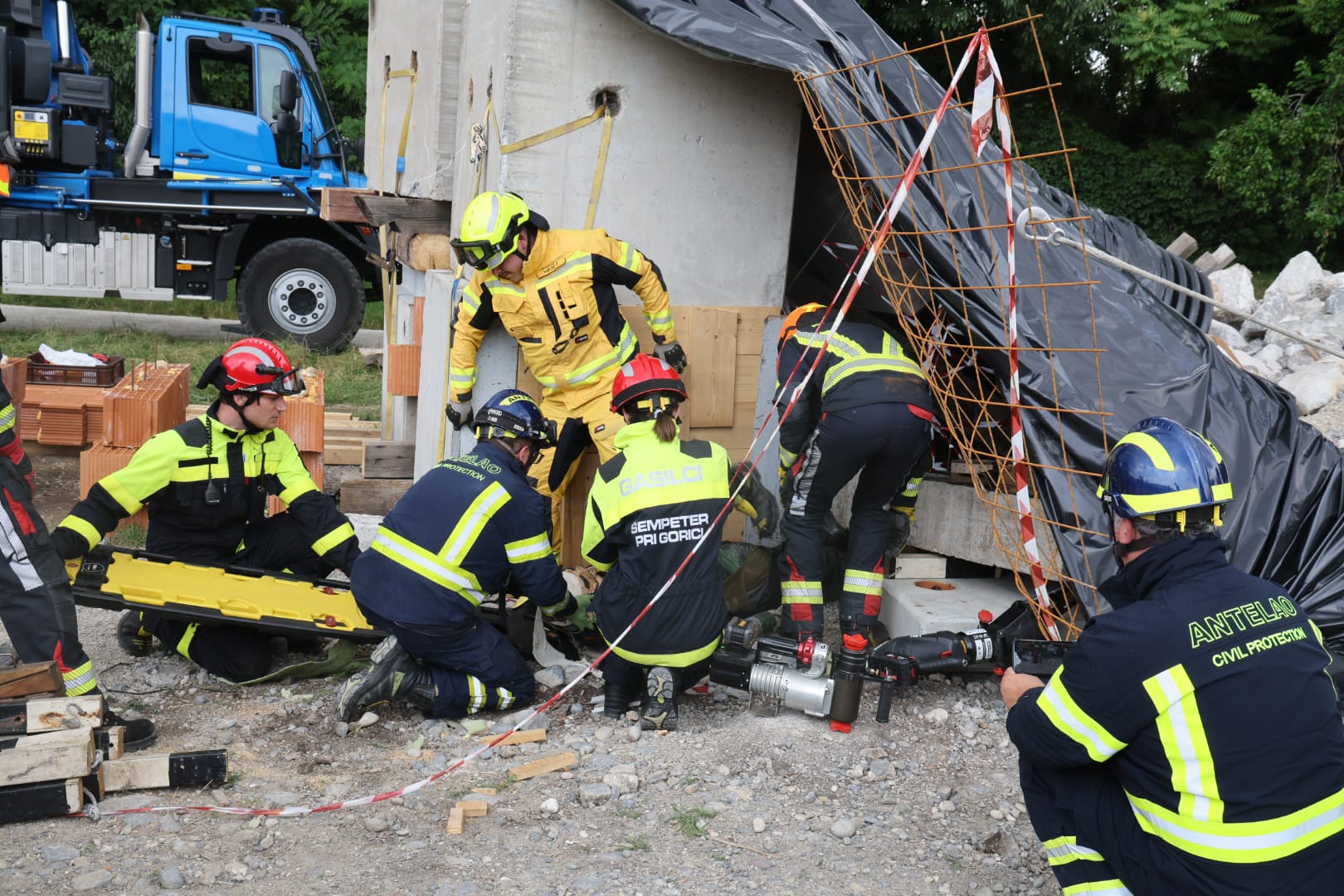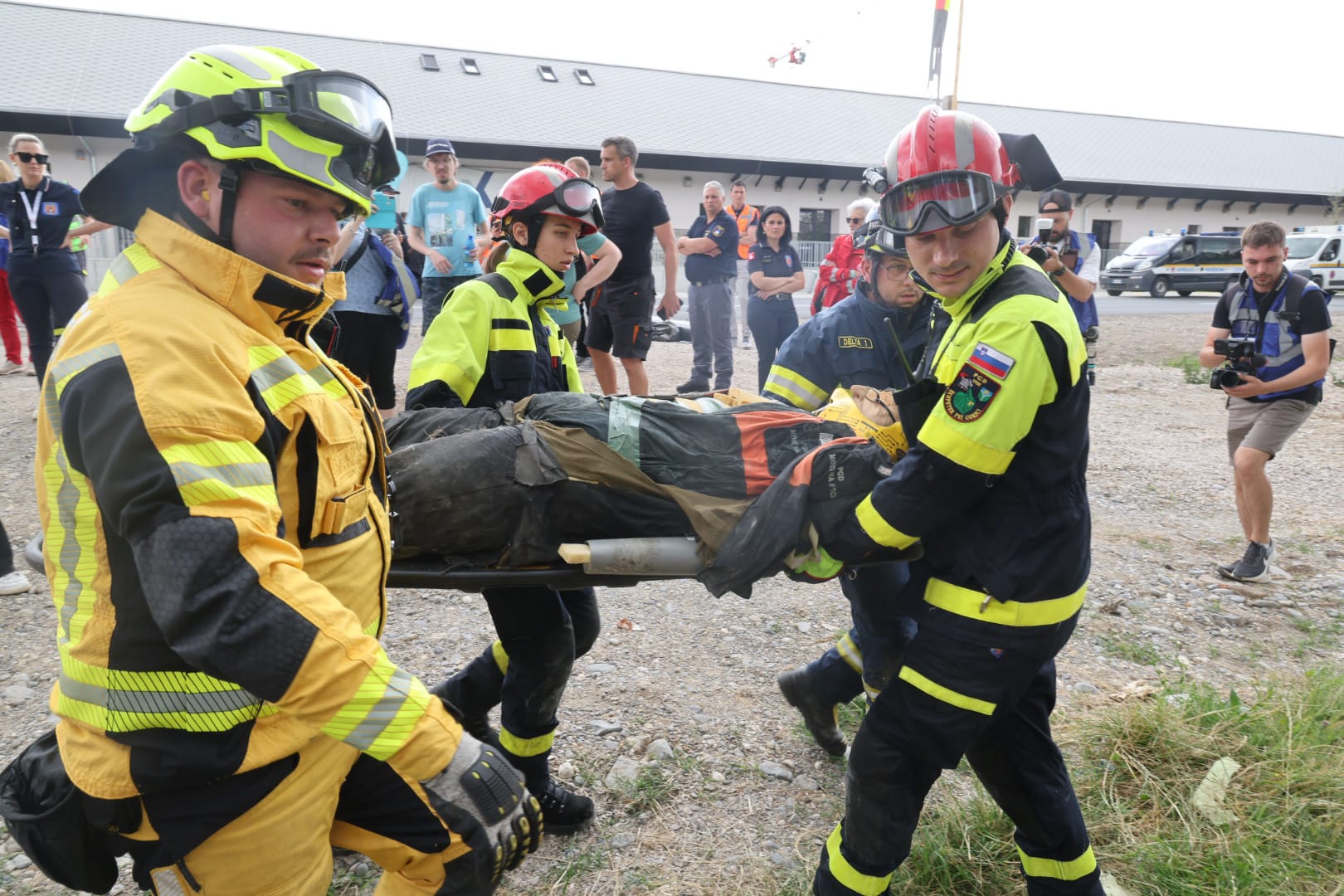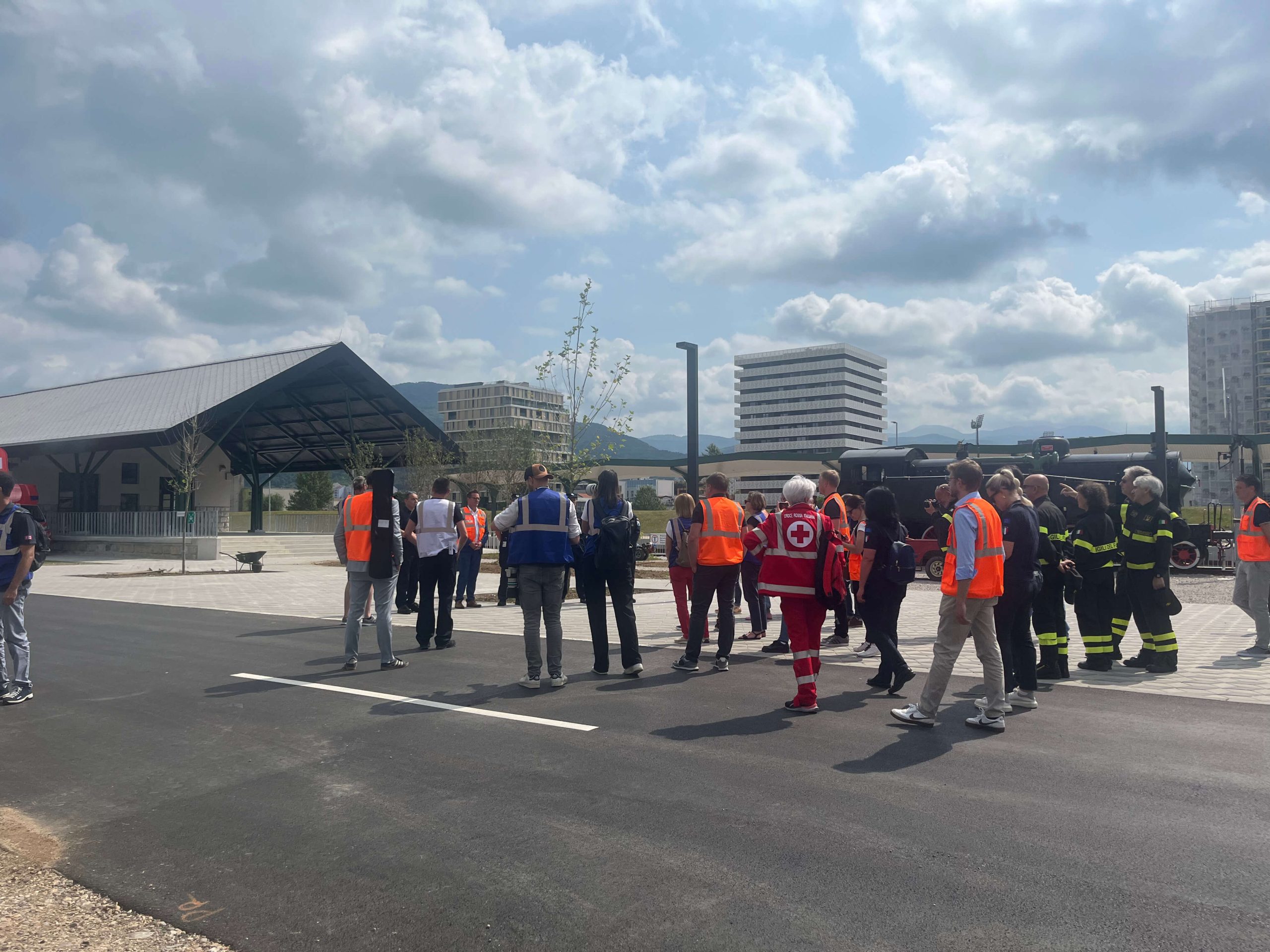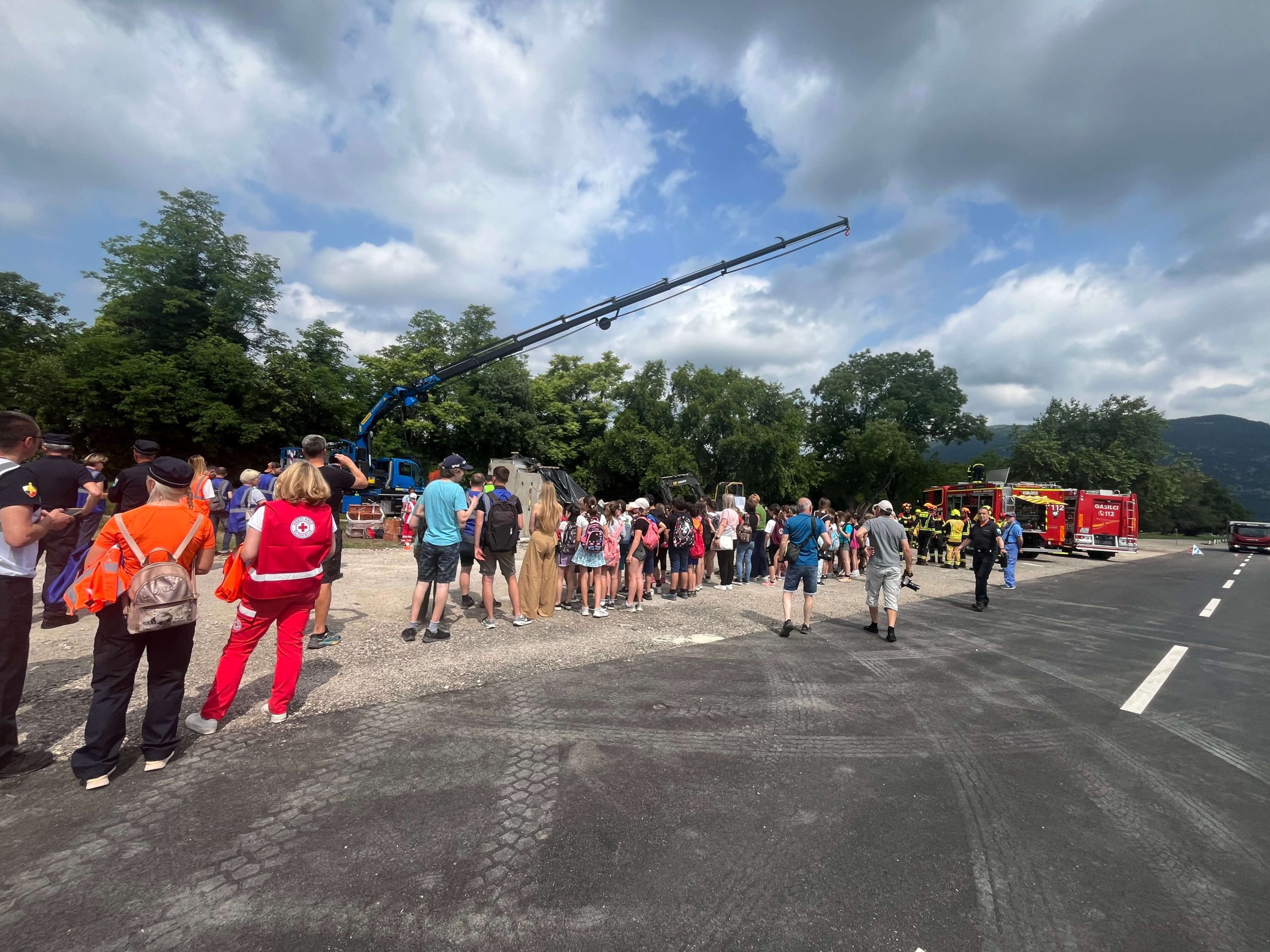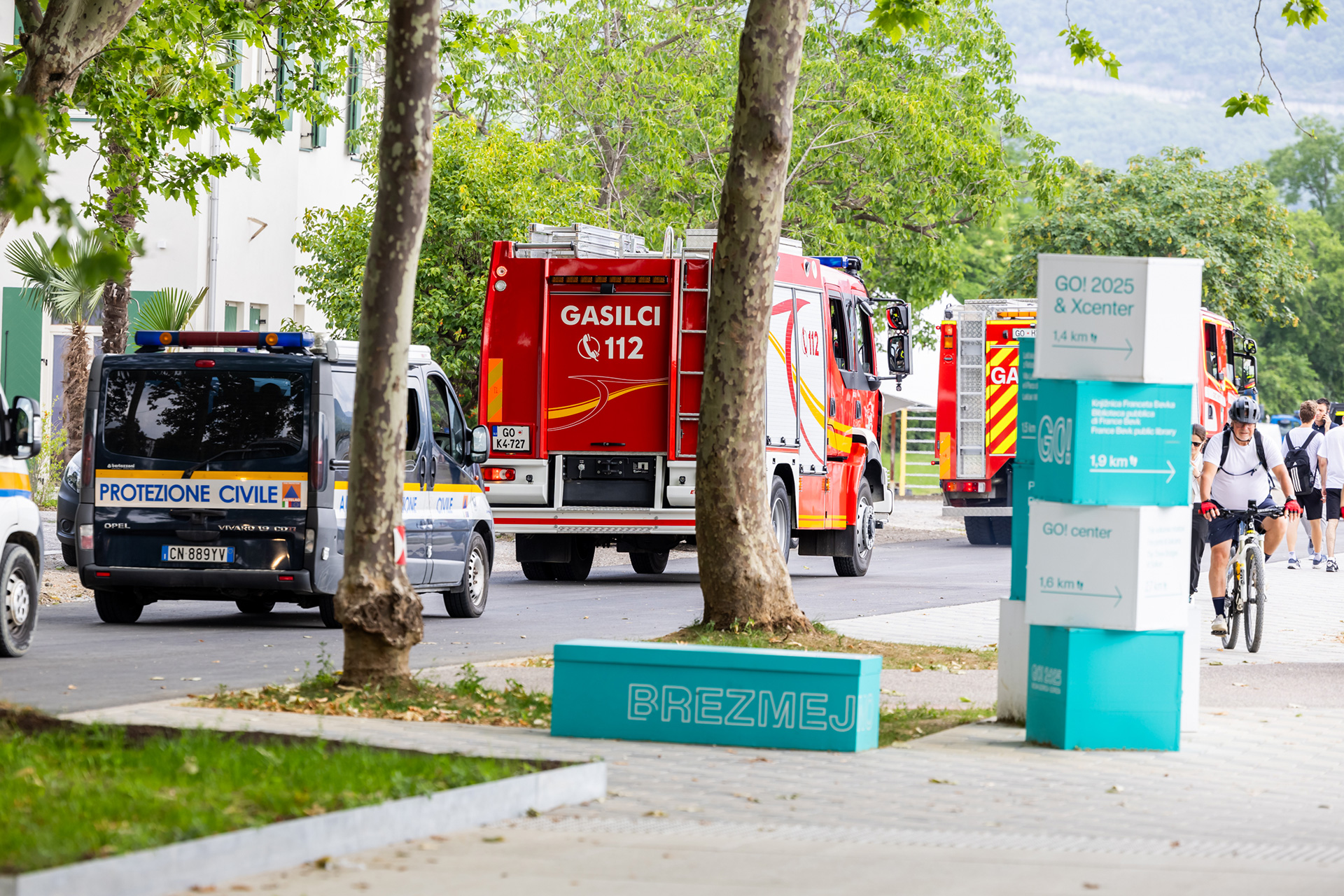
GOin4SAFETY, the largest-ever joint exercise in the cross-border area between Italy and Slovenia, has successfully concluded. From June 5 to 8, 2025, more than 500 operators including firefighters, law enforcement, specialized teams, volunteers and civil defense representatives from Italy, Slovenia, Croatia and Germany faced each other in the field to deal with complex, realistic and multidisciplinary emergency scenarios.
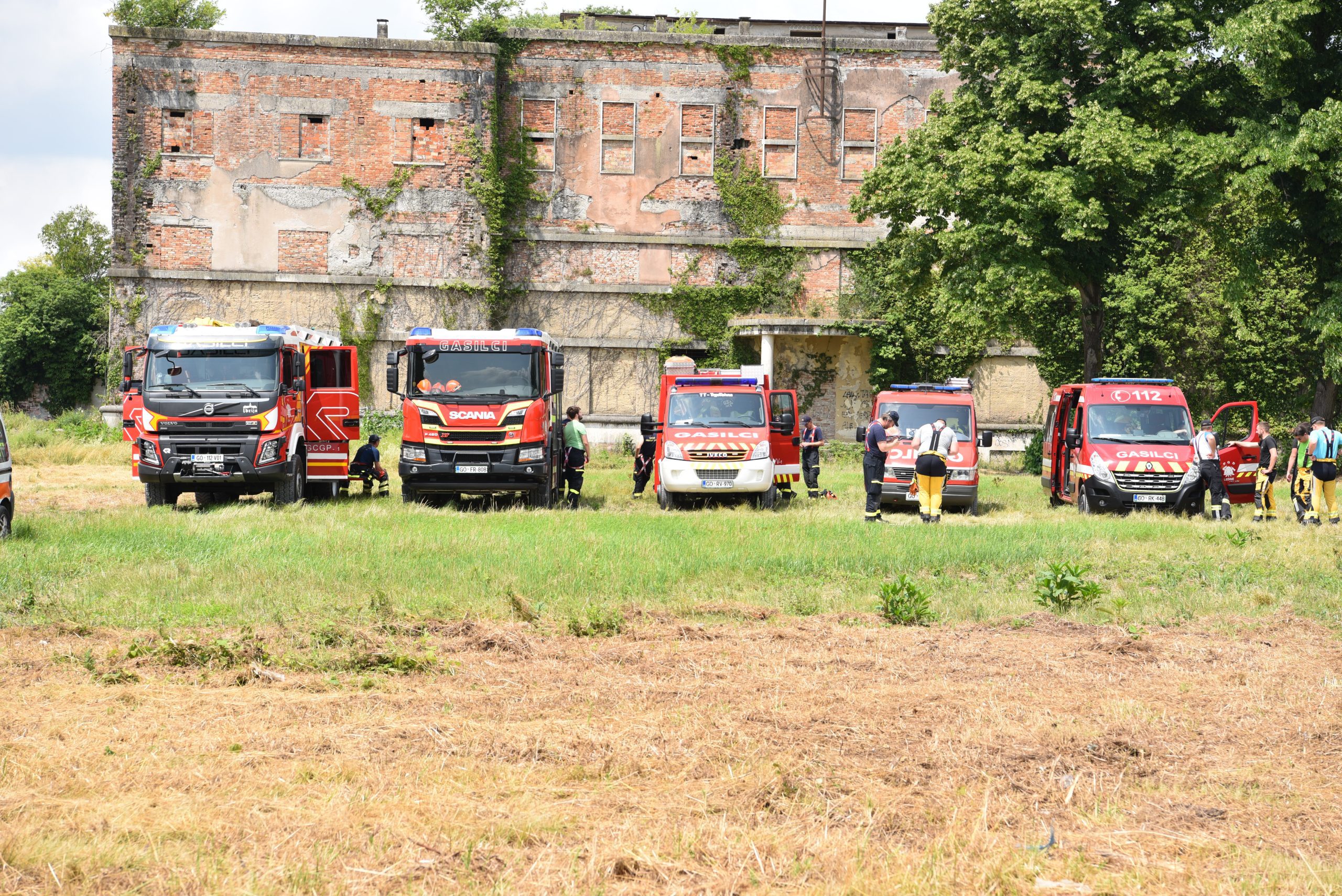
The simulations – carried out on both sides of the border – included building collapses, hazardous substance spills, infrastructure accidents, searches for missing persons, mass evacuations, and forest fires. All of this was done under controlled, but highly likely, operational conditions to field test response capacity and coordination between different institutions and territories.
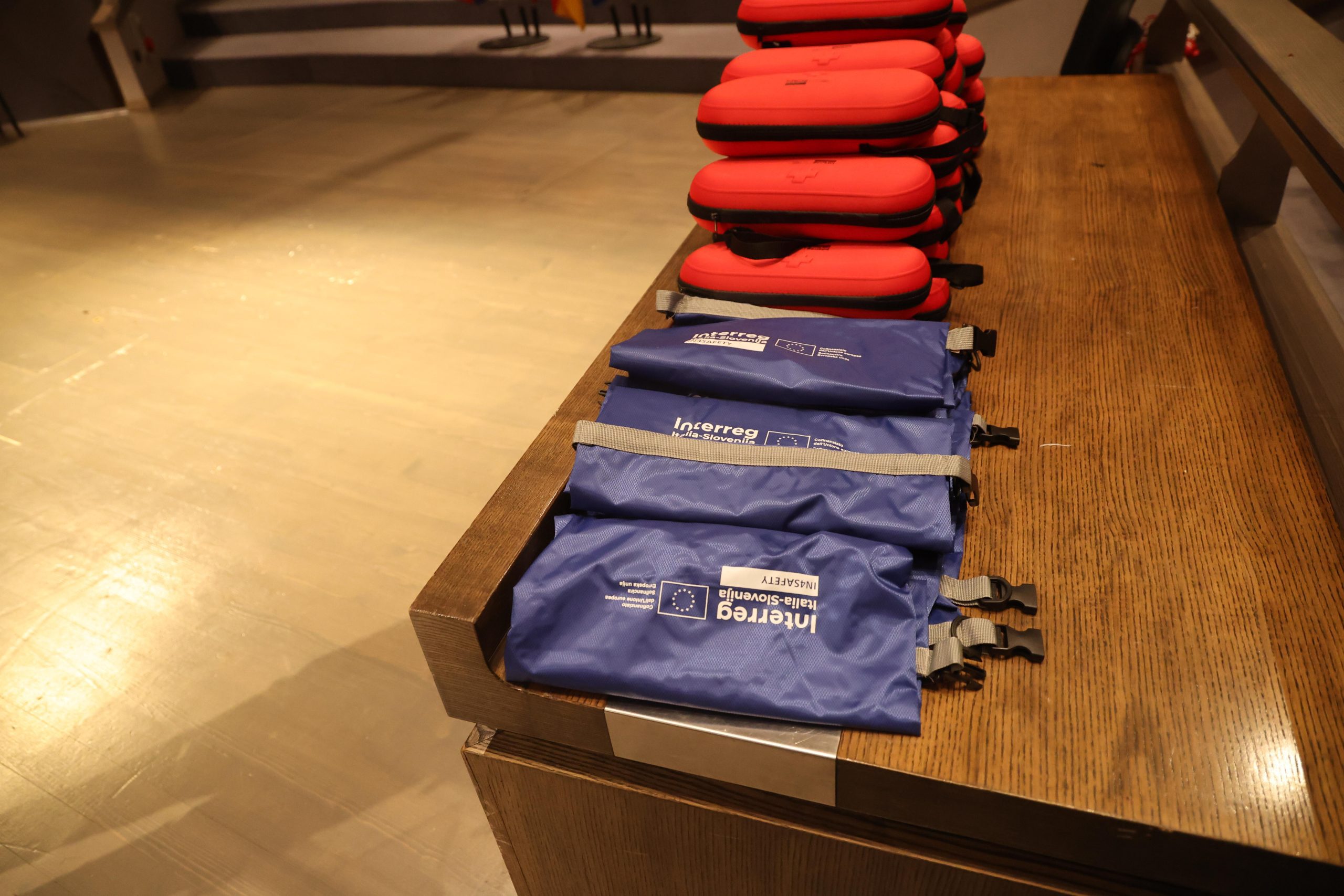
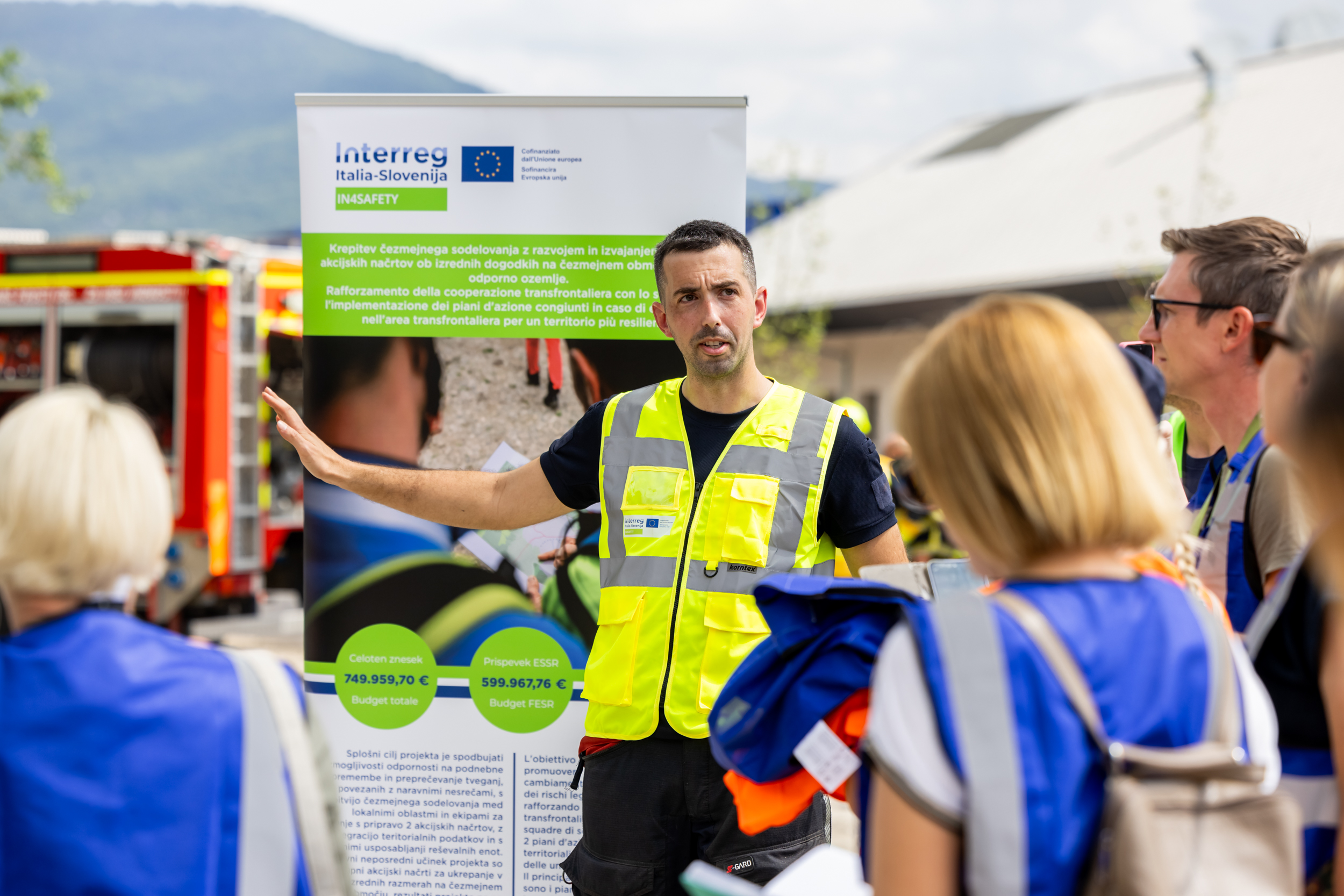
GOin4SAFETY was created as part of IN4SAFETY, a European project funded by the Interreg Italy-Slovenia Program, which aims to strengthen climate resilience and joint emergency management between neighboring countries. It included months of preparation, training seminars, command simulations and, finally, the field exercise, actively involving the municipalities of Gorizia, Nova Gorica, Šempeter-Vrtojba, as well as international teams from Chemnitz, Rijeka and other European cities.
GOin4SAFETY represents a concrete example of local European cooperation based on prevention, training and safety. A project that unites people, skills and territories, across borders, to build a common response to the challenges posed by climate change and natural disasters.
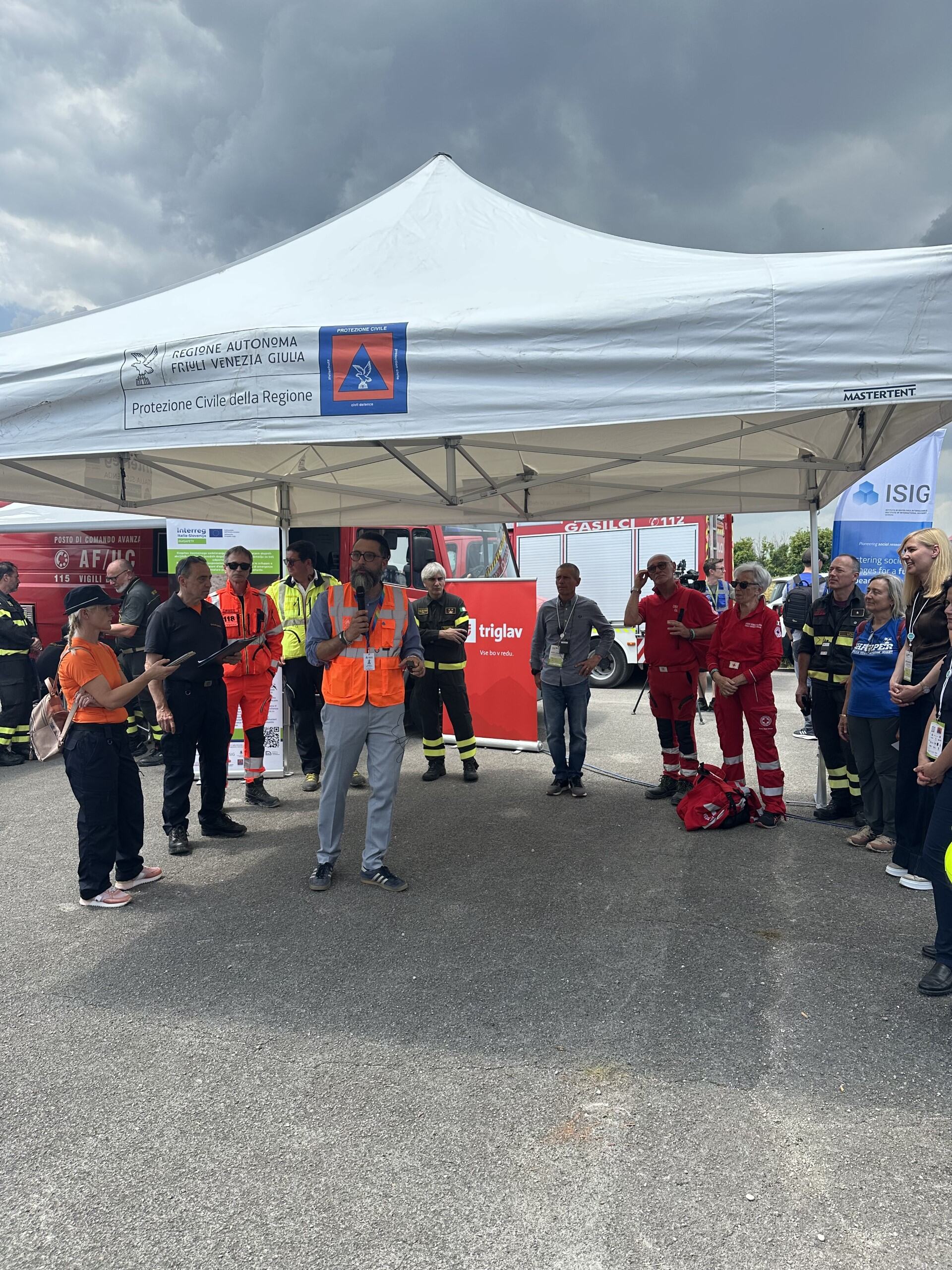
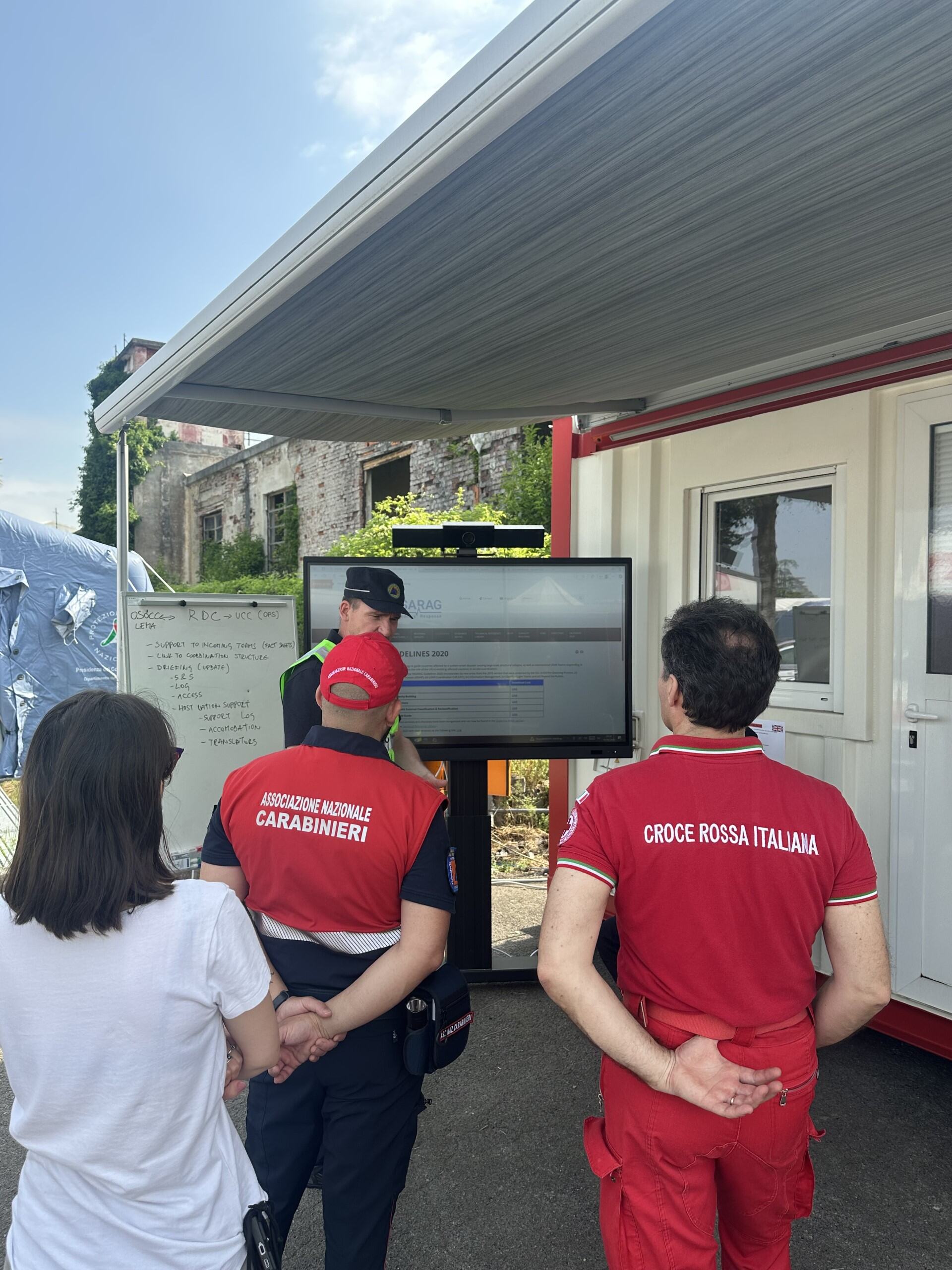
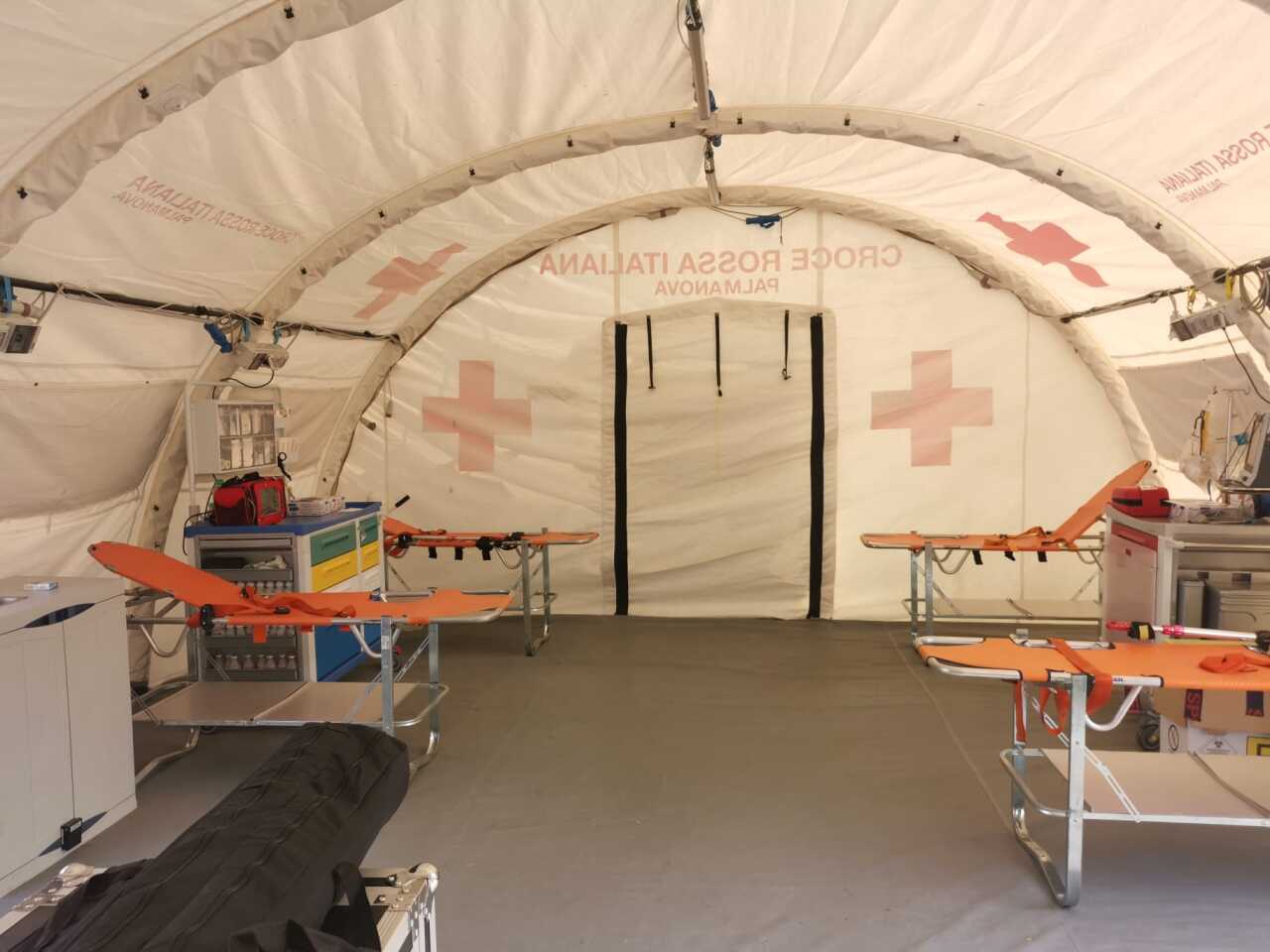
The GOin4SAFETY exercise saw the joint participation of a large network of operational actors from Italy and Slovenia, engaged in unprecedented cross-border cooperation. At the forefront were civil defense forces, fire brigades, law enforcement, dog units, volunteers, specialized technicians, and numerous other actors, including amateur radio operators, municipal police, and logistical partners. In total, about seventy teams and organizations were involved, including the Municipal Operations Center (COC), Red Cross, Urban Search and Rescue (USAR) teams, volunteer associations, and technical partners, working together to deal with complex and extremely realistic scenarios. The use of drones for reconnaissance and damage assessment complemented the field work, contributing to effective emergency management. The combination of forces in the field demonstrated how preparedness, coordination, and cooperation are essential for effective response in critical situations, in a context where operational solidarity crosses all boundaries.
Working Sites in Italy
THURSDAY, JUNE 5
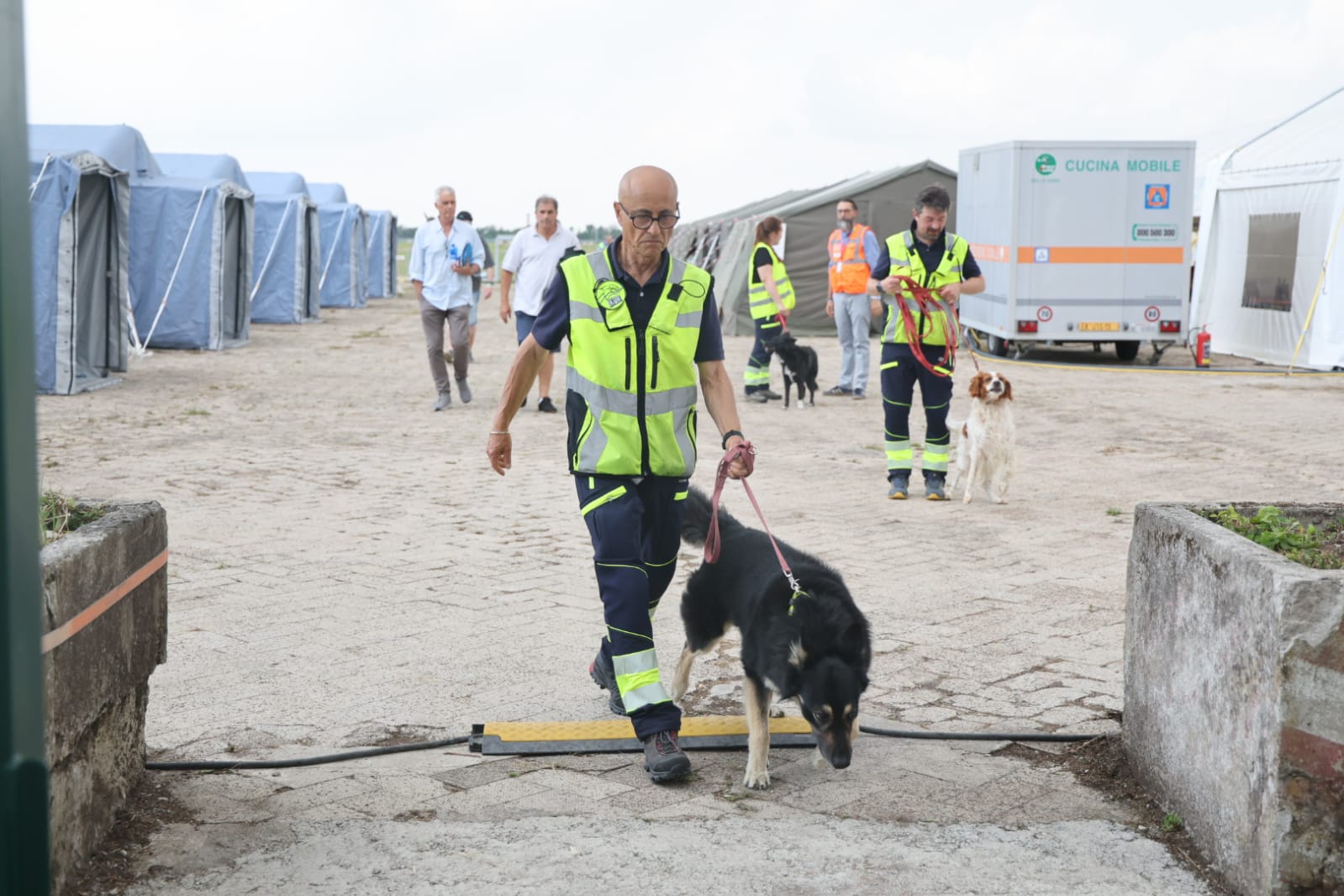
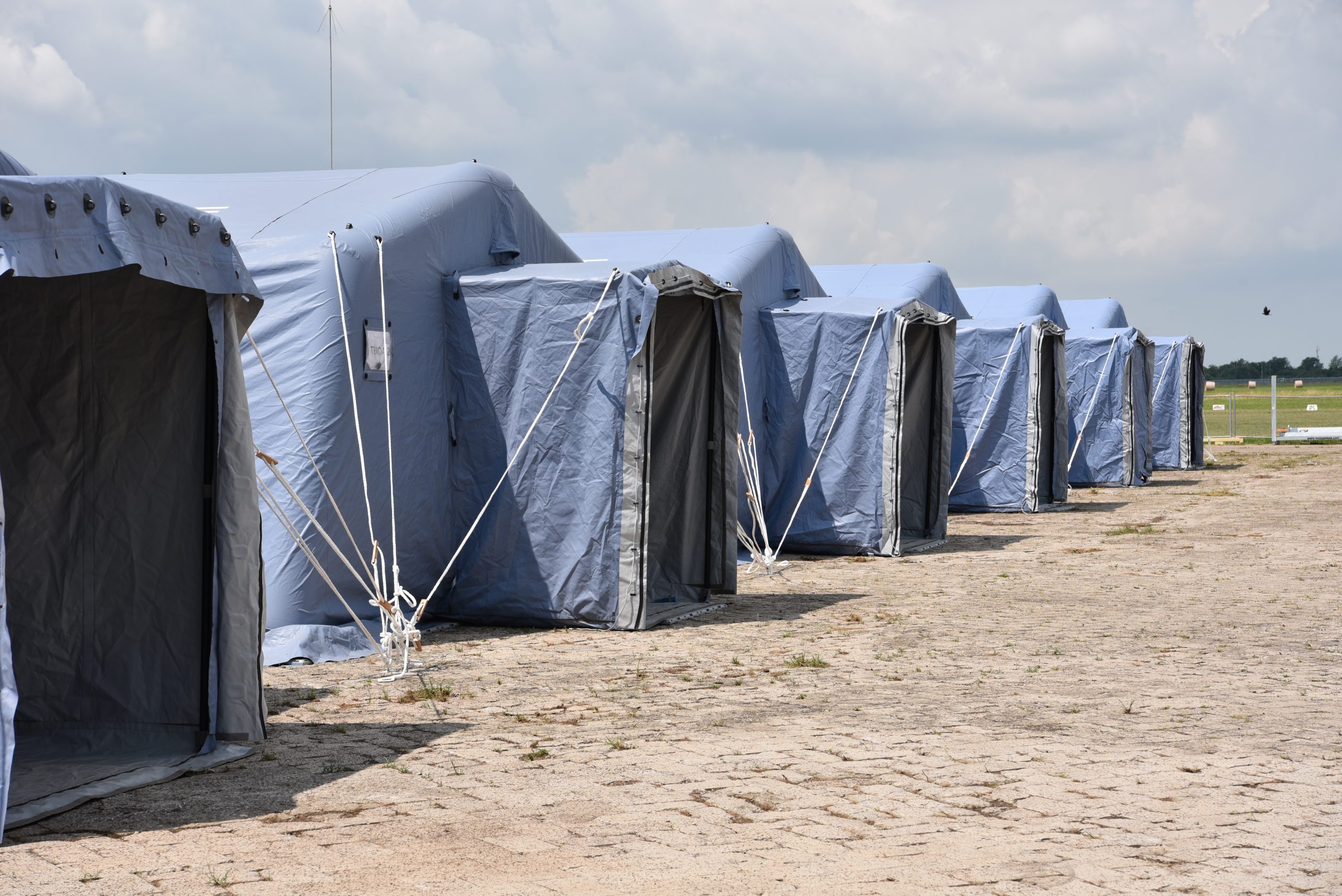
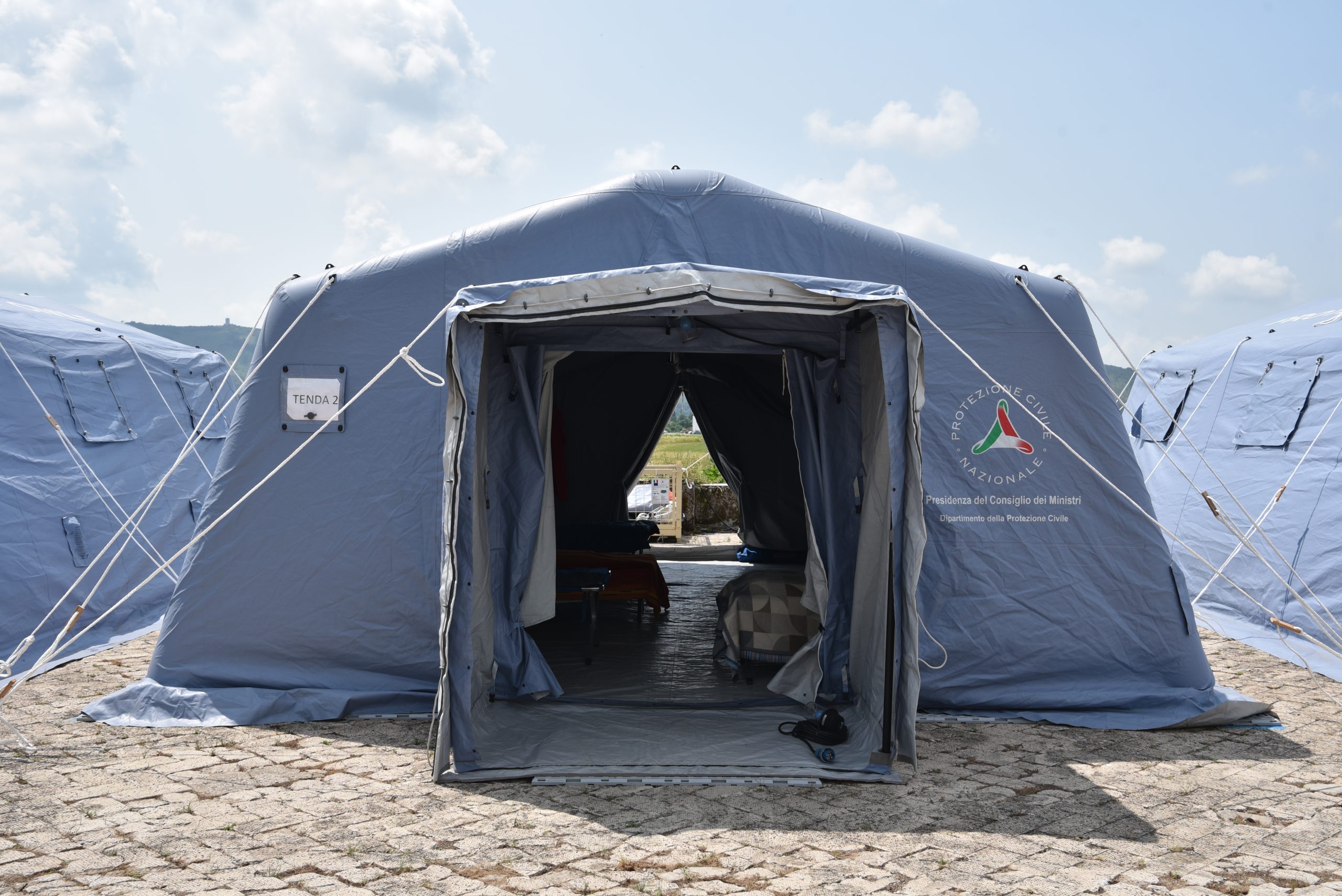
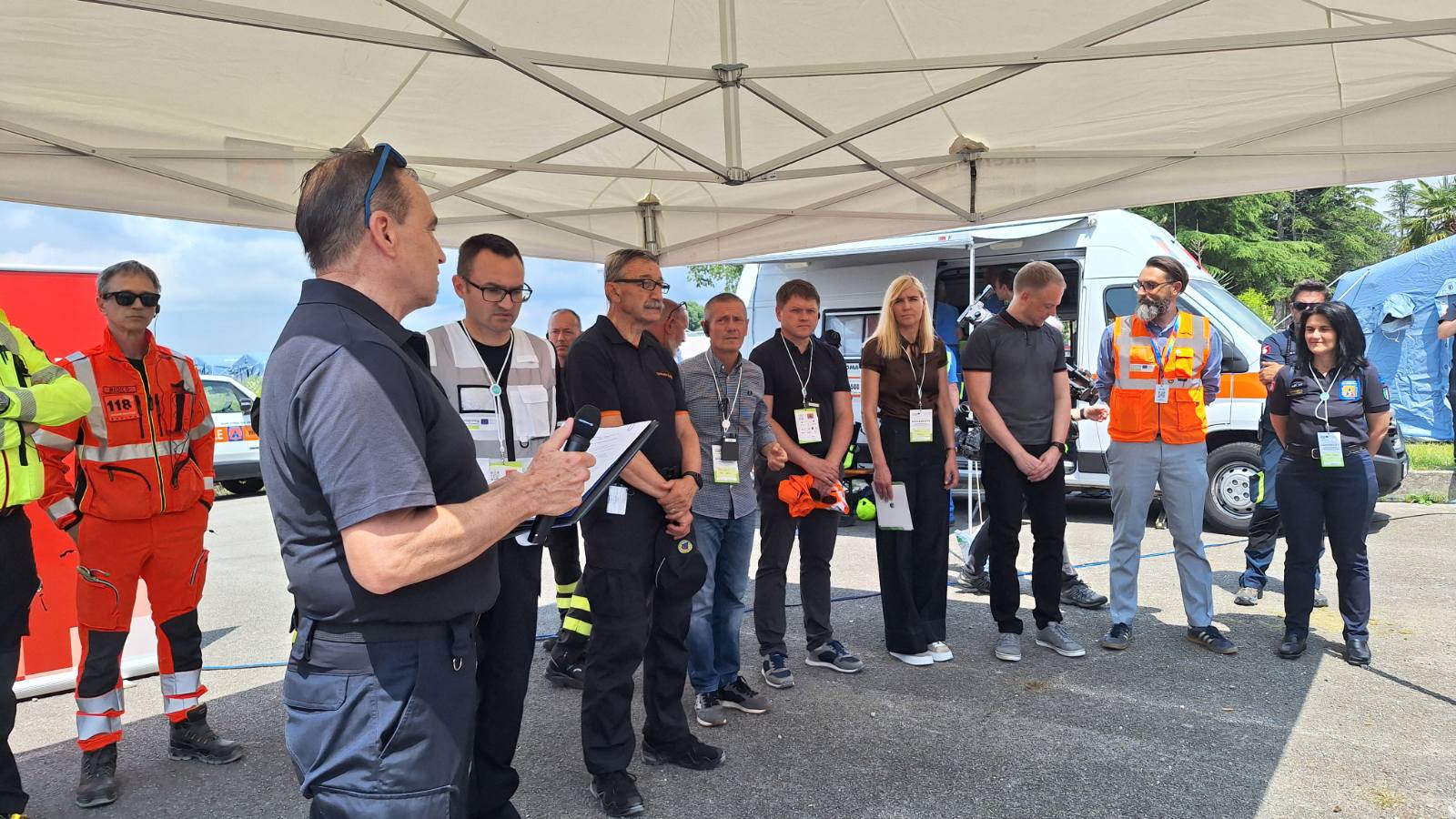
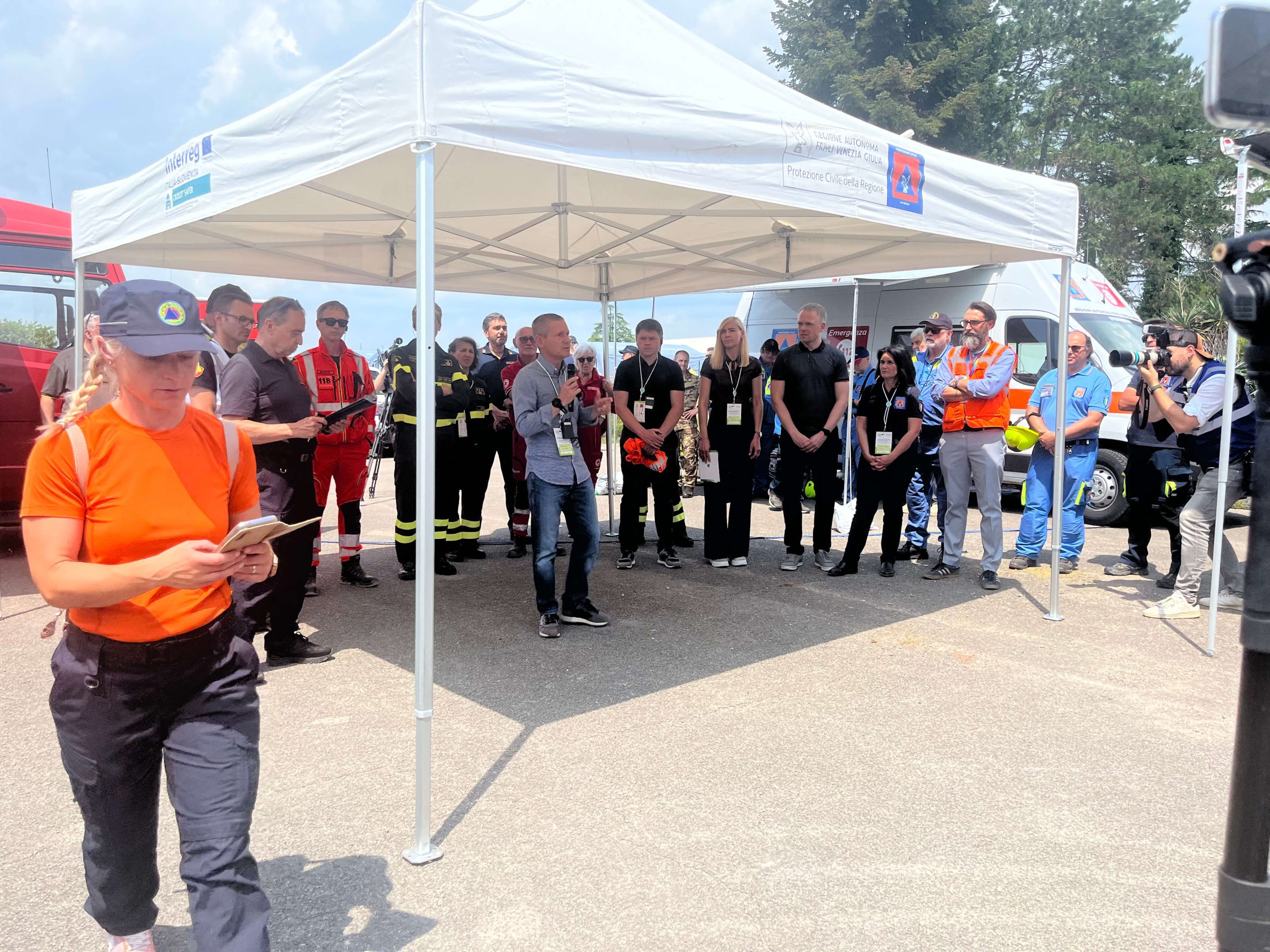
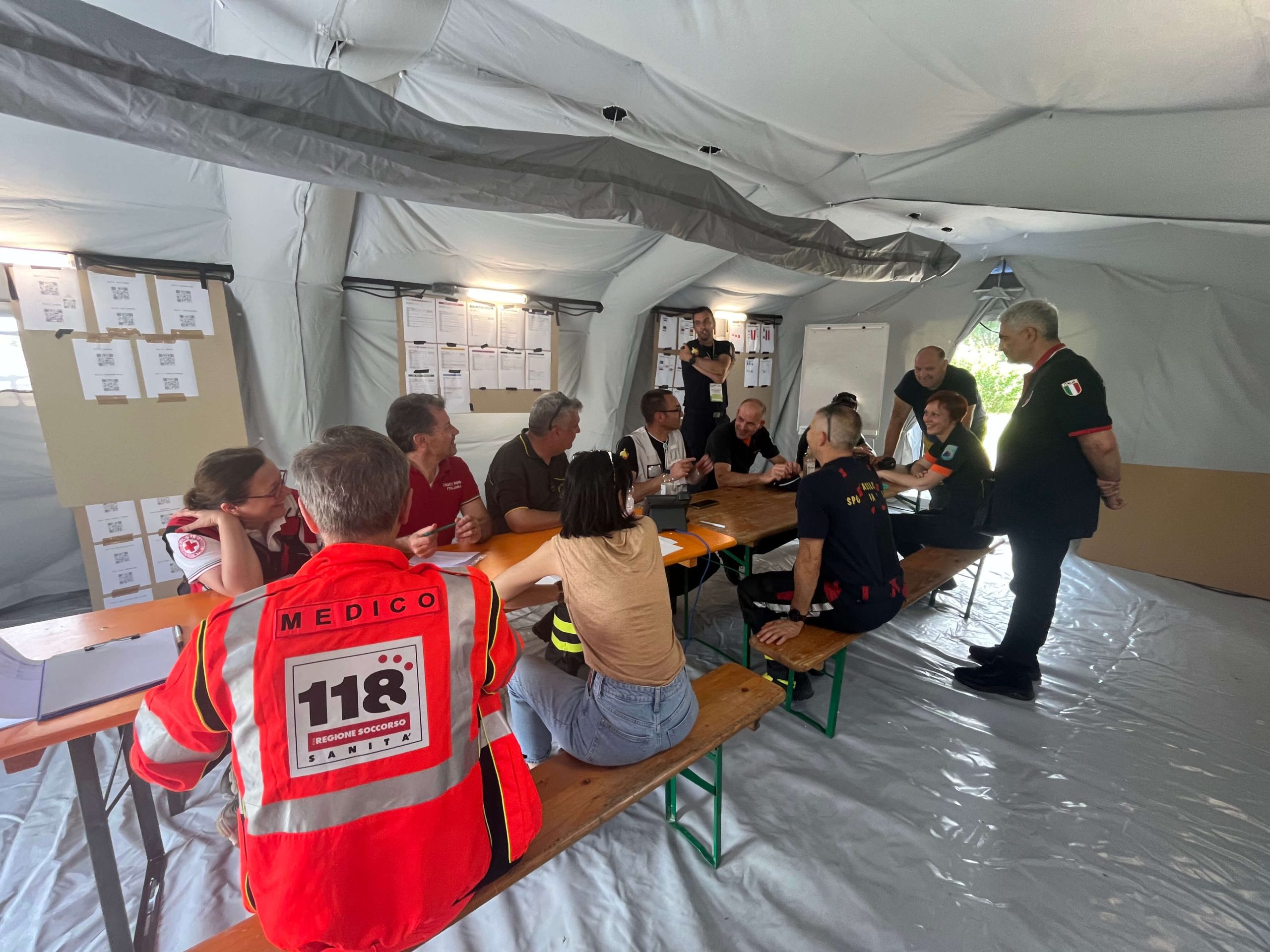
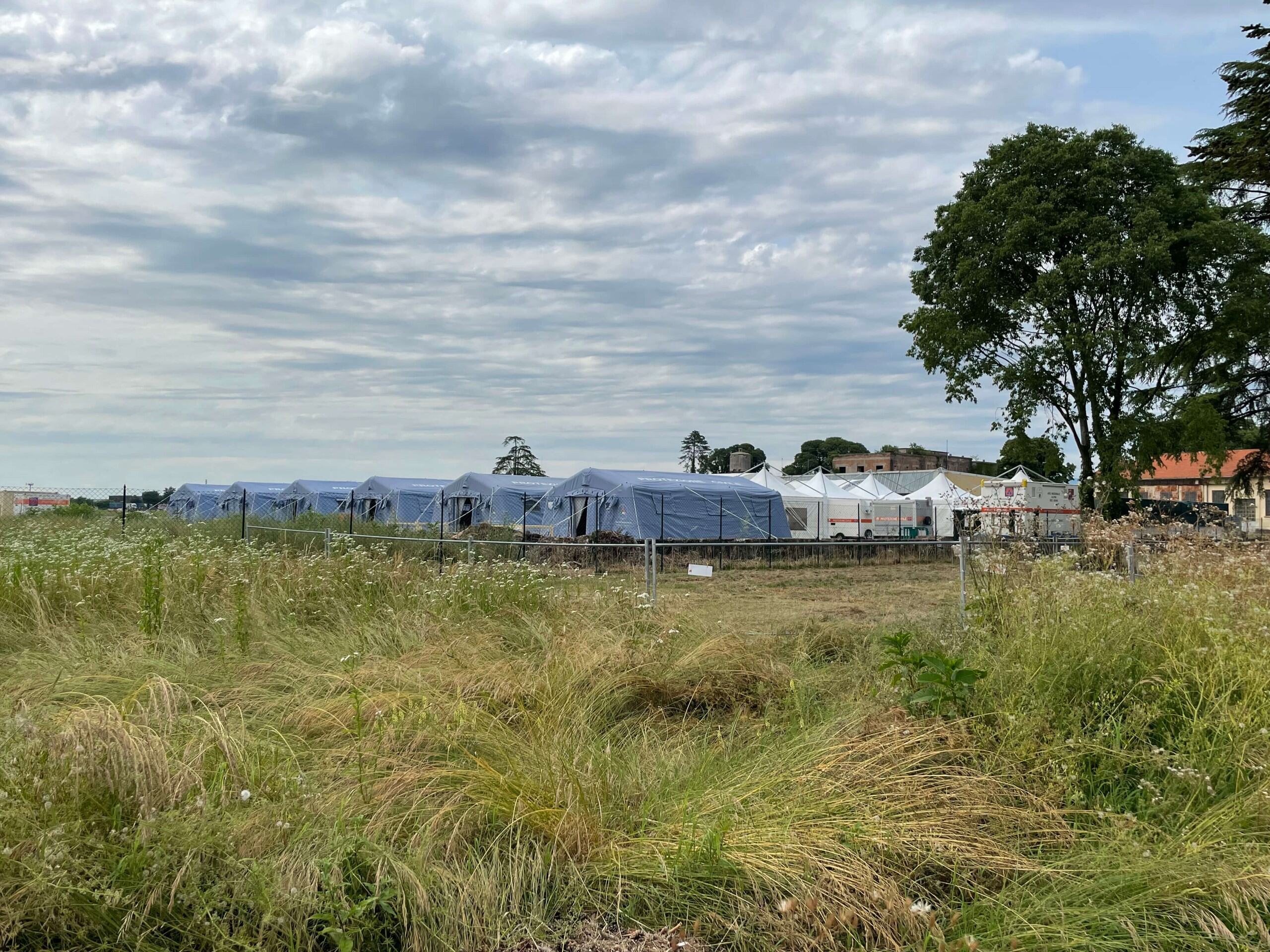
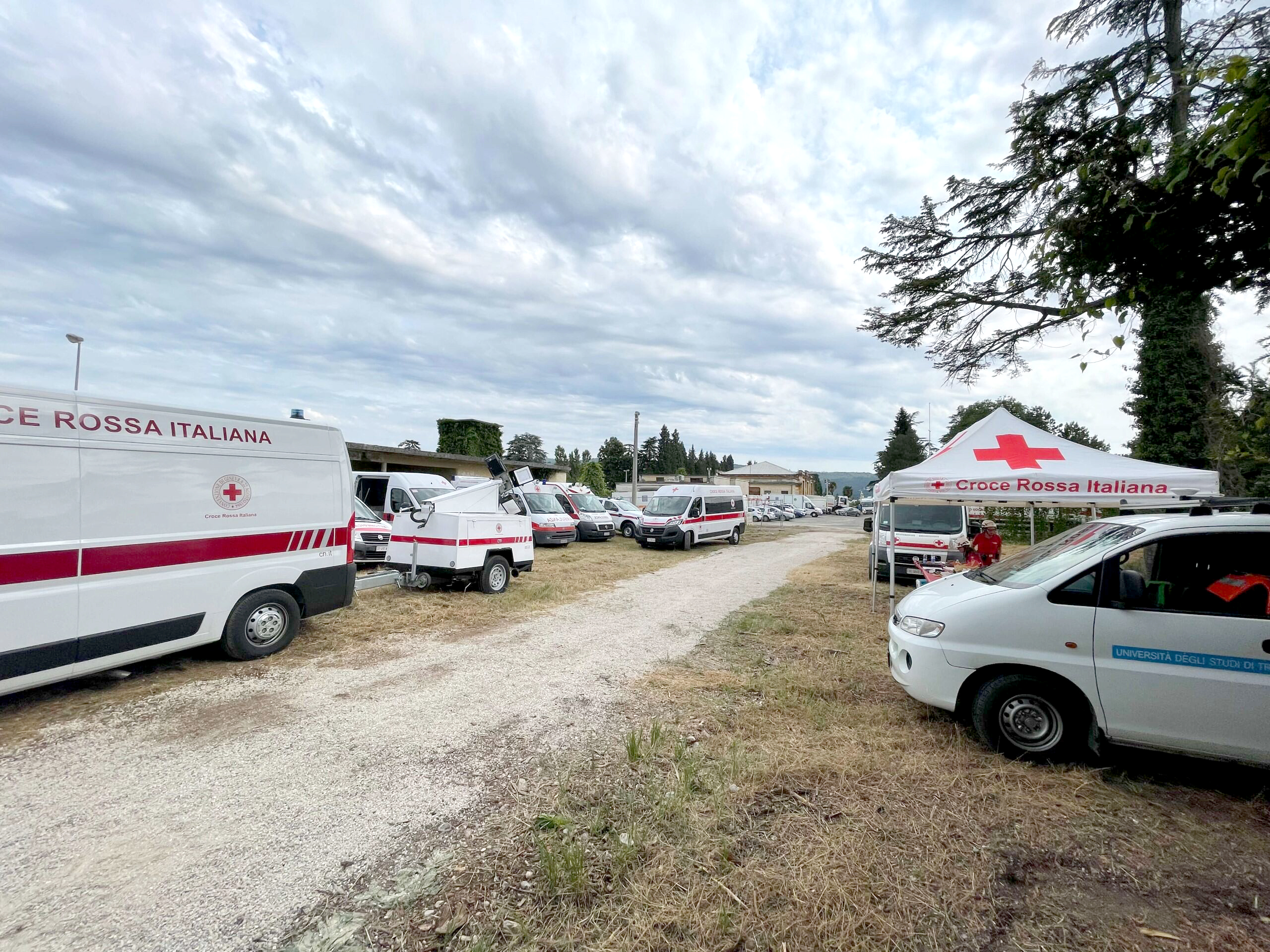
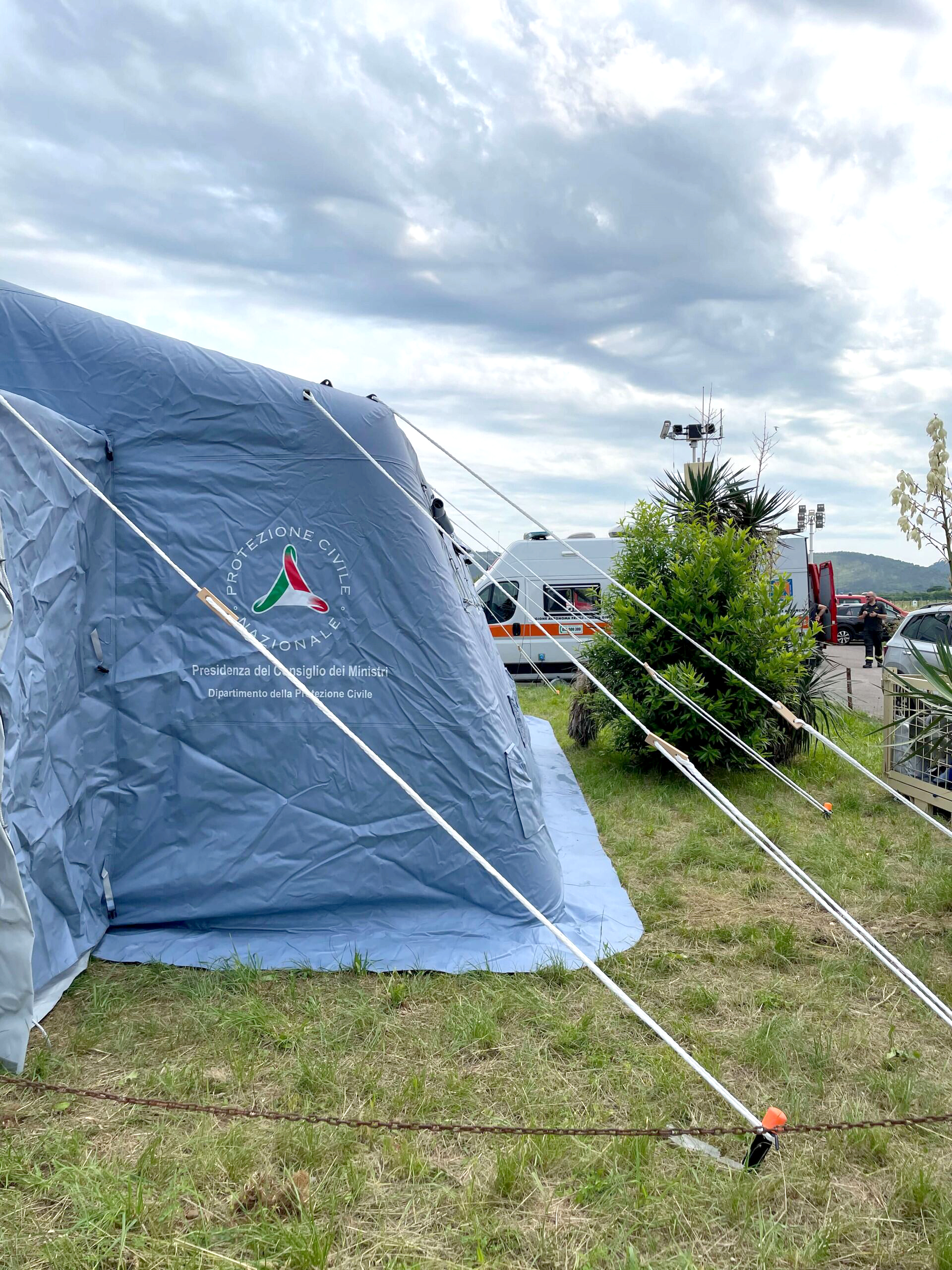
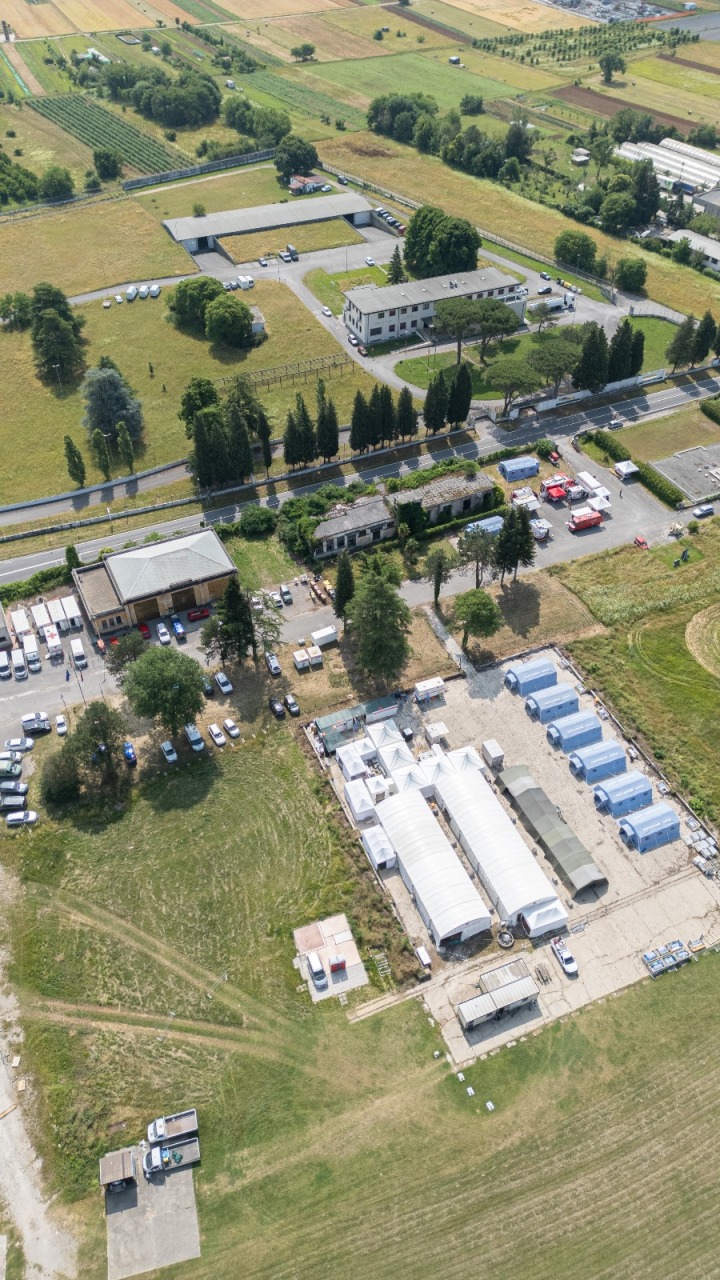
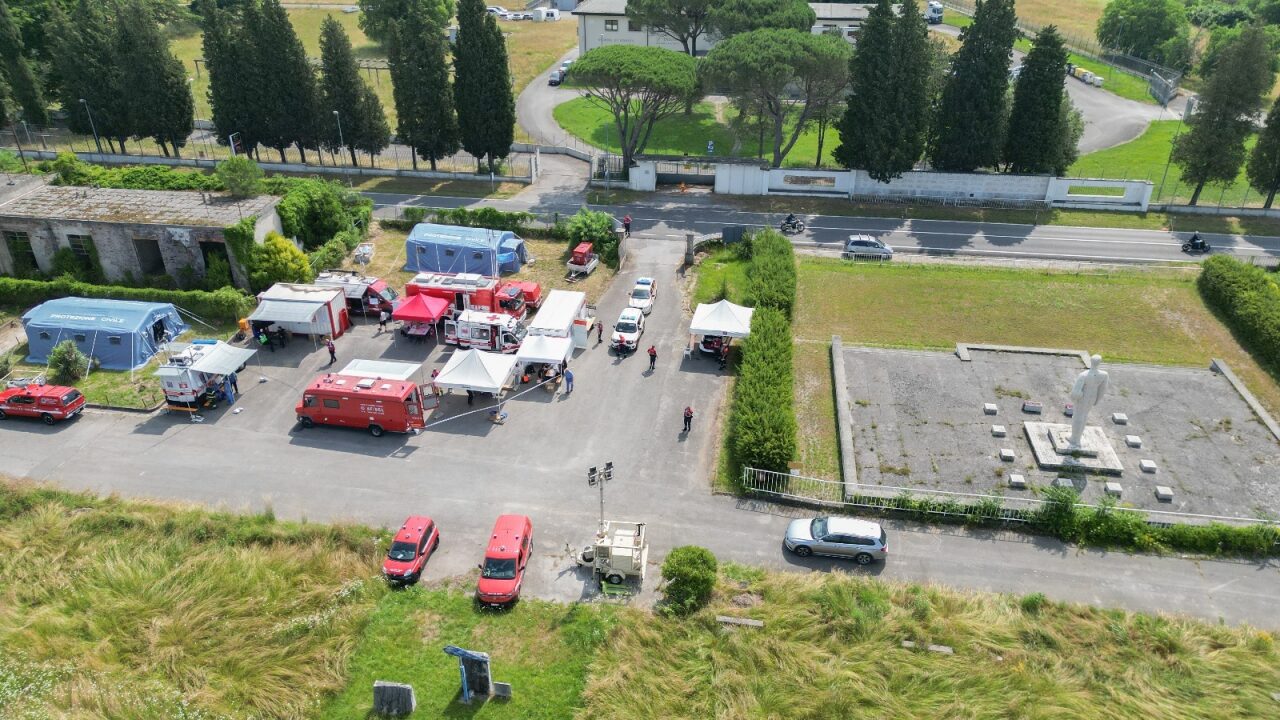
The first day of the GOin4SAFETY exercise opened with a large-scale simulation of a highly destructive earthquake, the epicenter of which was assumed to be near the border between Italy and Slovenia. The scenario tested the response capacity and coordination of the various actors involved, simulating a complex and high-impact emergency situation. In the afternoon, the Municipal Operations Center (COC) of Gorizia came into operation, tasked with coordinating the operational and administrative responses necessary to cope with the event. Starting at 3 p.m., emergency units, equipped with specialized vehicles and equipment, began to converge atGorizia’s Amedeo Duca d’Aosta Airport, which was set up as the main logistics base and coordination center for field operations for the occasion. Team organization and resource management marked the operational start of GOin4SAFETY, underscoring the importance of planning and cooperation in crisis situations.
FRIDAY, JUNE 6
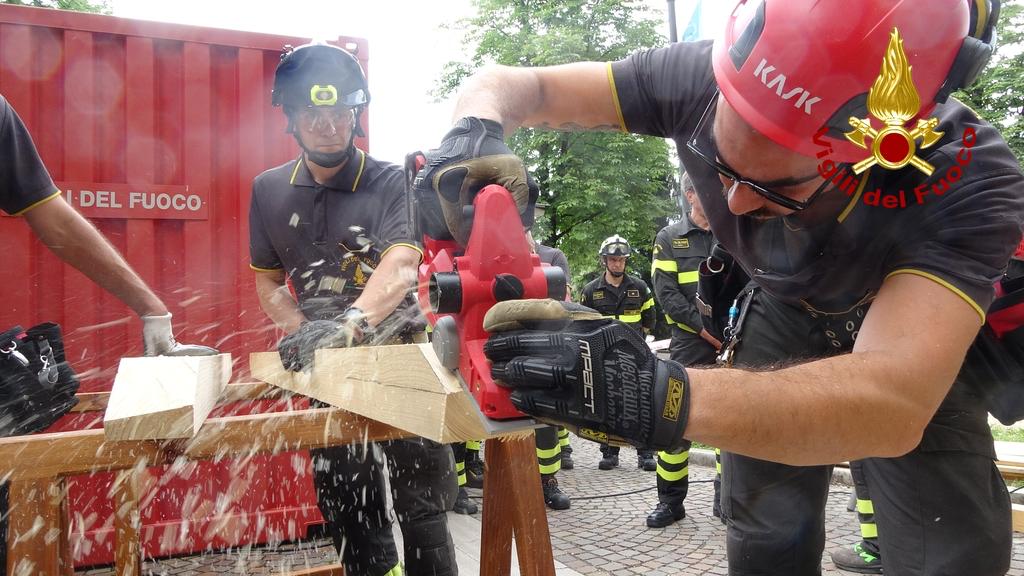
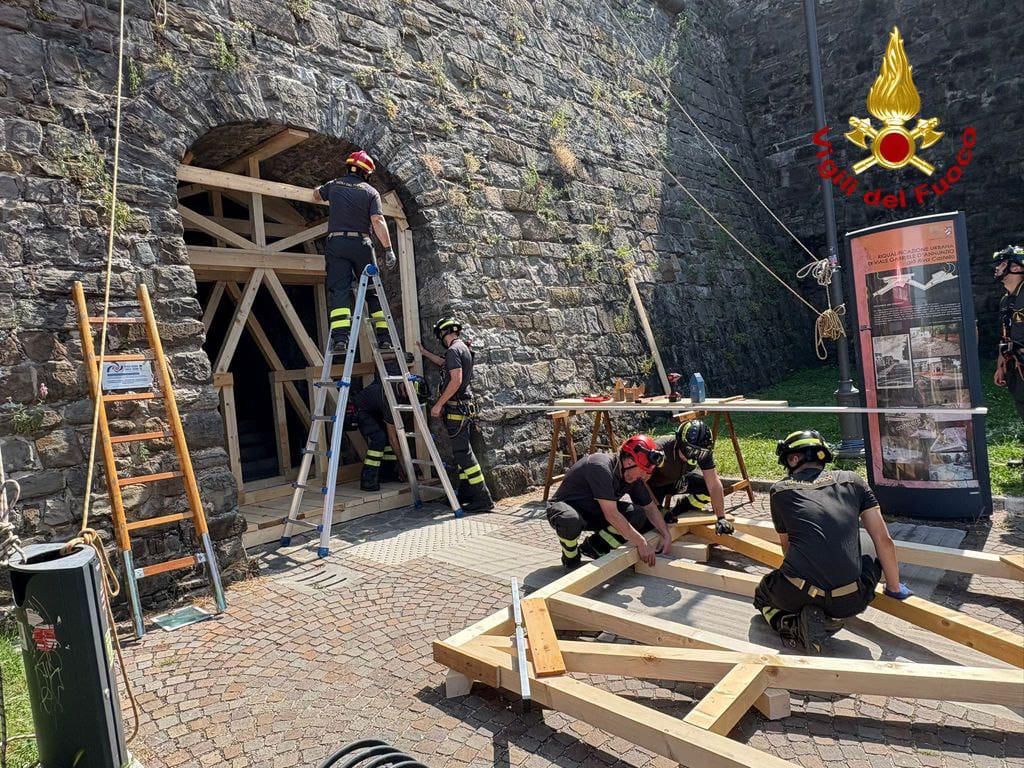
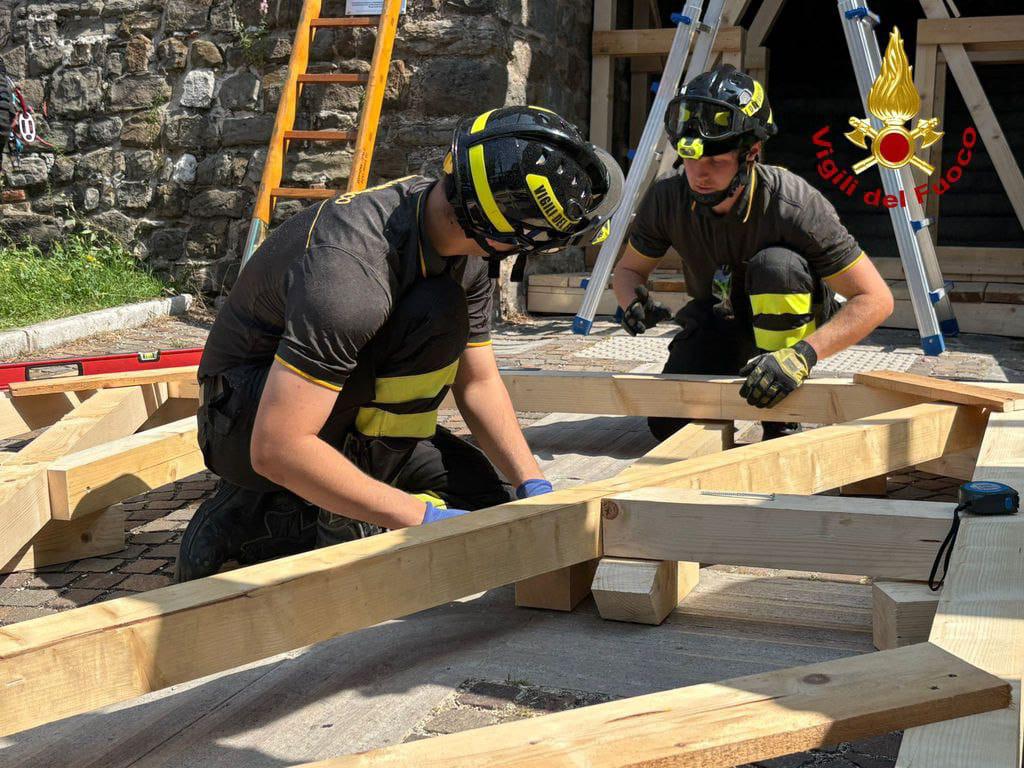
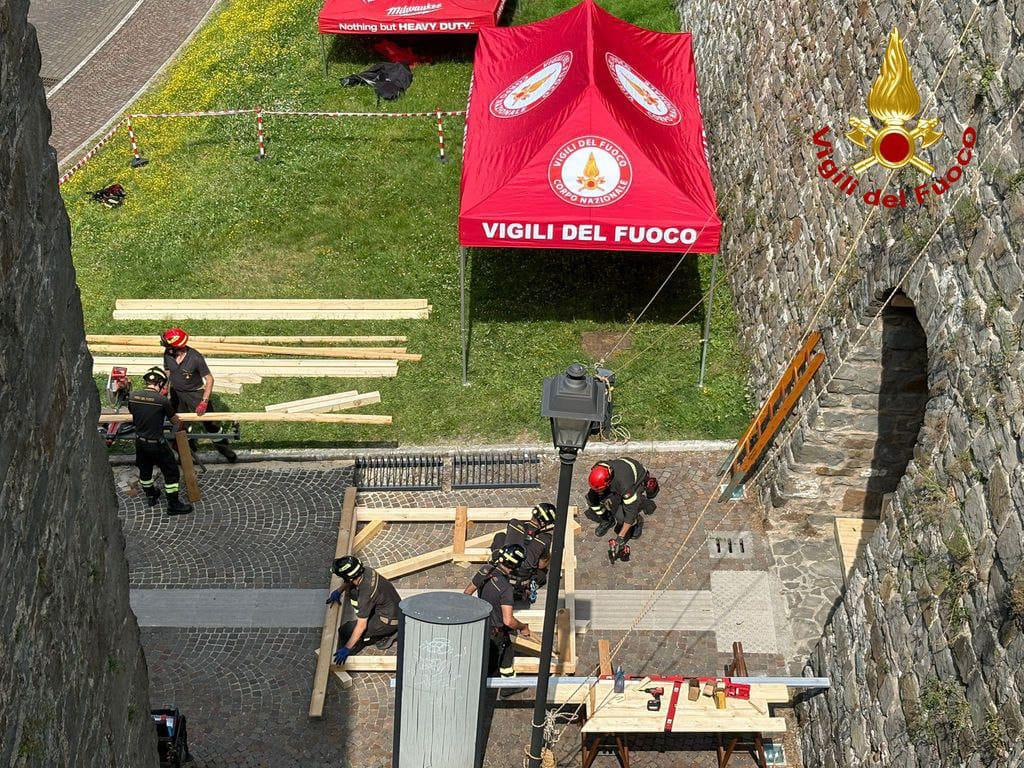
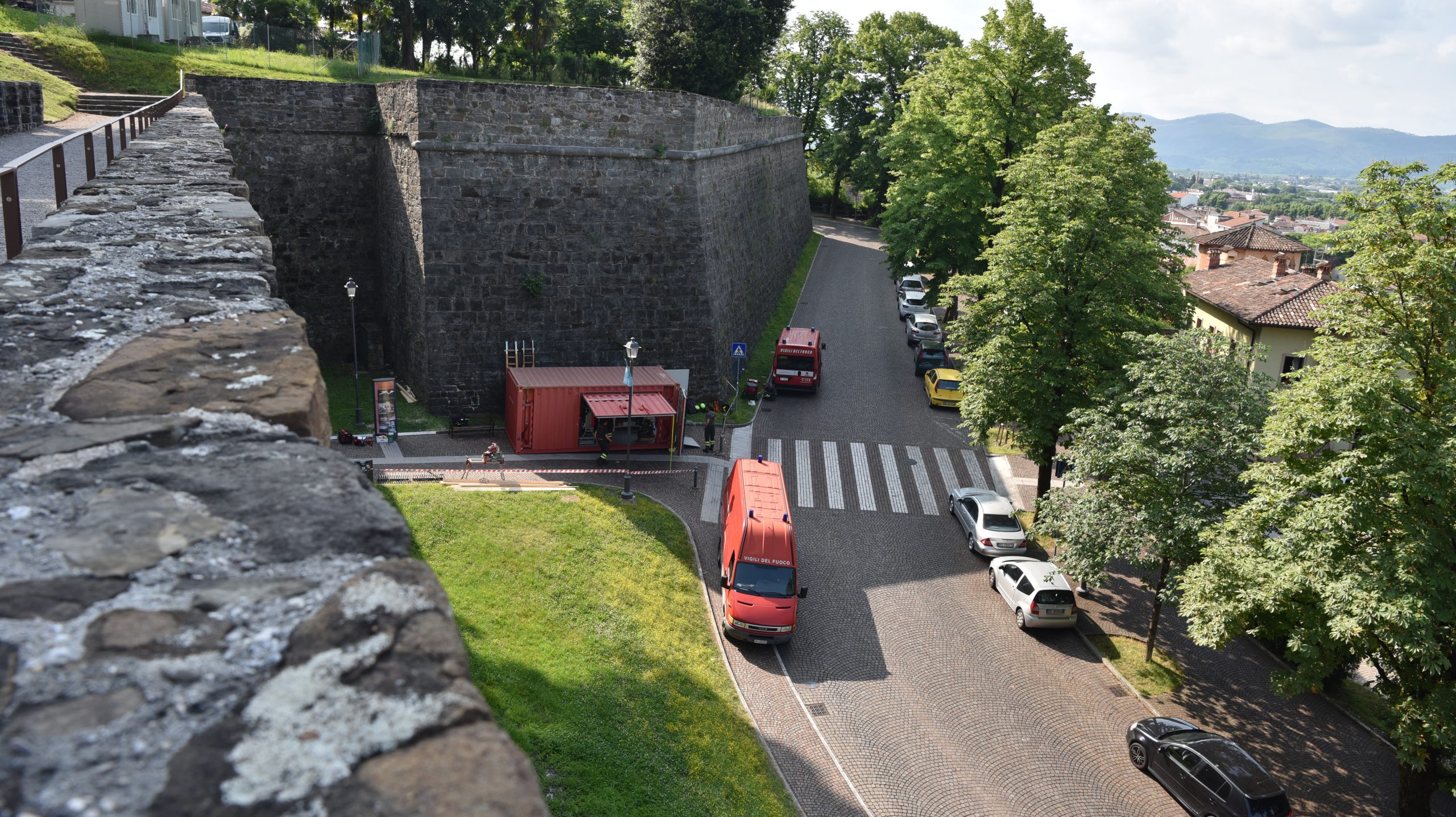
The second day of the exercise immediately got into full swing with numerous scenarios activated simultaneously throughout the cross-border territory. As early as 8:00 a.m., operations began to secure gas pipelines damaged by the simulated collapse of four bridges over the Soča River, with the aim of detecting and containing any leaks while ensuring continuity of service. Also from 8:00 a.m. to 6:00 p.m., complex urban search and rescue activities took place in Polazzo, while delicate structural stabilization work was carried out at Gorizia Castle: the work focused on reinforcing a damaged stone arch through shoring and ribbing techniques to secure the north entrance of the historic structure.
On Mount Six Busi, anextensive surface search operation was conducted from 8:00 a.m. to 5:00 p.m. aimed at locating missing persons over a large and complex area. The Municipal Operations Center (COC) in Gorica continued to coordinate ongoing activities by remaining active from 8:30 a.m. to 12:30 p.m. Just around the Castle, from 8:30 a.m. until midnight, the disappearance of three people following a chaotic evacuation was simulated, initiating a long and complex search operation. At the same time, a logistical support module capable of accommodating up to 40 people was set up.
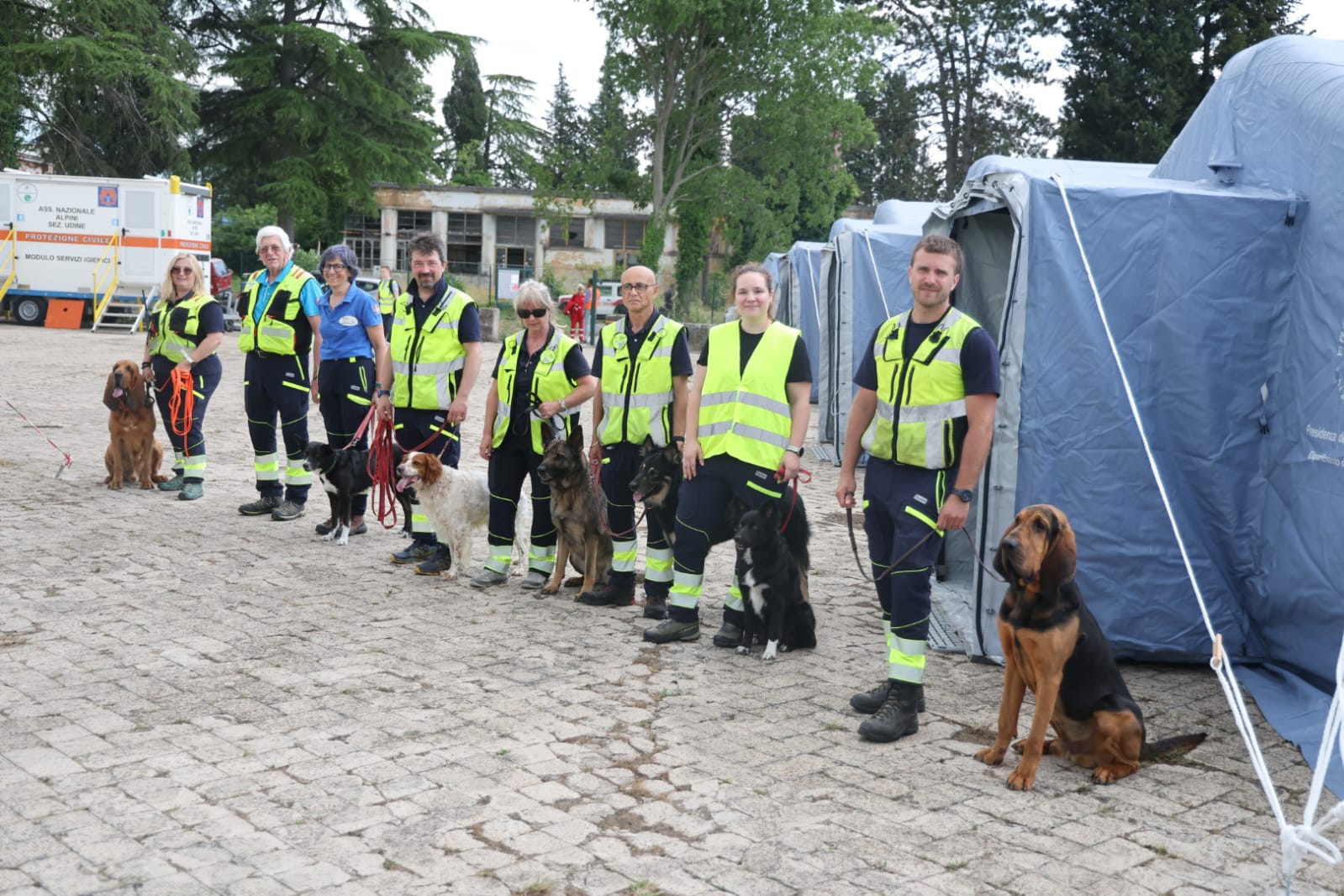
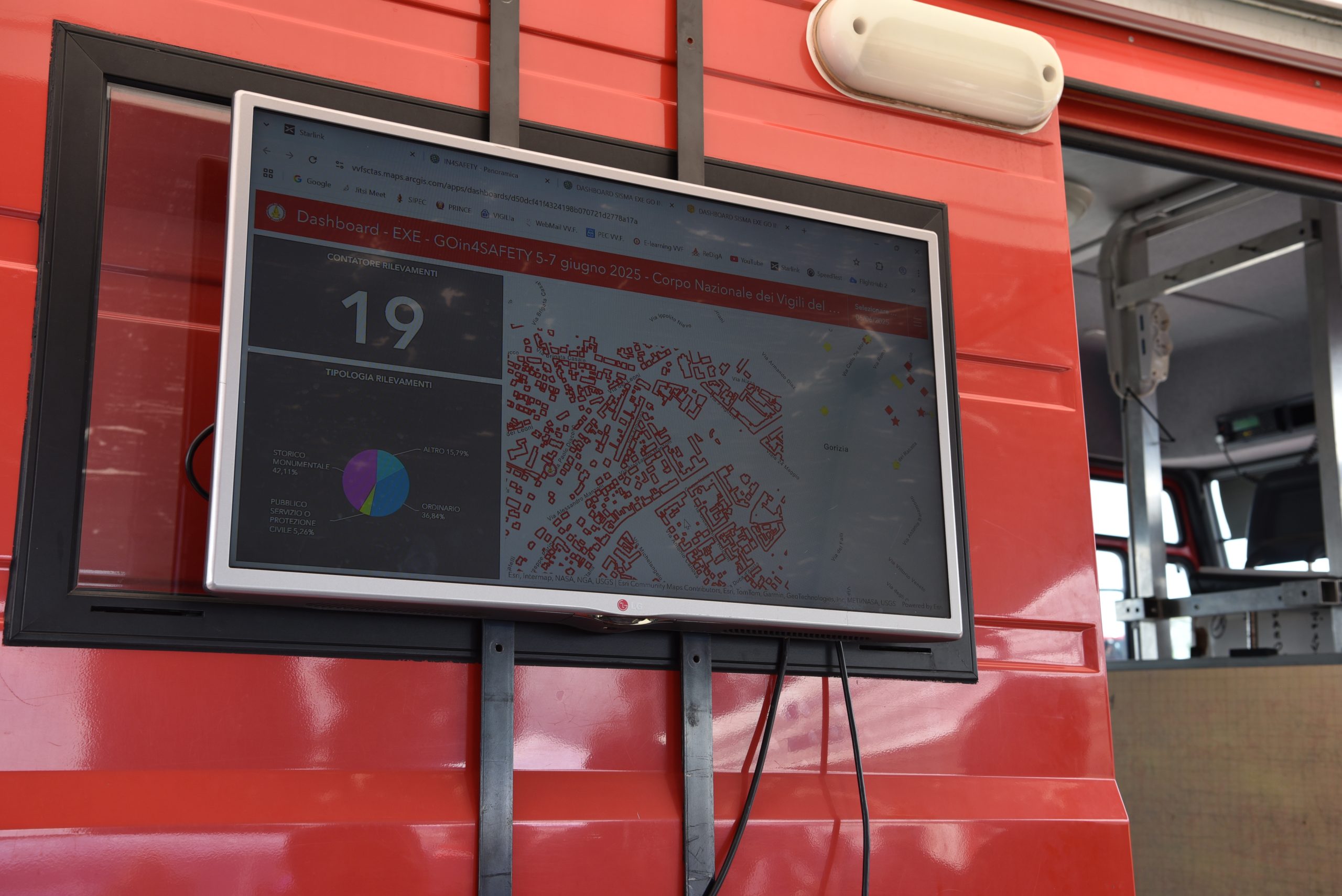
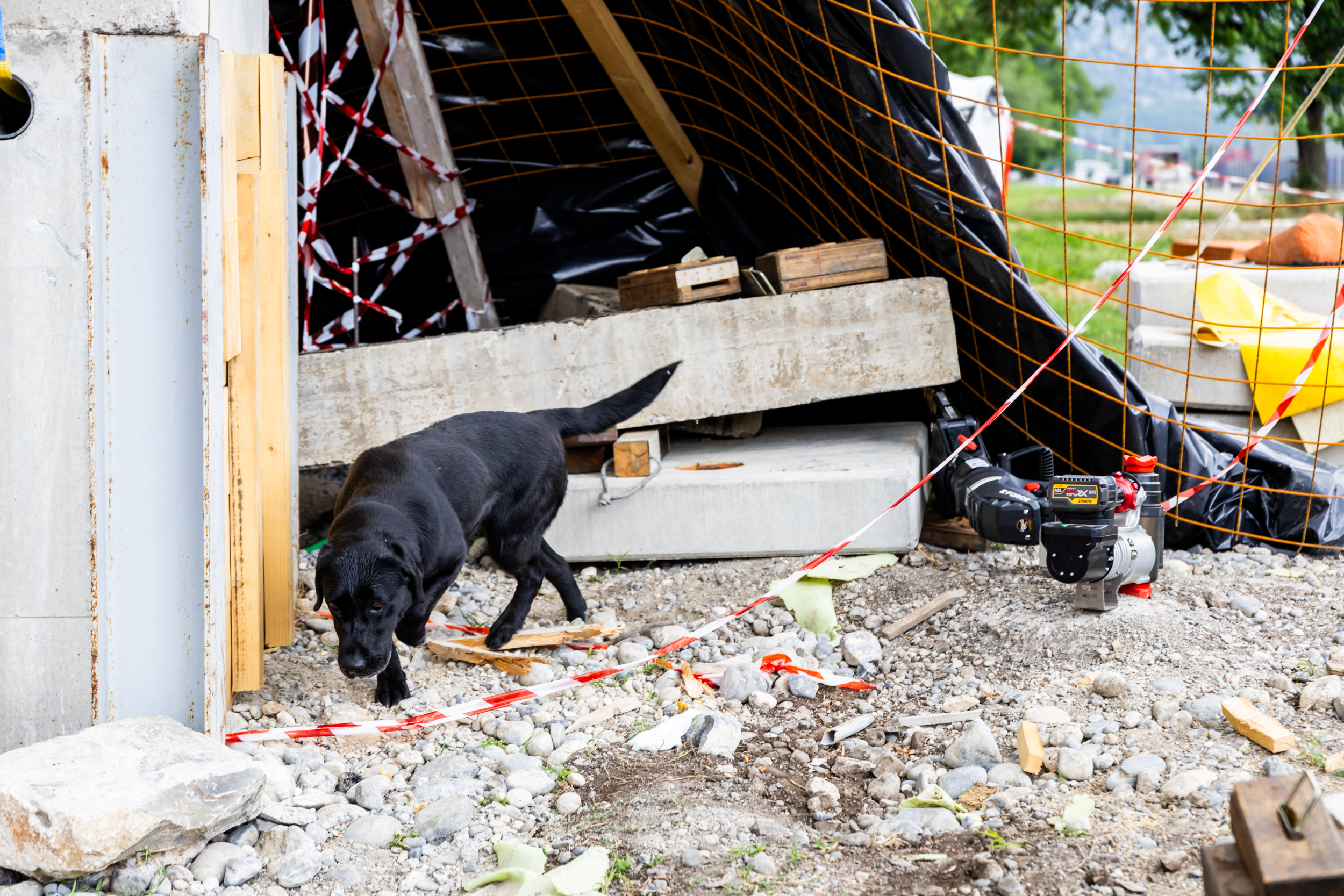
Meanwhile, from 9:00 a.m. to 1:00 p.m., at theMocchetta water plant, a simulated floor collapse of a transformer substation caused a power outage. The intervention required technical inspections, activation of emergency generators, radio communications and coordination with the crisis committee. In parallel, between 10:00 a.m. and 4:00 p.m., a drone reconnaissance mapped structural damage to buildings in designated areas, gathering vital data to plan subsequent interventions. To close the day, from 3:30 p.m. in Largo Michieli, searches for two missing persons began, conducted with the support of canine units and tracking of their movements based on testimonies collected at the scene.
SATURDAY, JUNE 7
The third day of the exercise confirmed the intensity and variety of scenarios provided by the GOin4SAFETY program. From 8:00 a.m. to 6:00 p.m., urban search and rescue operations continued in Polazzo, while at Gorizia Castle, firefighters carried out further structural stabilization work: again, the focus was on reinforcing the damaged stone arch of the northern entrance, using shoring and ribbing techniques to ensure the safety of the ancient artifact.
In parallel, between 8:00 a.m. and 2:00 p.m., another large-scale search session for missing persons was activated on Mount Sei Busi, involving specialized personnel in an articulated operation. One of the most significant simulations of the day took place at the Public Library of the Theological Seminary of Gorizia, where from 8:30 a.m. to 12:30 p.m. cultural heritage protection actions were simulated: books, documents and valuable objects were packed, catalogued and transferred according to emergency preservation protocols, emphasizing how protecting historical heritage is an integral part of risk management.
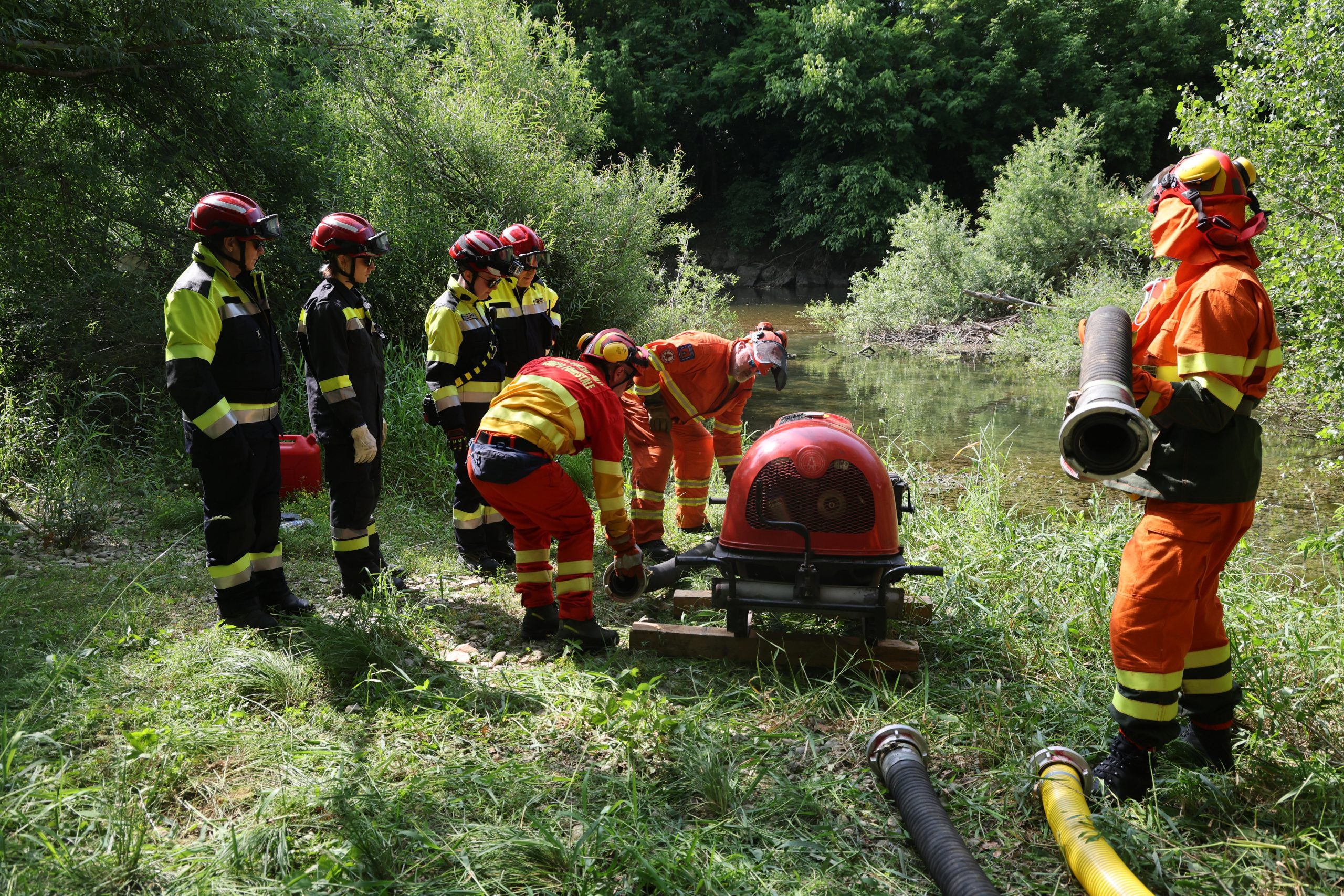
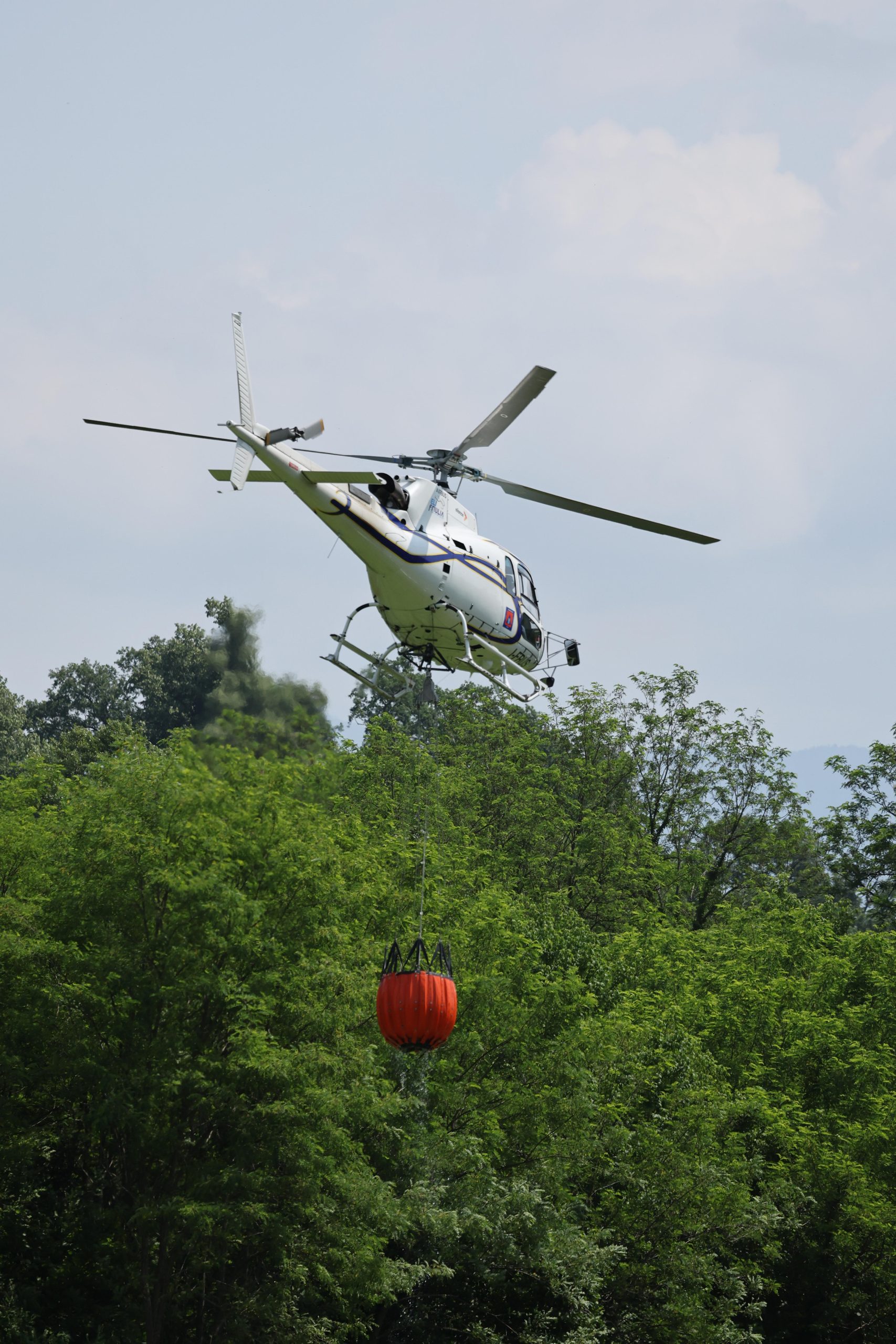
On the side of cross-border activities, from 8:30 a.m. to 6:00 p.m., canine units performed scent-based tracking operations, starting from abandoned vehicles in Transalpina Square and continuing across the border, demonstrating the difficulties and importance of international coordination in real scenarios. Finally, at 9:00 a.m., a forest fire was simulated between Savogna d’Isonzo and Doberdò del Lago: the intervention involved drawing water from the Vipacco River, deploying ground units along forest roads, and using a dedicated reservoir to contain and contain the flames. A further demonstration of the operational effectiveness of the teams involved.
Working Sites in Slovenia
THURSDAY, JUNE 5
In the complex picture of the June 5 operations, a crucial role was played by amateur radio operators, whose contribution proved essential especially in a total blackout scenario. Thanks to their expertise and ability to operate in critical conditions, it was possible to transmit key information in a timely manner, ensuring continuity of communications and supporting the rapid activation of relief efforts. Coordinating the field activities were the civil defense (CZ) operations centers, which were already active in the days leading up to the exercise. These centers managed the simulated states of emergency, dealing with the consequences of the hypothesized earthquake and preparing targeted interventions to contain the critical issues. Their actions helped maintain order and effectiveness in operations, demonstrating the importance of strategic planning and coordination in emergency management.
FRIDAY, JUNE 6
The June 6 day opened with the presentation of the Slovenian Fire Brigade Association’s (GZS) prevention vehicle, set up at Europa Square in Nova Gorica. From 9:00 a.m. to 2:00 p.m., citizens and operators were able to learn first-hand about the main prevention measures to be taken in case of earthquakes, fires, and chain accidents, thanks to an interactive exhibition designed to raise awareness of the correct behavior to adopt in emergency situations.
Meanwhile, at the Ivana Roba Elementary School in Šempeter pri Gorici, a fire caused by an earthquake tremor was simulated: pupils and teachers were evacuated under emergency conditions, amid smoke and obstacles in the hallways, while rescue workers worked to extinguish the fire and secure the building.
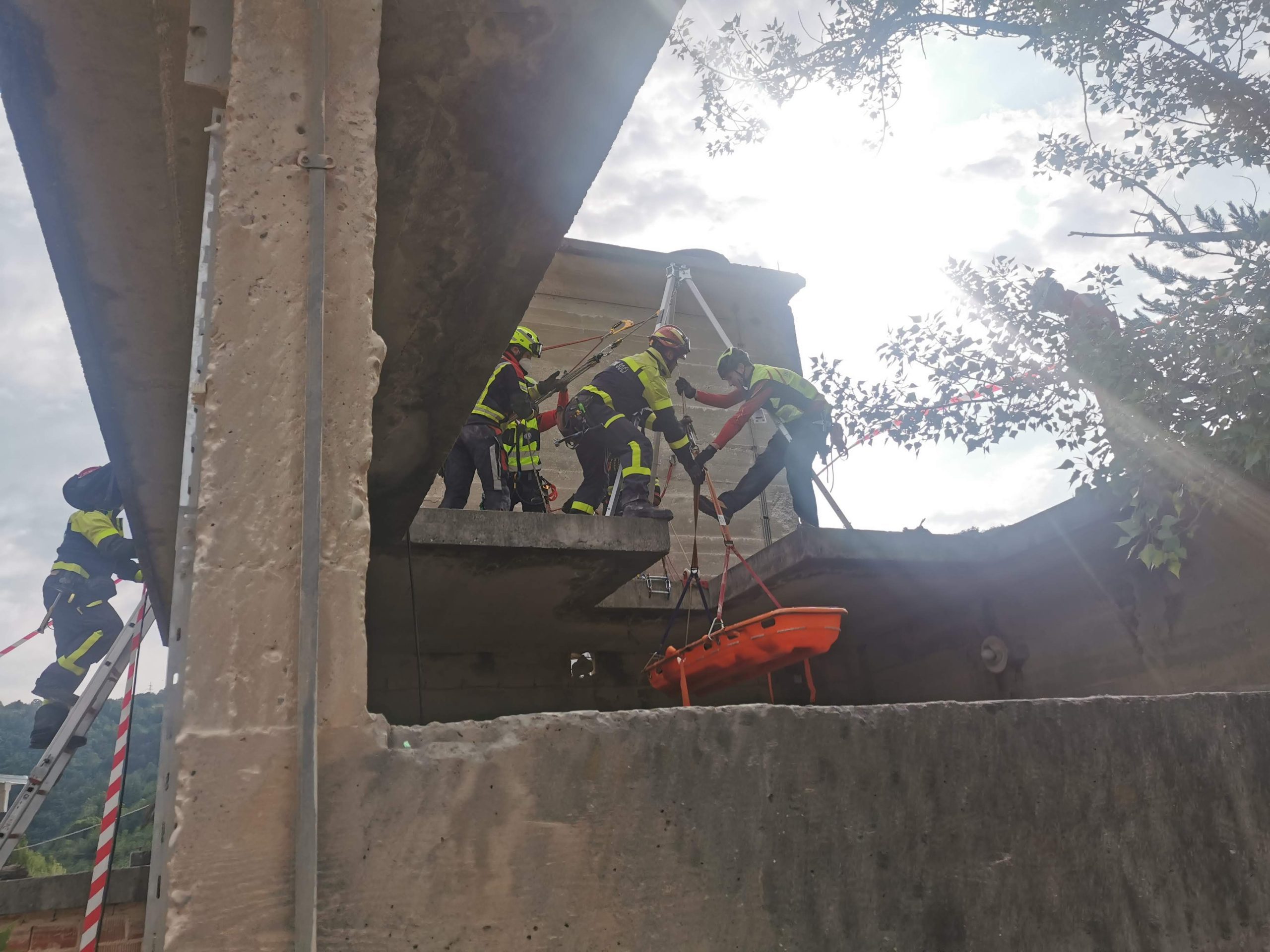
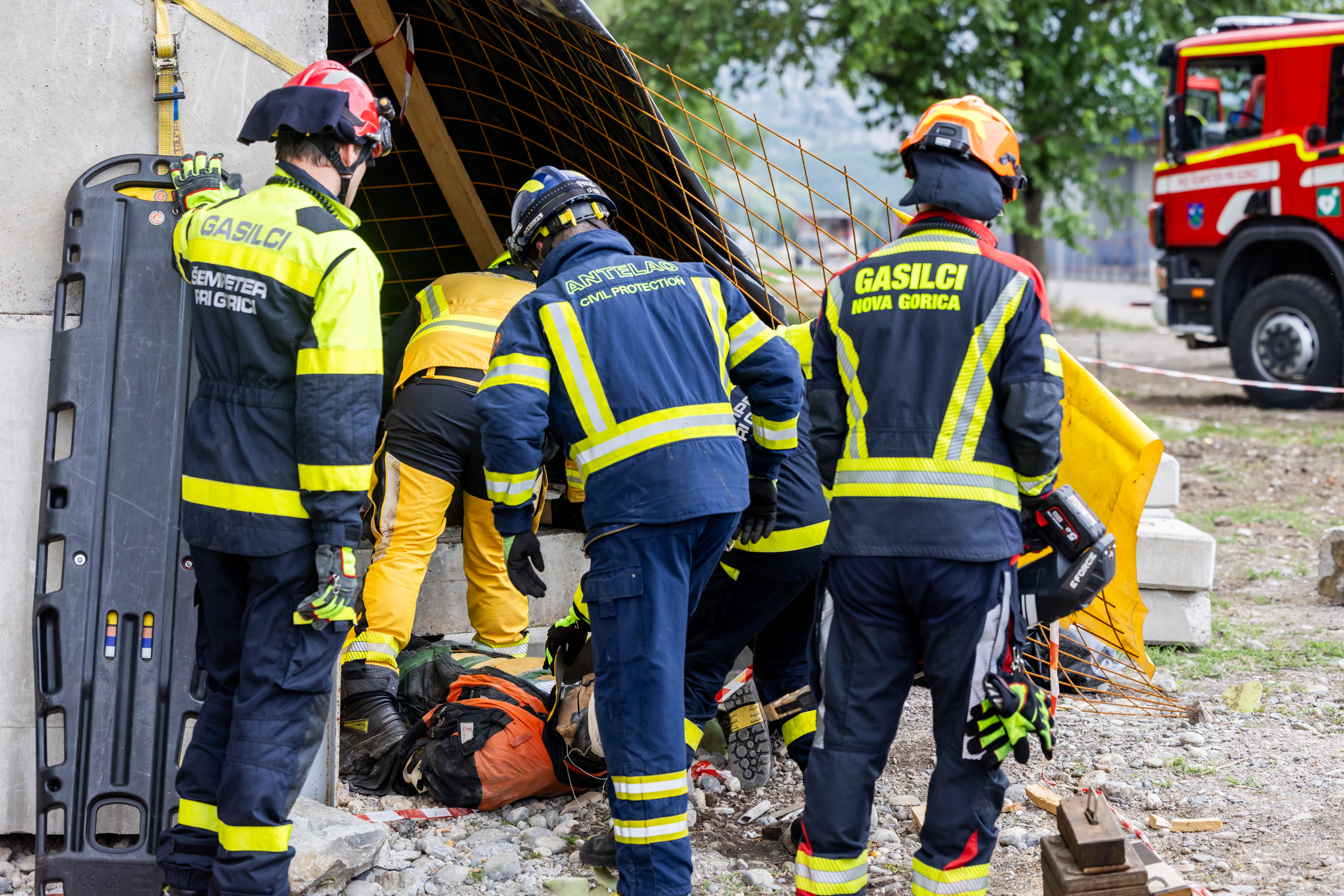
Among the most complex scenarios was in Vrtojba, where the partial collapse of a damaged old building triggered a fire. The two-day operation required the use of advanced shoring, cutting and vertical rescue techniques to recover three people trapped in the rubble.
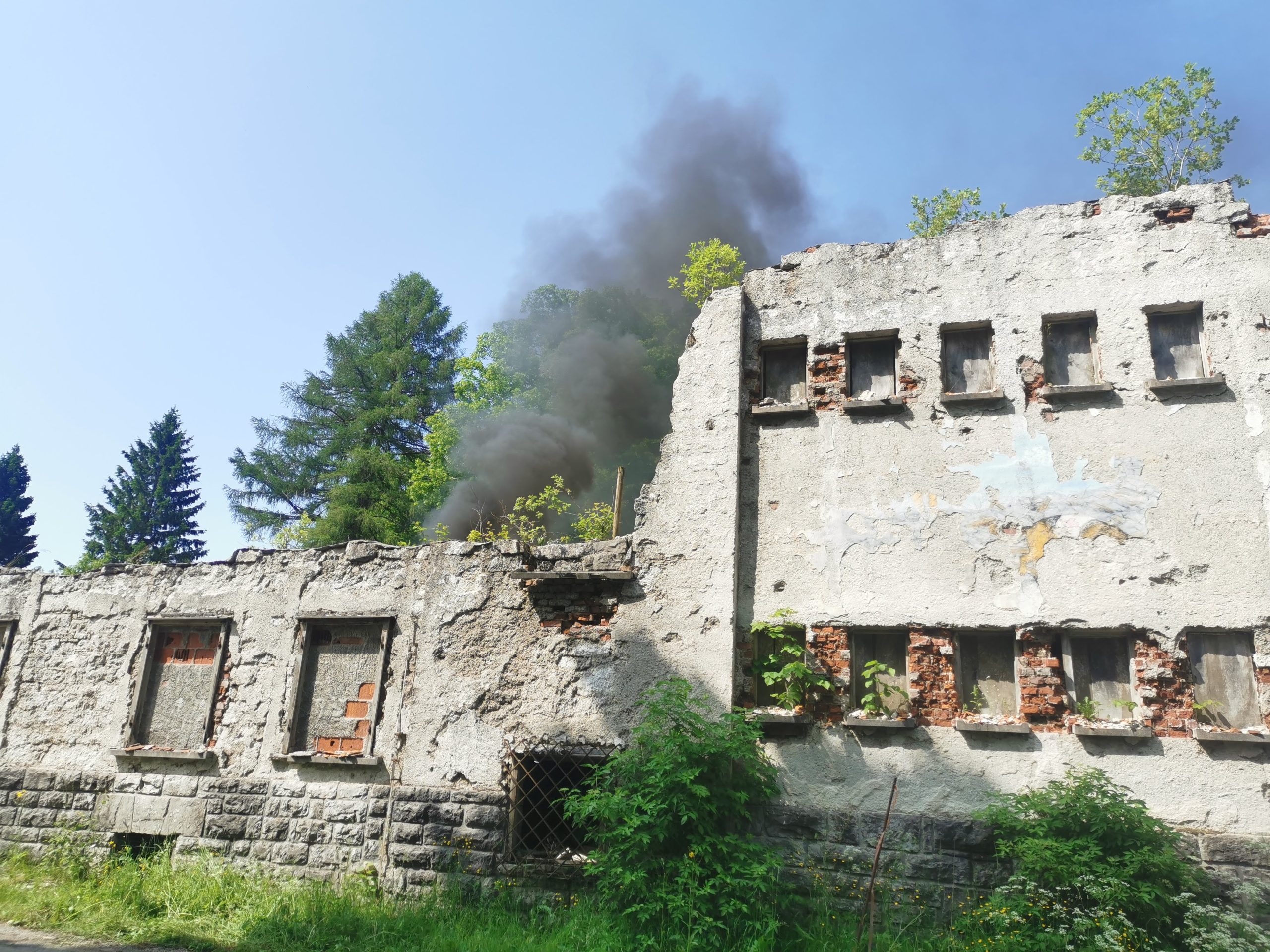
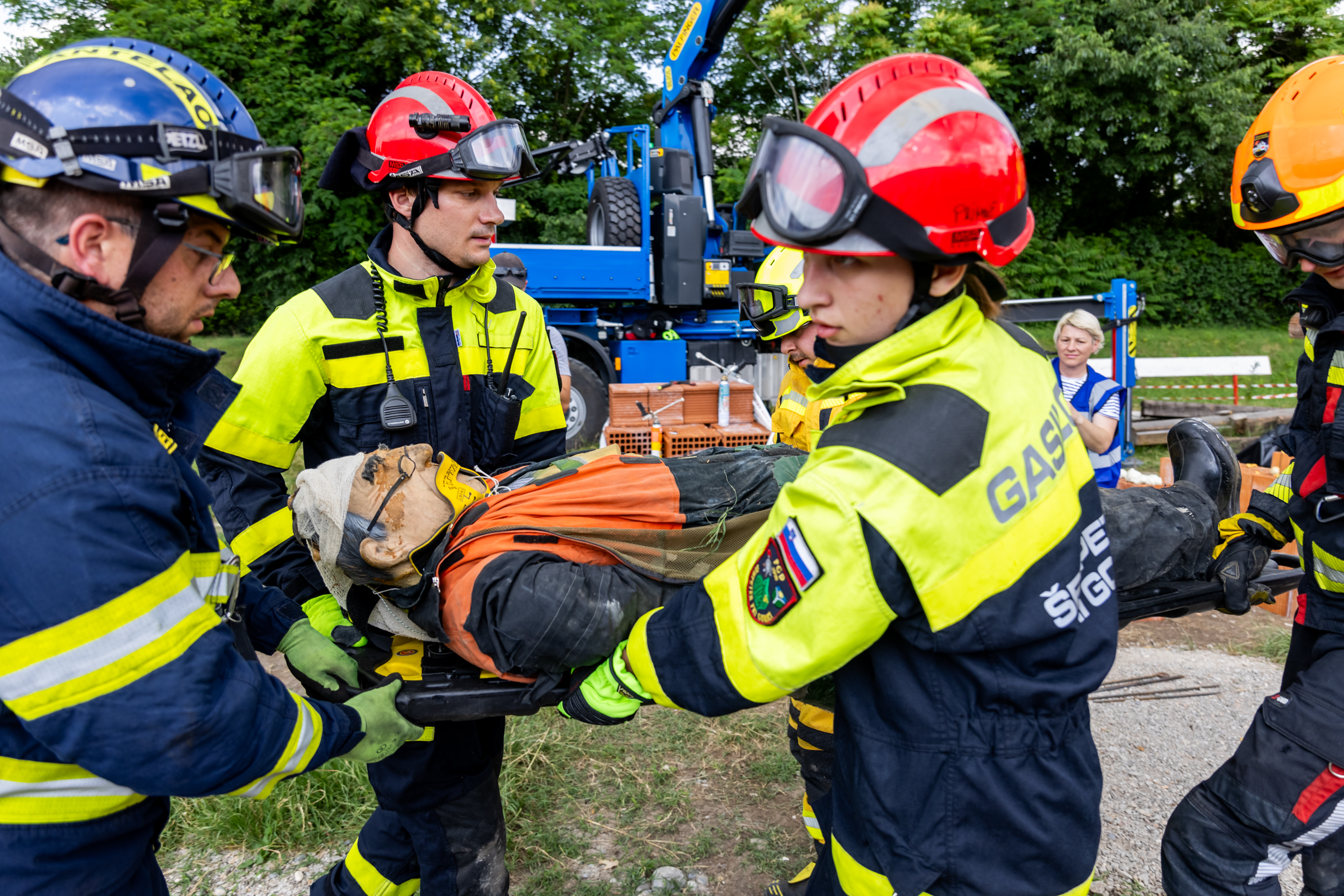
Also between June 6 and 7, in Lokve, the former Hotel Poldanovec was the scene of a total collapse simulation. Rescue teams worked continuously for more than 24 hours in the debris, applying complex procedures for locating, extracting, and medically assisting the injured, in one of the most challenging scenarios of the entire exercise.
SATURDAY, JUNE 7
The day of Saturday, June 7, saw the continuation of operations in several critical scenarios located throughout the cross-border territory. In Ajdovščina – Hubelj, a complex emergency was simulated in a small town affected by an earthquake: several buildings were found to be damaged or destroyed, with people trapped under rubble and hazardous substances leaking from damaged drums. The intervention required the deployment of highly specialized technical and health teams, who operated under difficult conditions, applying complex containment and rescue procedures.
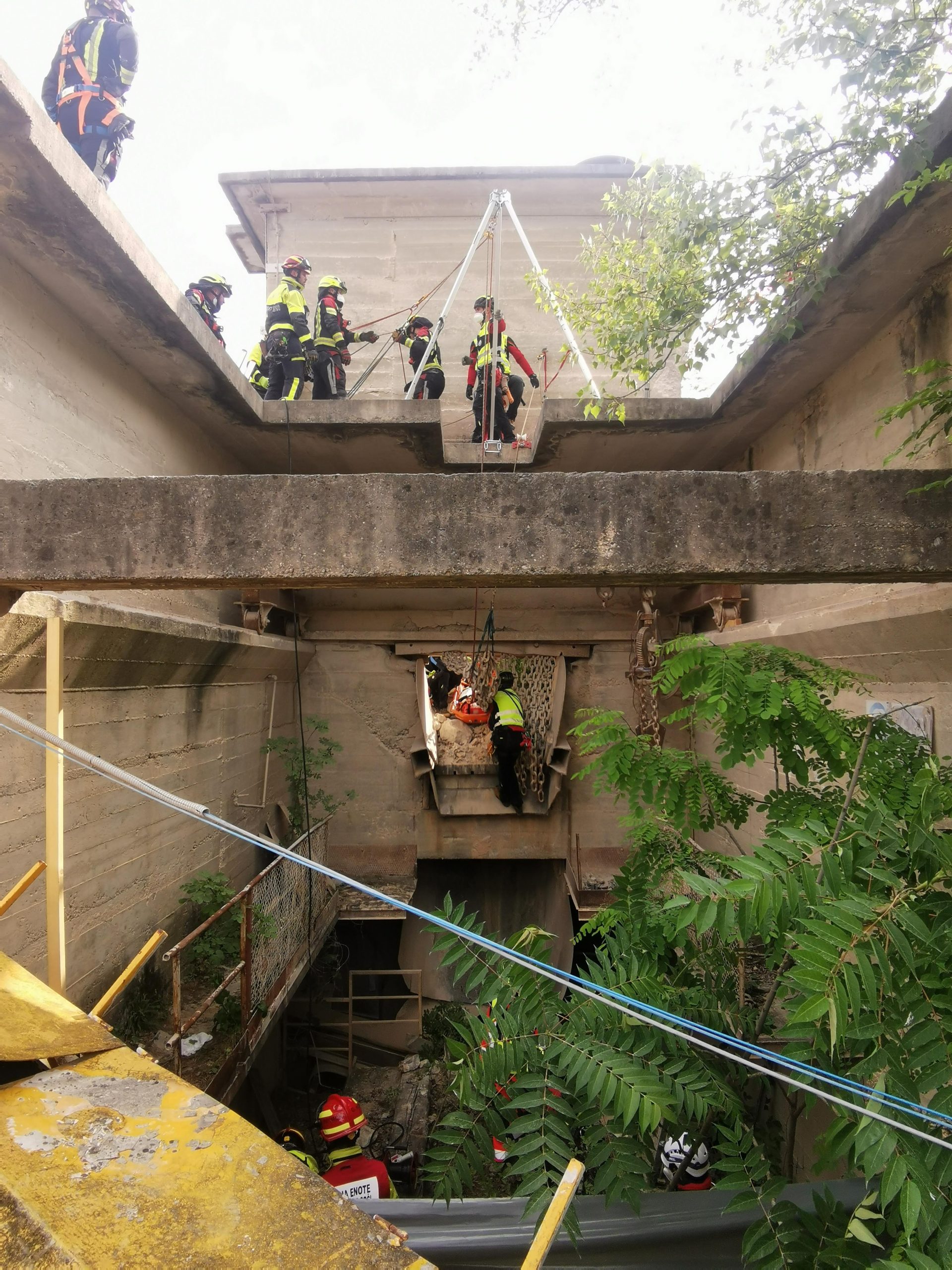
Ajdovščina Airport was another strategic point of the exercise, where a building collapse required light technical rescue operations. In parallel, at the Solkan quarry, emergency teams responded to an industrial collapse scenario combined with a landslide, which involved some vehicles. These operations, which started in the afternoon of June 6, lasted until the evening of the following day.
In the heart of the cross-border area, one of the most significant simulations was held in Europe Square: the collapse of a house required the deployment of specialized teams to recover two people buried under the rubble, using advanced technologies and complex rescue techniques.
In Čepovan, the scenario involved a light technical rescue operation to free the driver of a car who was trapped under a fallen tree due to the earthquake.
Finally, the environmental and naturalistic component of the exercise involved Solkan – Šmaver, Rafut Park, and the mountainous area between Trnovo and Nemci, where search and rescue simulations took place in forested and mountainous environments. In these contexts, personnel also used the technique of “man trailing,” or tracking missing persons from olfactory clues, to locate and rescue missing or injured persons in places that are difficult to access.
Conclusion and celebration of the shared journey
The final day of GOin4SAFETY, Sunday, June 8, opened in Transalpina Square with a celebratory moment in front of spectators and onlookers. Slovenian and Italian firefighters enlivened the square with the traditional Rainbow, giving a symbolic moment that focused on cooperation: the core of safety and a force capable of uniting, beyond all borders.
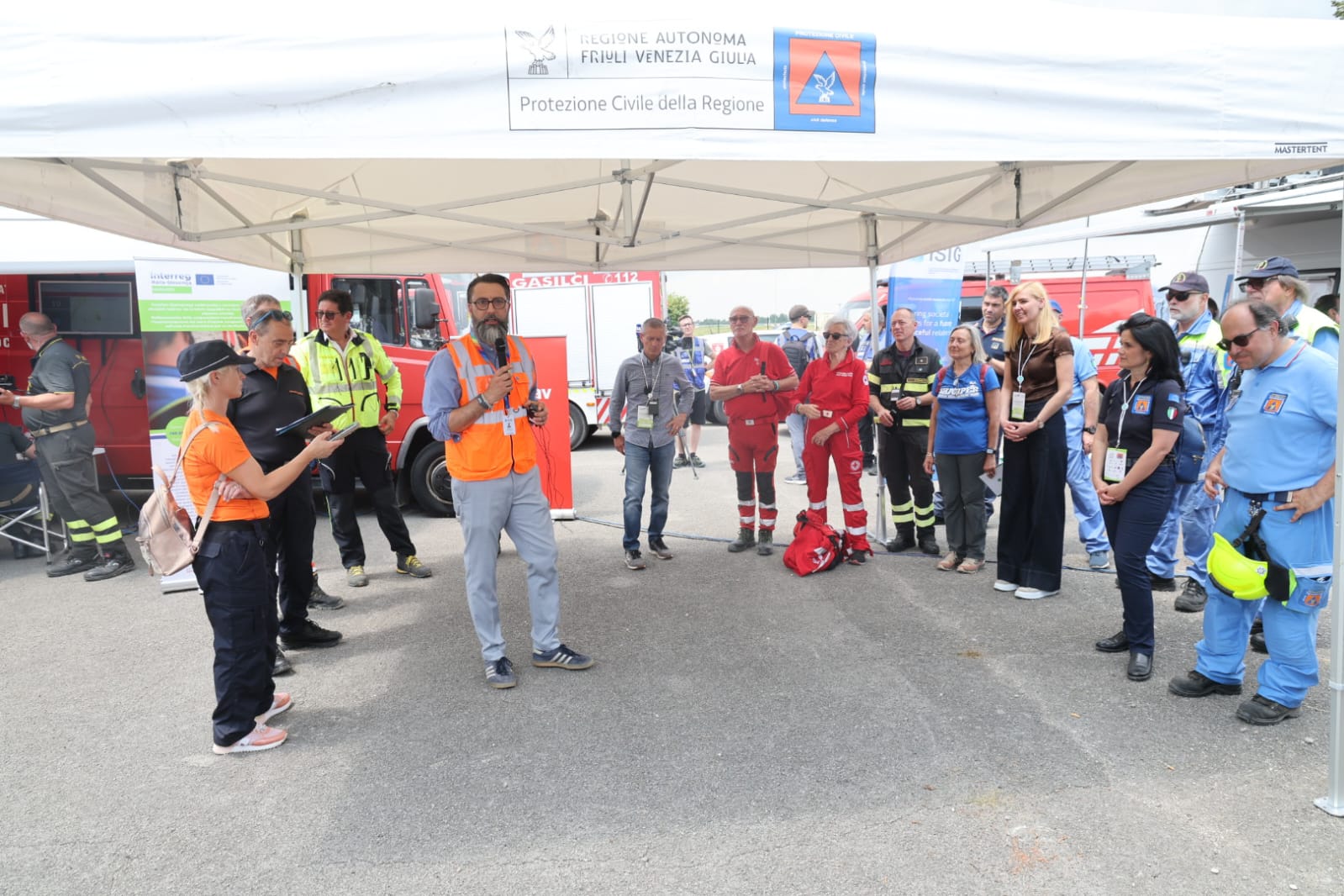
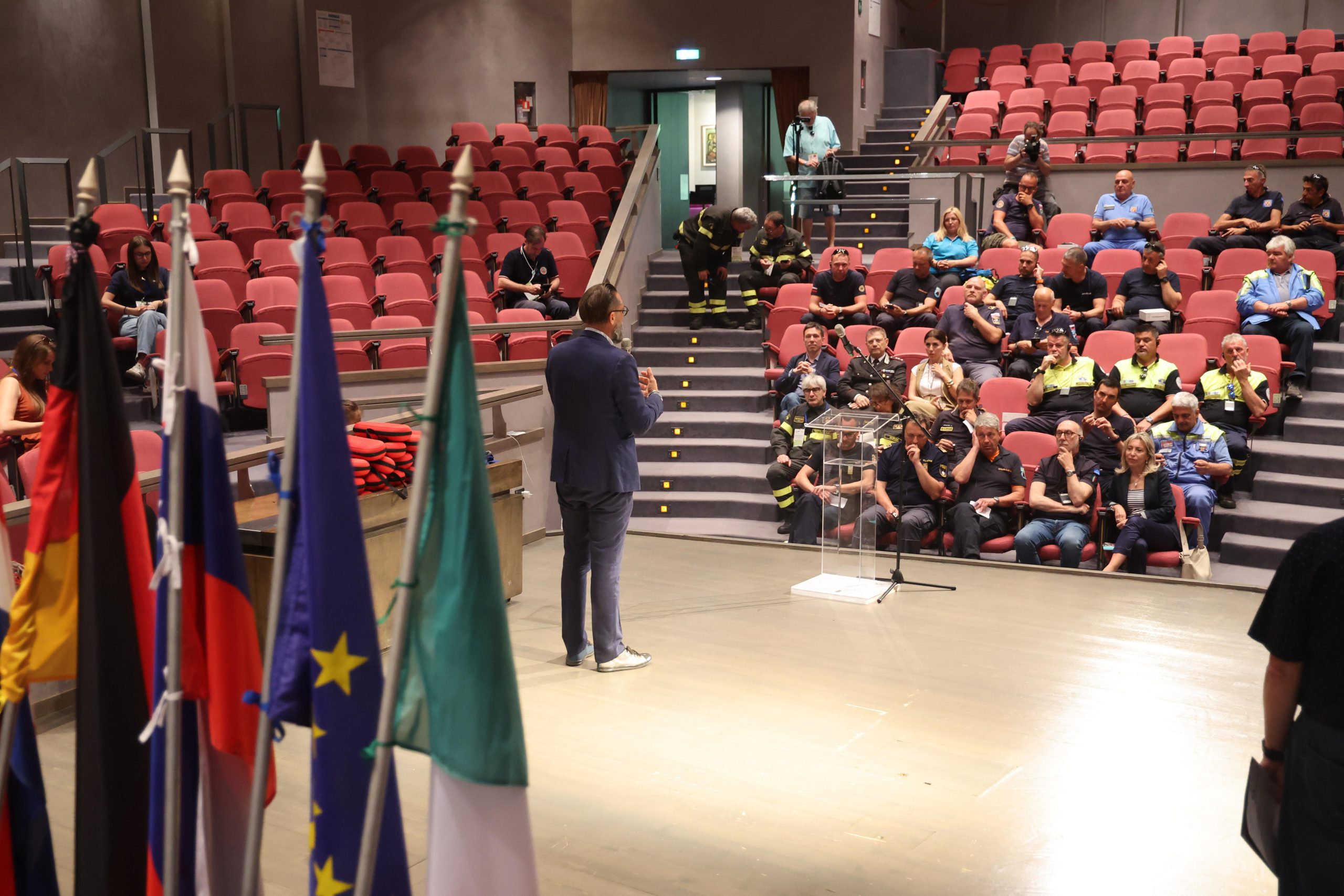
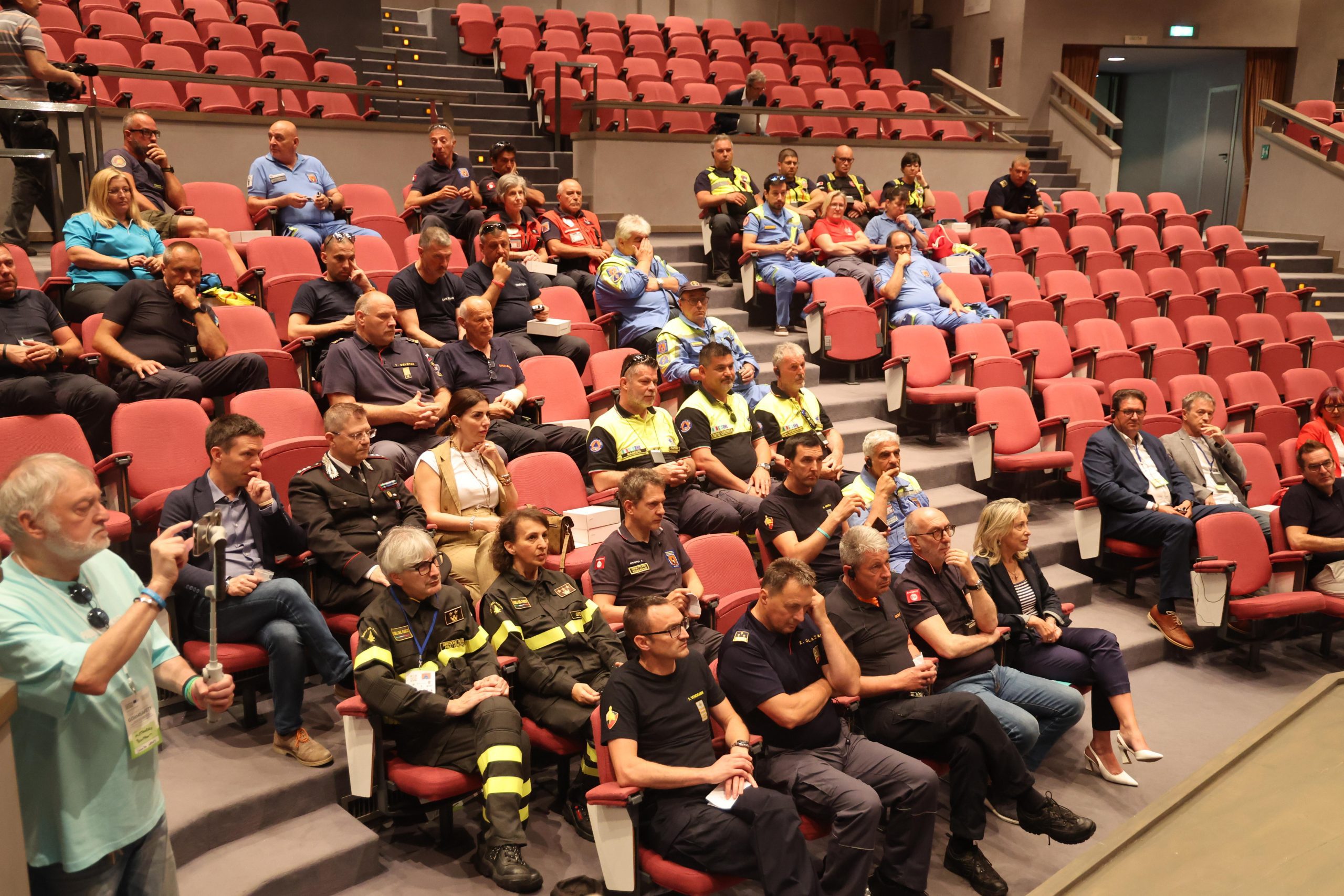
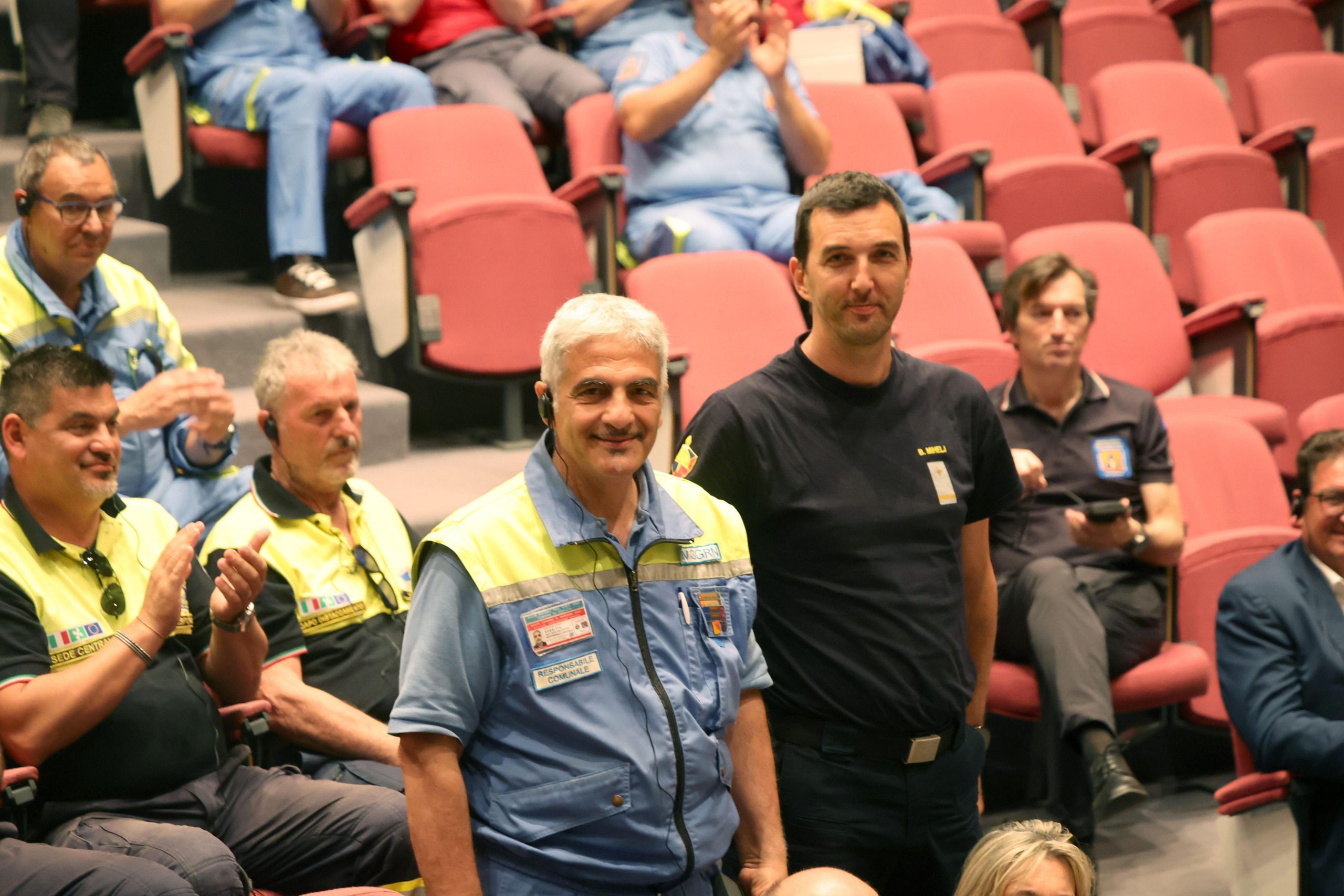
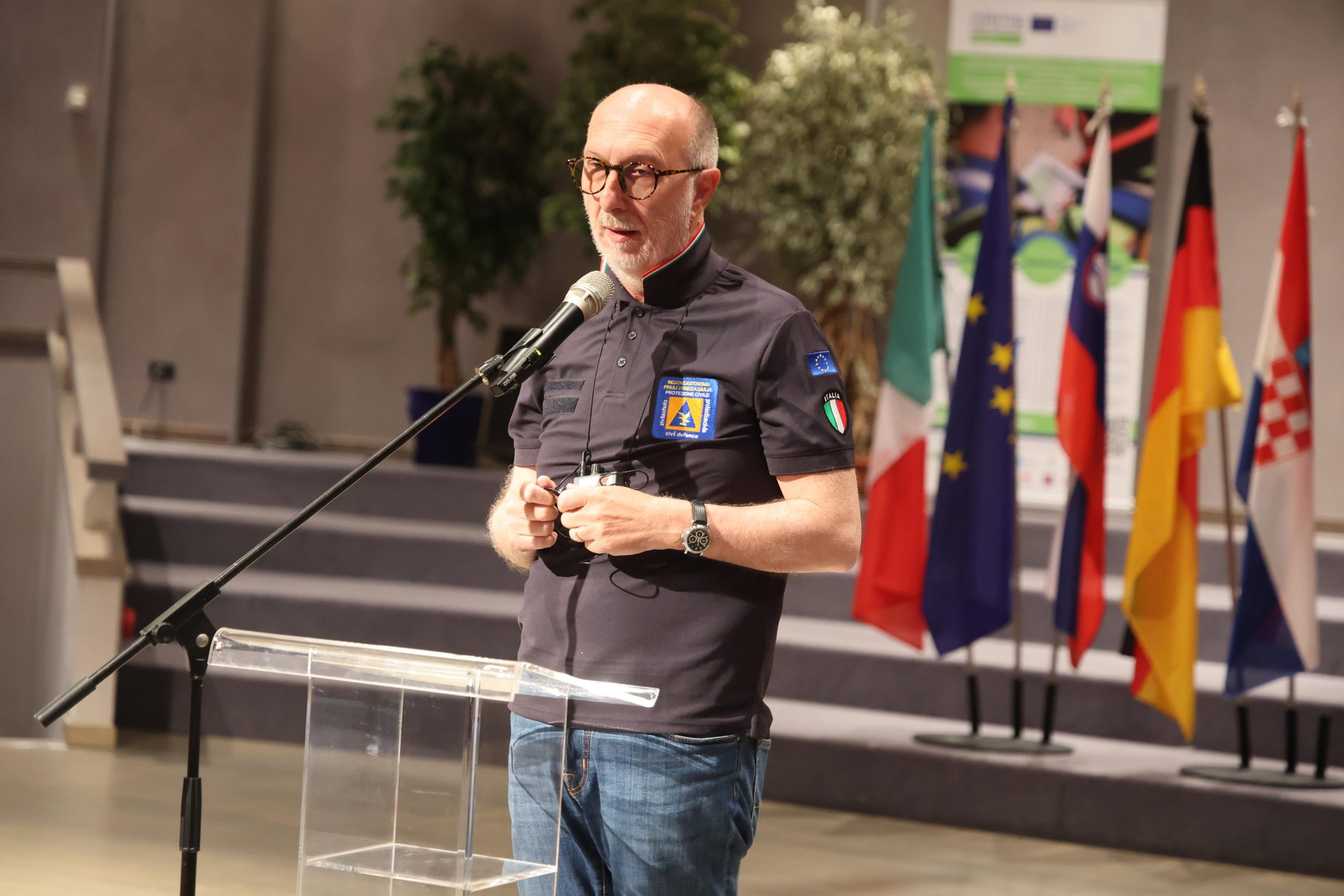
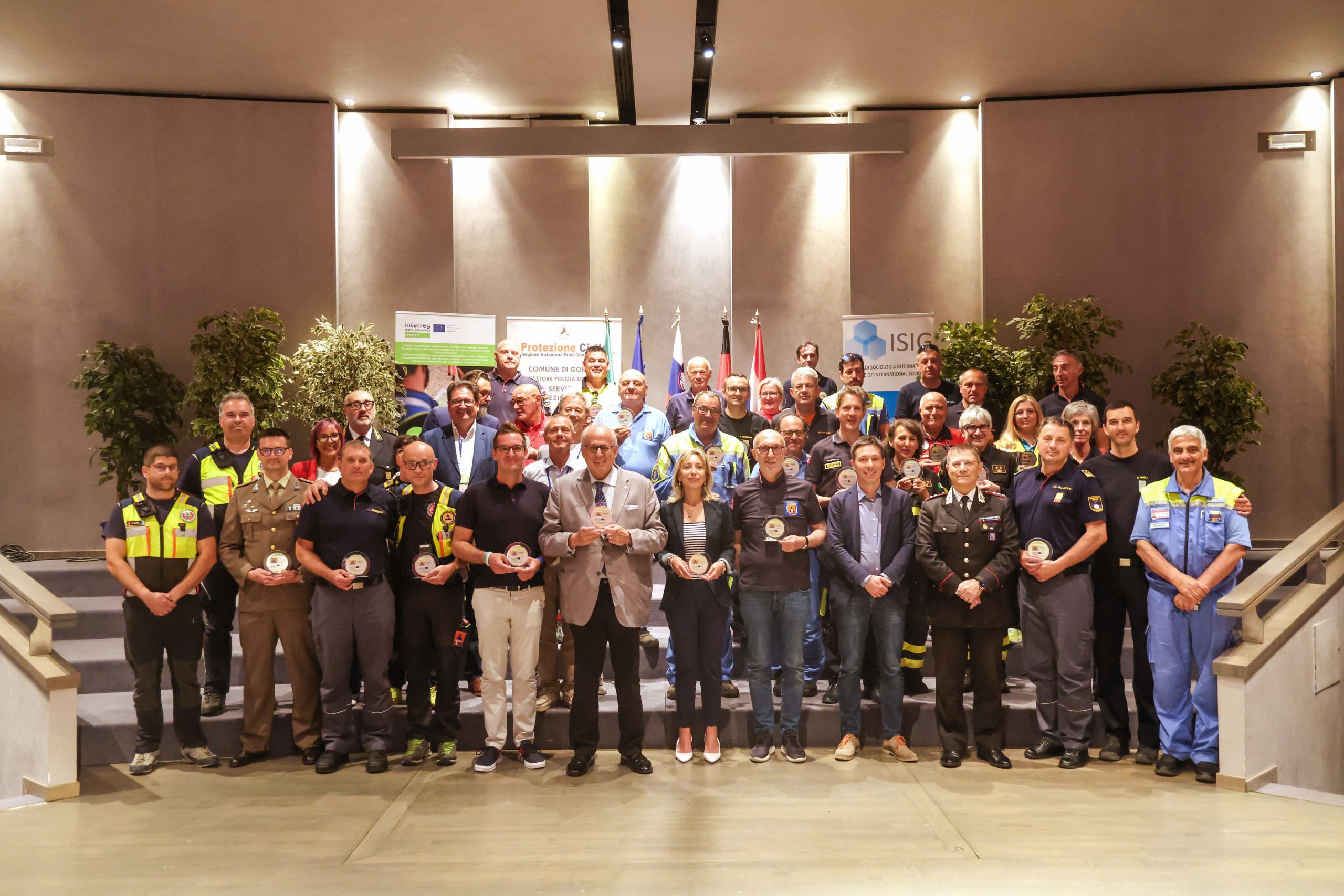
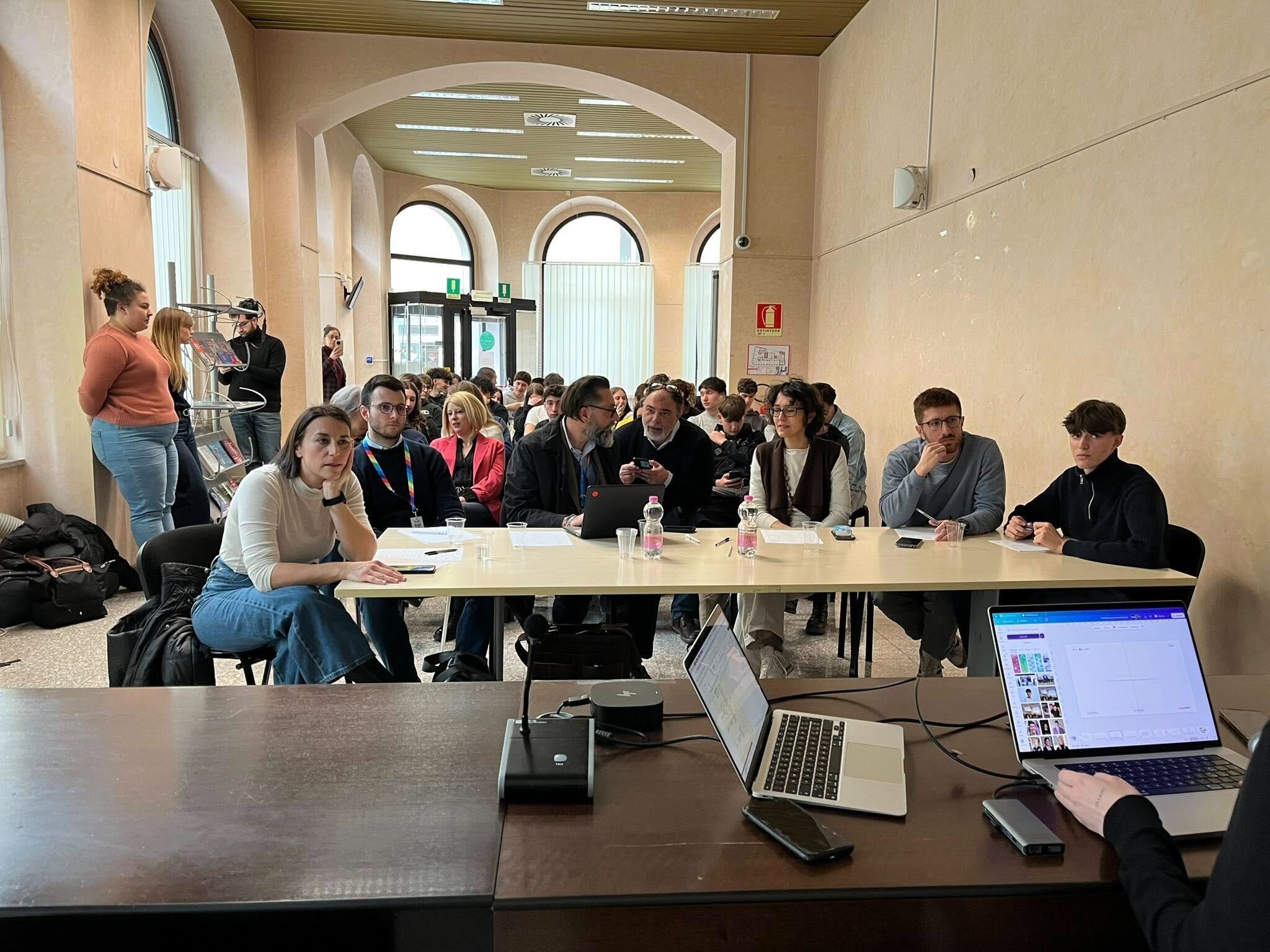
At 11:00 a.m., the awards ceremony began and took place at the Auditorium of Friulian Culture in Gorizia, where the project organizers and partners presented the goals of the initiative-focused on strengthening cooperation between civil protection and emergency systems across borders-and shared an initial assessment of the results.
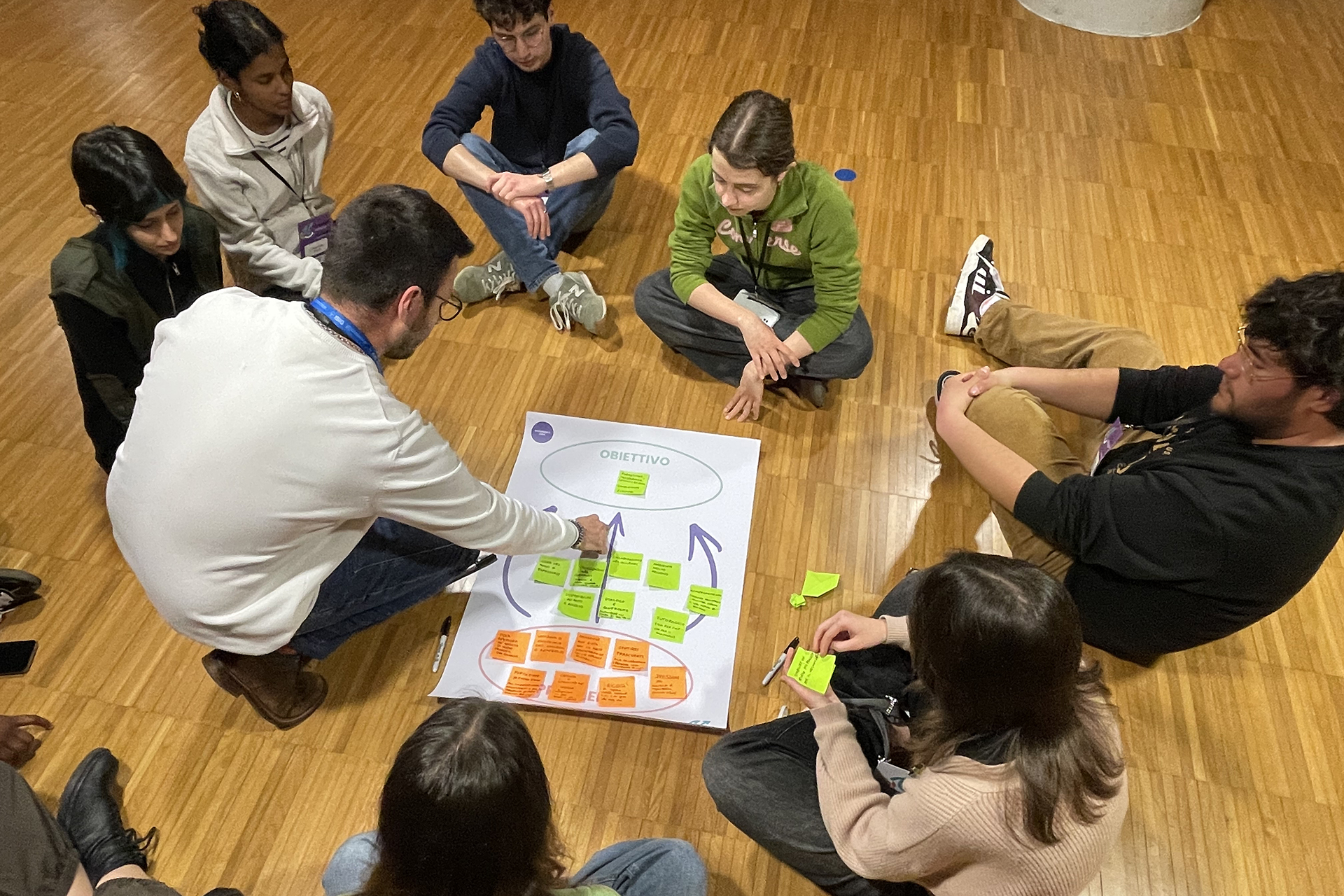
During the final debriefing, operational proposals emerged to further improve coordination and dialogue among the institutions of the countries involved. This debriefing was a key step in transforming the field experience into concrete tools for more efficient, integrated and sustainable emergency management.
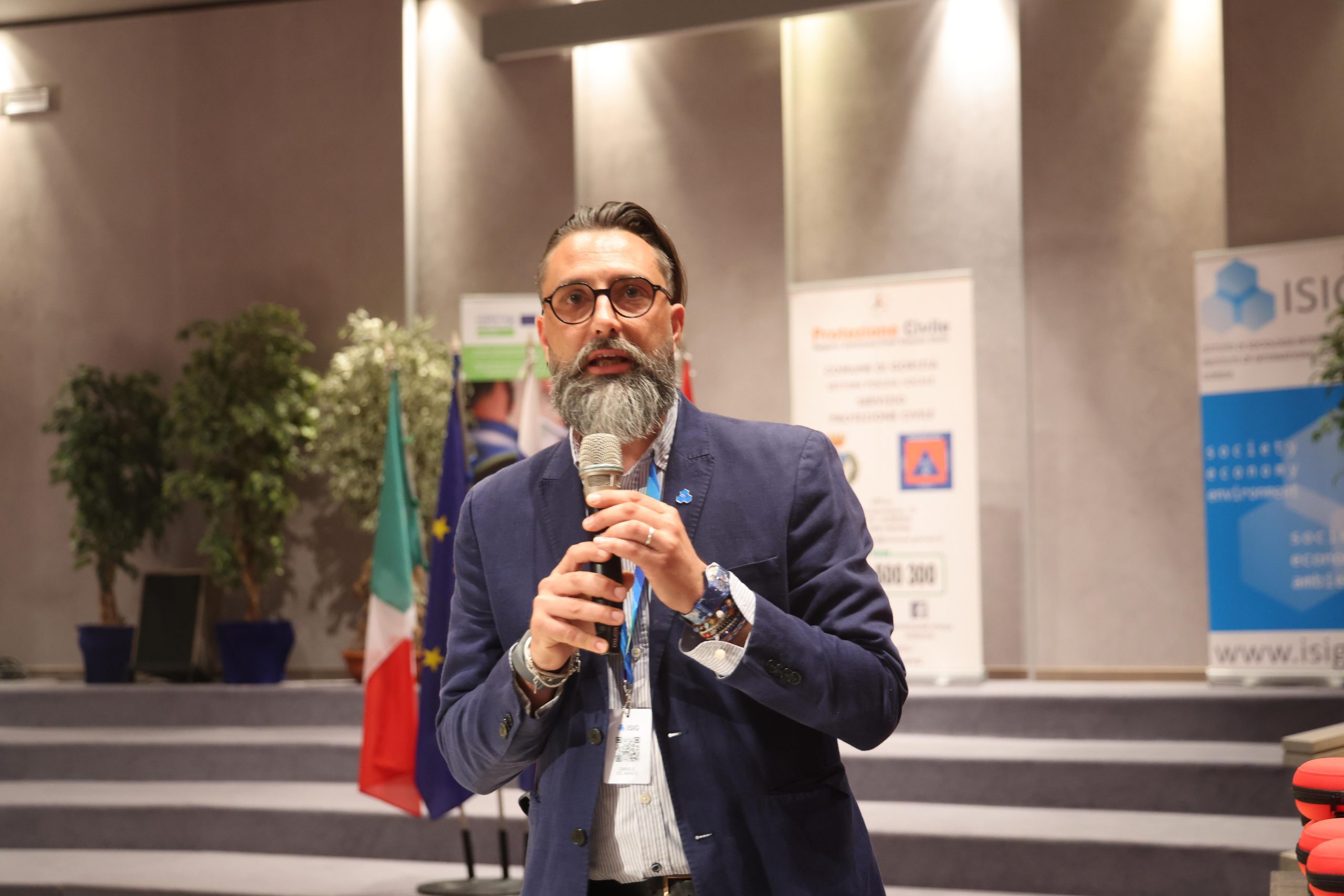
The authorities and speakers present at the final ceremony took the floor, bringing their greetings and contributions: Municipality of Gorizia – Mayor Rodolfo Ziberna, Municipality of Nova Gorica – Mayor Samo Turel, Municipality of Ajdovščina – Mayor Tadej Beočanin, Interreg Italy-Slovenia Joint Secretariat, Deputy Commissioner of Police – Gennaro D’Agnese, Prefecture of Gorizia – Ester Fedullo, Autonomous Region of Friuli Venezia Giulia – Councillor Riccardo Riccardi, EGTC GO – Director Romina Kocina, GO!2025 – Director Mija Lorbek, Northern Primorska Civil Defense – Samo Kosmač (Head of Civil Defense), Friuli Venezia Giulia Civil Defense – Amedeo Aristei (General Director), Nova Gorica Fire Brigade Unit – Simon Vendramin (Commander), Gorizia Fire Brigade – Cira Piscicelli (Commander), Municipality of Gorica – Councillor Francesco Del Sordi, President of the Association of Volunteer Fire Brigades (PGD) of Nova Gorica and Šempeter pri Gorici and representative of the operational volunteer fire brigade for Slovenia – Tadej Devetak, Civil Protection Municipality of Gorica and expert on emergency and volunteer forces for Italy – Alessandro Gallo.
The exercise was a key test case for testing cross-country cooperation and the response capacity of operational forces in the event of disasters. Lessons learned will help strengthen the resilience of the area and communities involved.
The value of people in the field
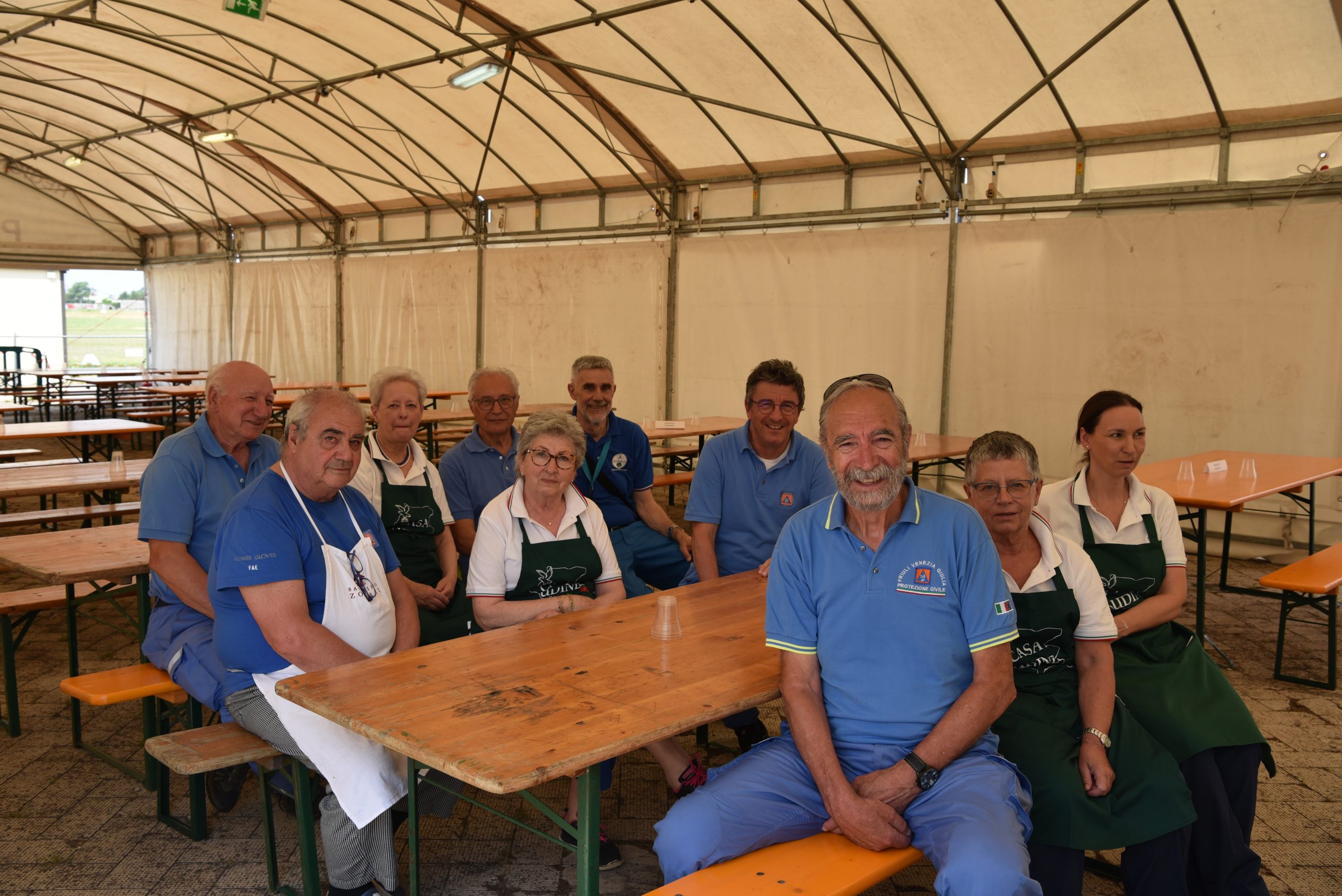
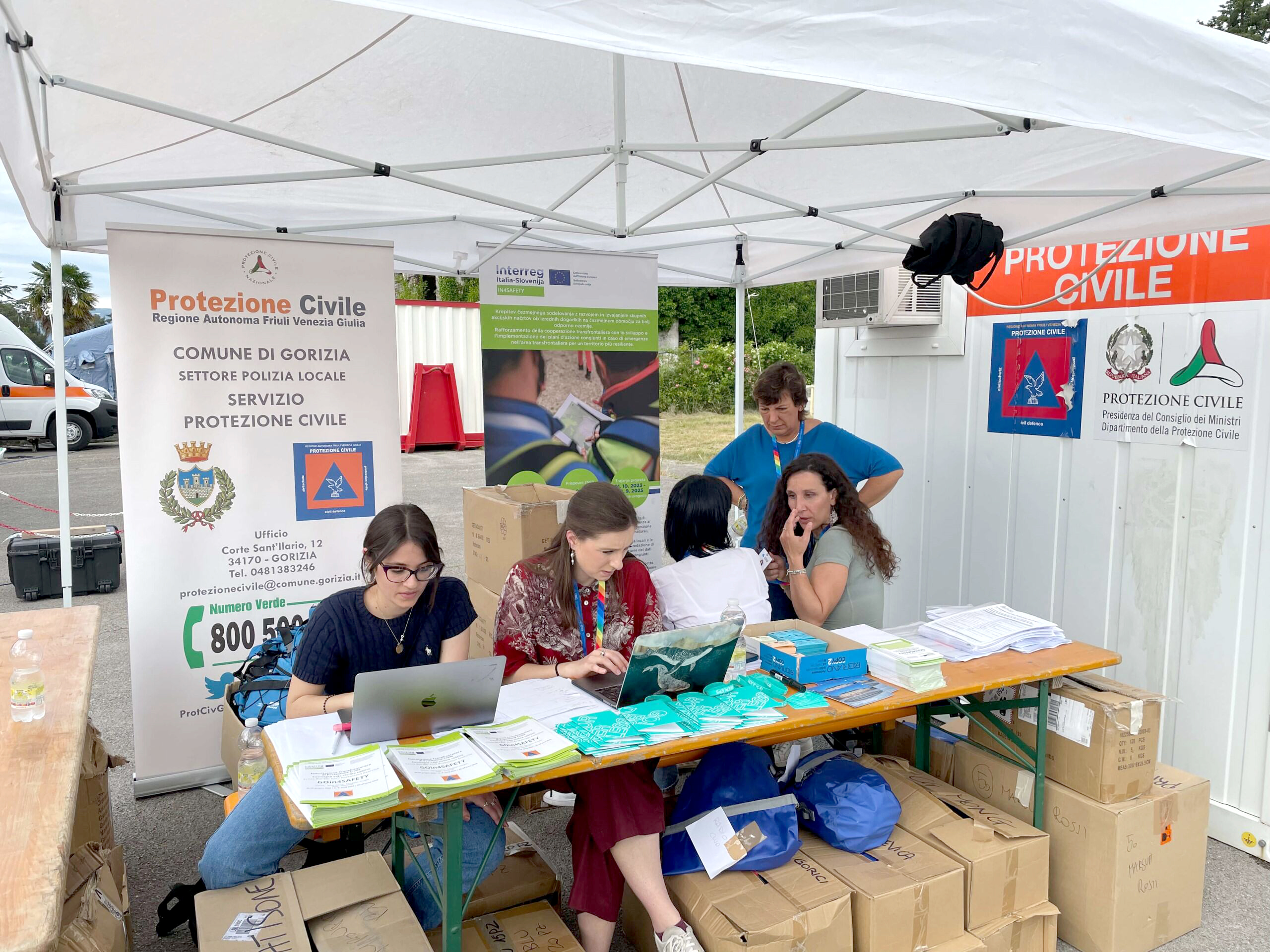
Behind every successful exercise are expertise, coordination, and above all, people. The operational and support teams-composed of trained professionals ready to act in any scenario-are the real driving force behind GOin4SAFETY. It is thanks to their commitment, collaboration in the field, and ability to work together that the entire exercise machine was able to function effectively and safely.
Italian organizations: Acegas, Associazione Culturale Sportiva Dilettantistica Del Corpo Forestale FVG, Associazione Nazionale Alpini – Gorizia, Associazione Nazionale Alpini – Udine, Associazione Nazionale Carabinieri – Ispettorato Friuli Venezia Giulia, Associazione Radioamatori Italiani – Comitato Regionale Friuli Venezia Giulia, Azienda Sanitaria Universitaria Giuliano Isontina, Corpo Nazionale dei Vigili del Fuoco – Comandi FVG, Corpo Nazionale Soccorso Alpino e Speleologico – Servizio Regionale Friuli Venezia Giulia, Corpo Pompieri Volontari Breg, Corpo Pompieri Volontari Muggia, Corpo Pompieri Volontari Trieste, Croce Verde Goriziana, Italian Red Cross – Regional Committee FVG, Distretto Valli del Natisone – Civil Protection, Gruppo Comunale di Protezione Civile Cormons, Gruppo Comunale di Protezione Civile Duino Aurisina, Gruppo Comunale di Protezione Civile Gorizia, Gruppo Comunale di Protezione Civile Mirano, Gruppo Comunale di Protezione Civile Monfalcone, Gruppo Comunale di Protezione Civile Salzano, Gruppo Comunale di Protezione Civile Staranzano, Gruppo Comunale di Protezione Civile Trieste, Gruppo Comunale di Protezione Civile Udine, Ispettorato Forestale di Trieste e Gorizia.
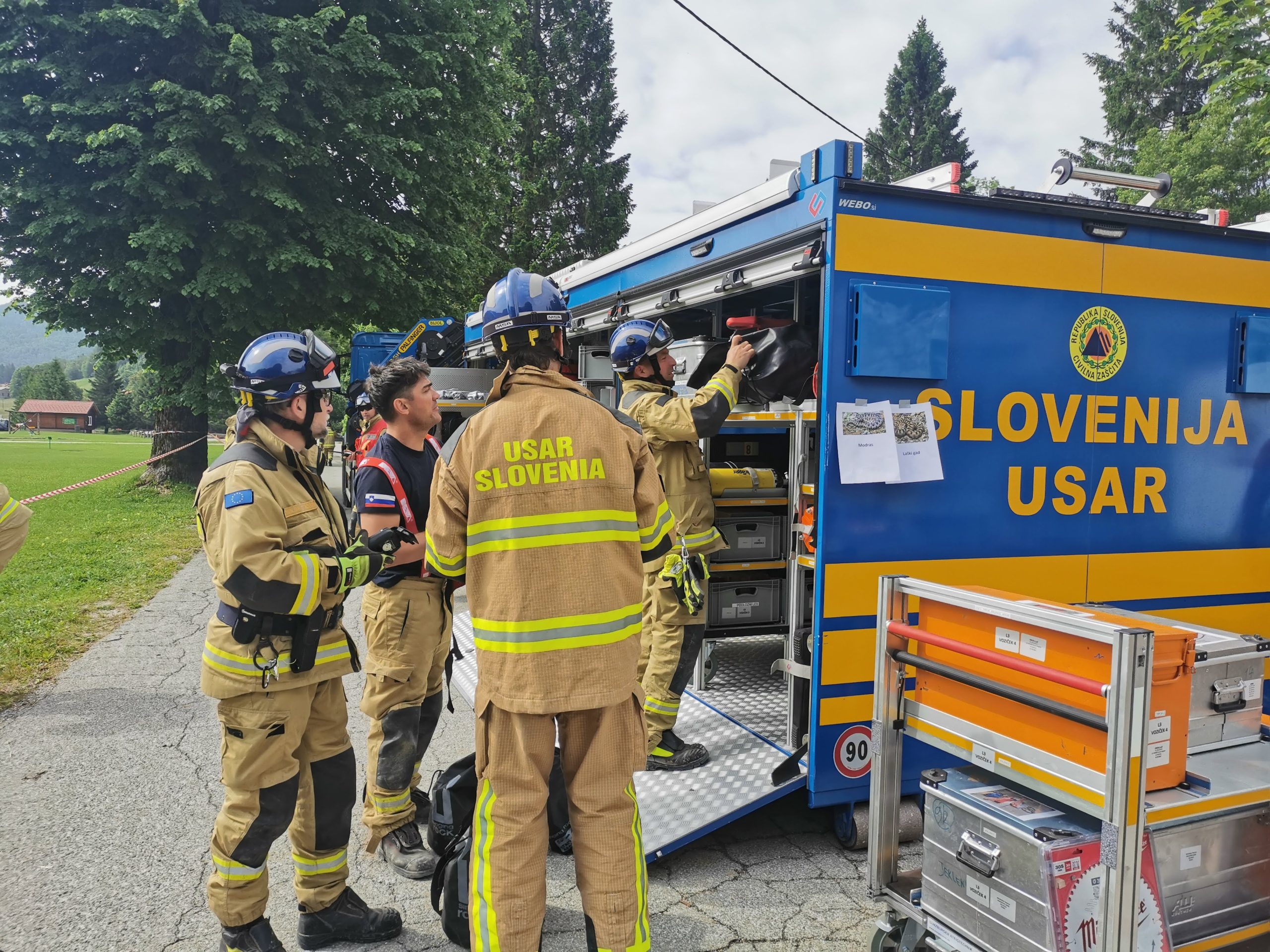
Slovenian organizations: RS Administration for Rescue and Safety, RS Administration for Rescue and Safety – Nova Gorica Unit, Slovenian Association of Volunteer Firefighters, Nova Gorica Rescue Dog Unit Association, Bovec and Kobarid Volunteer Firefighters Association, Goriške Volunteer Firefighters Association, Idrija Volunteer Fire Brigade Association, Nova Gorica -Šempeter Volunteer Fire Brigade Association, Vipava Volunteer Fire Brigade Association, Cerkno Volunteer Fire Brigade Association, Nova Gorica Red Cross, PC COR – Civil Protection Slovenian Regional Operations Center, PC COC – Civil Defense municipal operations center in Nova Gorica, PC COC – Civil Defense municipal operations center in Šempeter Vrtojba, Nova Gorica Police, First Psychological Support Team, BURJA Šempeter Radio Amateurs, Soča Radio Amateurs, Nova Gorica Radio Amateurs, Nova Gorica Emergency Medical Service, Regional Radio Technicians, Ajdovščina Rescue and Protection Unit, Tolmin Joint Rescue and Protection Unit, Regional Rescue Dog Units Team OE5, Regional Rescue Dog Units Team MERP, Tolmin Rescue Dog Units, USAR Slovenia, Nova Gorica Fire Department.
Other organizations: Chemnitz Red Cross (Germany), Public Fire Service Units of the City of Rijeka (Croatia).
We would like to thank for the support and success of the event: Gorizia Airport – Società Consortile R.L. “Amedeo Duca D’Aosta”, Carabinieri Corps – Gorizia Provincial Command, ASUGI, State Police – Gorizia Police Headquarters, Prefecture – Gorizia Territorial Government Office, Irisacqua, Isontina K9 Rescue, GeoSNav Laboratory – University of Trieste, Antelao Civil Protection Volunteers. Water Supply and Sewerage of Nova Gorica, Association of Artisans of Nova Gorica, Nova Gorica Chamber of Commerce, FGG UL – Faculty of Civil Engineering and Geodesy Ljubljana, Triglav Insurance.
Project partners and supporters
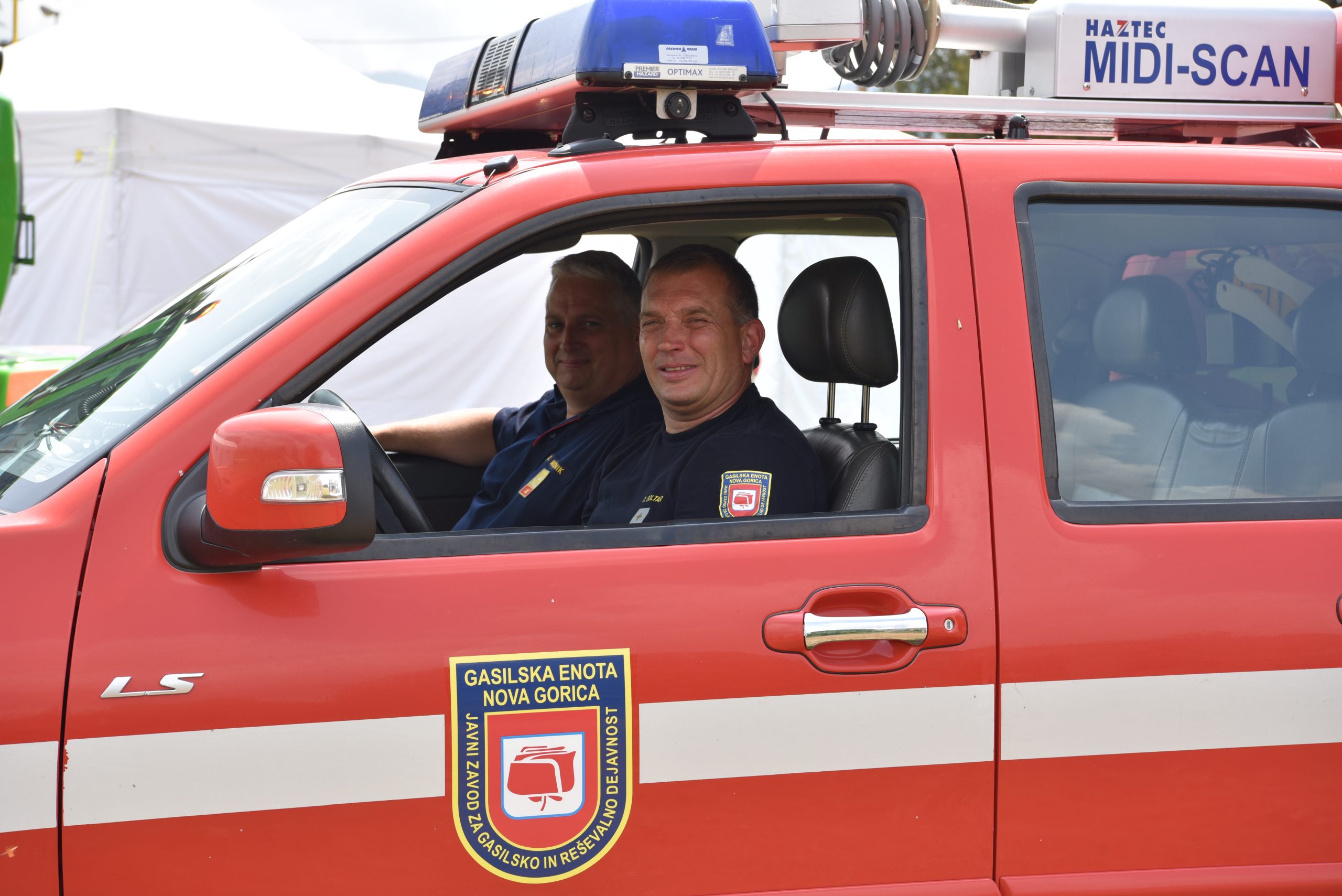
Municipality of Gorizia, Civil Protection of the Friuli Venezia Giulia Region, Civil Protection of the Municipality of Gorizia, Gasilska enota Nova Gorica | Municipality of Ajdovščina | Municipality of Nova Gorica | Geodetski inštitut Slovenije | Metropolitan City of Venice | University of Trieste | Gasilska zveza Slovenije | Zdravstveni dom Ajdovščina | Autonomous Region of Friuli Venezia Giulia | Municipality of Duino Aurisina – Občina Devin Nabrežina | @European Capital of Culture 2025 Nova Gorica – Gorica | Gect GO Ezts GO.
ISIG’s contribution to the exercise
The exercise posed a complex challenge for all those involved, requiring strong coordination and effective collaboration between different institutional and territorial actors. ISIG supported the coordination activities, in synergy with the Municipality of Gorica and the Nova Gorica Fire Department, dealing in particular with the management of communication, logistics, dialogue with local actors and involvement of project partners. He facilitated the integration of EGTC GO and GO!2025 through a memorandum of understanding, helping to build trust and cooperation. It also promoted synergies with other European projects, including CRISAFE, by organizing moments of exchange and comparison, such as a meeting dedicated to synergies between related initiatives.