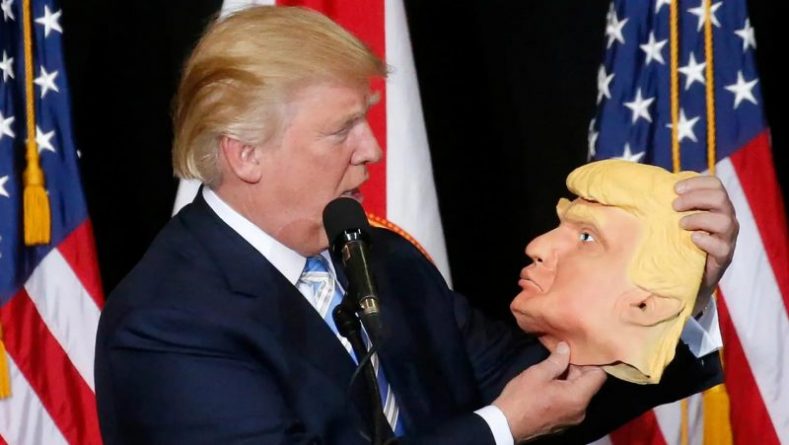
“You are Fake news!”
(President D. Trump)
Lies, misinformation, propaganda. In an expression: fake news.
It really doesn’t matter that these notions are not perfectly overlapping: in the last years of the digital age, fake news has now become a passe-partout concept, a protagonist of debate in the public and private spheres thanks to its power to synthesize-often at the expense of lucid analysis-all the demerits and limitations of social communication.
The Collins Dictionary defines fake news as anything that is “false, often sensationalistic information disseminated under the guise of making news,” thereby attracting the attention of the public-or some specific sectors of it. Although, this media tool, in its broadest definition is an integral part of the history of politics and communication since these have effectively become “mass” stories, the expression fake news burst into contemporary public debate during the 2016 U.S. election.
At an early stage, the use of the term basically coincides with its literal meaning. However, in 2017 on Twitter and during his press conferences, the 45th U.S. president gives the expression a new meaning, using it to attack some mainstream media and debunk their criticism of him. In the same year, two major Anglo-Saxon language authorities such as the Collins Dictionary and the American Dialect Society named fake news “Word of the Year,” certifying a 365 percent increase in its public use.
Fake news therefore conquers the airwaves, and in particular the social media universe, where it inevitably becomes intertwined with the most trending topics and issues, either in the form of disinformation – in which the intention of those who fabricated/shared the news is to deceive those who read it in order to maximize their own visibility or that of their cause – or misinformation – in which the deception is unintentional and the sharing is authentically motivated by outrage or a desire for influence.
During the different phases of the COVID-19 pandemic, for example, social media has been the scene of the spread of a new repertoire of fake news regarding the very existence of the virus, its origin, strategies for dealing with it, or even the efficacy and side effects of vaccines.
In this case, it is the relationship between misinformation and science that is at stake. With this in mind, ISIG presented to the European Parliament on April 19 the results of a research it conducted together with other universities and research institutes from five EU countries.
“Is what they say about fake news true?” we asked ourselves. If you would like to learn more, click here for the video of the talk or here for the research report.