Language: Italian
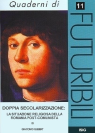
Content: The history of Romania in the 20th century would highlight a “double secularization,” the communist one and the spontaneous one that followed the country’s opening to the market economy and Western-style, liberal democracy. The serious and meticulous empirical verification of the interpretative hypotheses of this phenomenon is conducted by making use of data collected over the years by the EVS-European Value Survey and the WVS-World Value Survey, as well as data included in numerous monographic studies. The statistical analysis tools used lead to the identification of different patterns of secularization, the definition of certain religious relationship switches, and the identification of different transcendent or immanent factors of trust or distrust.
Order a copy
biblio@isig.it